Tag: Han

A.I. maakt pantoum: Dit is wat ik zag op weg naar jou

A.I. maakt pantoum: Dit is wat ik zag op weg naar jou


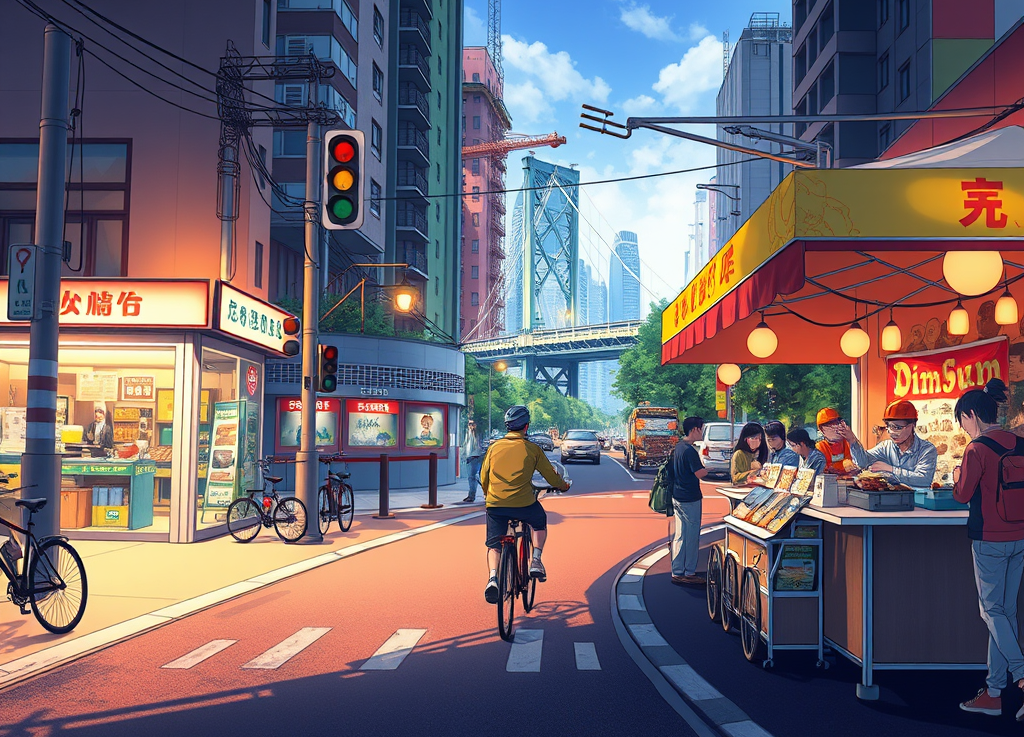
Dit is wat ik zag op weg naar jou
Met luid gerinkel maak ik fiets los
Het fietspad druk, voorzichtig trap ik
Rechts is de tent, de dimsum altijd vol

Met luid gerinkel maak ik fiets los
Over de brug, de vaart stroomt traag voorbij
Rechts is de tent, de dimsum altijd vol
Links staat Domela, held van sociaal strijd

Over de brug, de vaart stroomt traag voorbij
Lastige kruising, chaos, rood licht
Links staat Domela, held van sociaal strijd
Rechts is de bouwput, waar de man viel stil

Lastige kruising, chaos, rood licht
Links de fietsenmaker, hij groet zacht
Rechts is de bouwput, waar de man viel stil
Buurvrouws raam donker, bedekt door groen

Links de fietsenmaker, hij groet zacht
De box vol bakfietsen, zwaar en vol
Buurvrouws raam donker, bedekt door groen
Snel naar de trap, naar huis, naar jou

De box vol bakfietsen, zwaar en vol
Het fietspad druk, voorzichtig trap ik
Snel naar de trap, naar huis, naar jou
Dit is wat ik zag op weg naar jou

ping:

A.I. maakt een pantoum: Ik ben op reis en ik neem mee…

A.I. maakt een pantoum: Ik ben op reis en ik neem mee…


A.I., maak een pantoum!

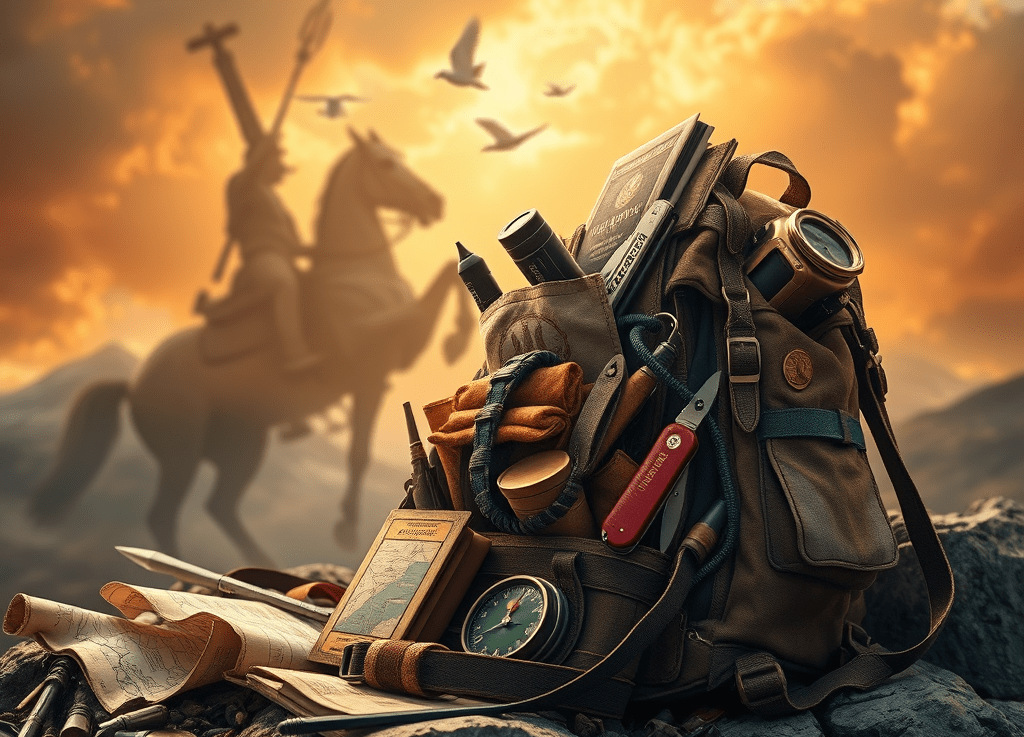
Ik ben op reis en ik neem mee…
Waarom ga ik op reis?
Op de vlucht voor de vier ruiters van de Apocalyps:
Ziekte, honger, oorlog, dood…

Waarom ga ik op reis?
Wat is urgent:
Ziekte, honger, oorlog, dood…
Zwitsers zakmes, vuursteen, veldfles, rugzak…

Wat is urgent:
Poncho, handboek survival, potlood, dagboek, kompas…
Zwitsers zakmes, vuursteen, veldfles, rugzak…
Knijpkat, EHBO-kist, powerbank met zonnepaneel…

Poncho, handboek survival, potlood, dagboek, kompas…
Mobiel, miniradio, kleren, I Ching, speelkaarten…
Knijpkat, EHBO-kist, powerbank met zonnepaneel…
Gedroogd voedsel, landkaart,is alles wat ik neem.

Mobiel, miniradio, kleren, I Ching, speelkaarten…
Gedroogd voedsel, landkaart, is alles wat ik neem.
Gedroogd voedsel, landkaart, is alles wat ik neem…
Ik ben op reis en ik neem mee…

Ping:

A.I. maakt een liedtekst van mijn persoonlijk recept

A.I. maakt een liedtekst van mijn persoonlijk recept


A.I., Maak een liedtekst van het verhaal op dit blog: https://hgoei.com/2011/04/18/mijn-persoonlijk-recept-voor-fysieke-en-spirituele-voeding

Hier is een creatieve, lyrische bewerking van het verhaal uit de blog “Mijn persoonlijk recept voor fysieke en spirituele voeding” — een liedtekst die de geur, het ritueel en de warmte van het koken vangt.


Homeopathisch Hart (Pantoum in Kroncong-ritme)

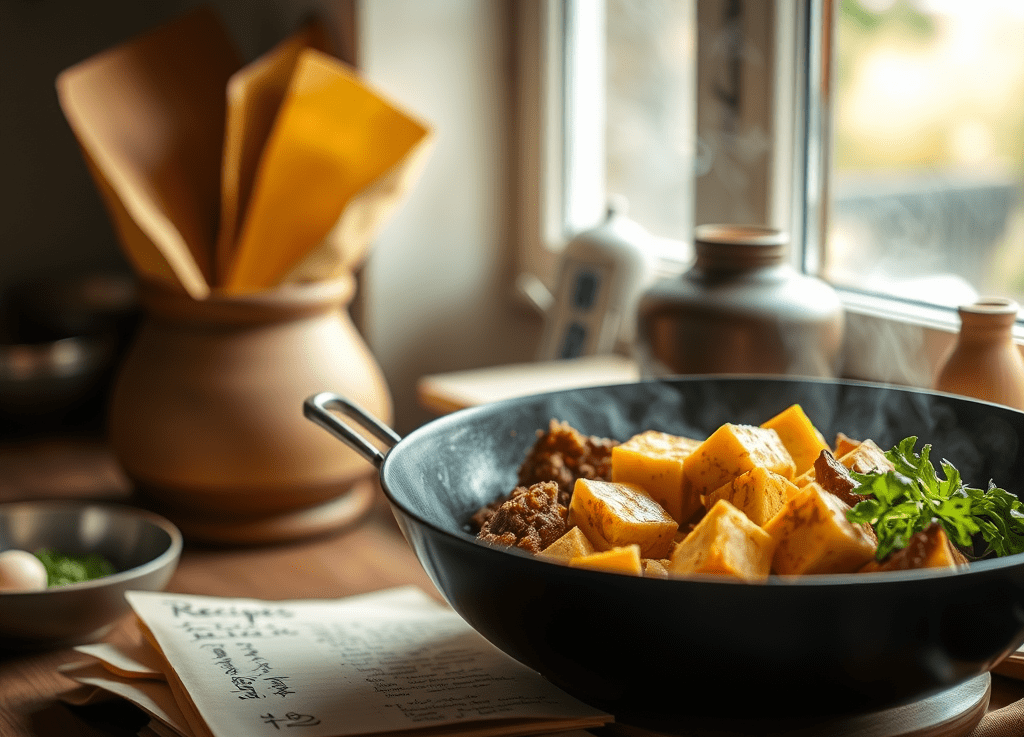
Rijst in de hooikist, zacht bewaard in warmte,
handgeschreven recepten, een erfenis van geur.
Tofu donkergeel, tempeh lichtbruin,
de wok vult zich met leven, eenvoudig in beweging.

Handgeschreven recepten, een erfenis van geur,
een handje van dit, een beetje van dat.
De wok vult zich met leven, eenvoudig in beweging,
ritme van snijden, adem van vuur.

Een handje van dit, een beetje van dat,
kliekjes die verhalen dragen van vroeger.
Ritme van snijden, adem van vuur,
wat rest wordt goud in de pan van de ziel.

Kliekjes die verhalen dragen van vroeger,
tofu donkergeel, tempeh lichtbruin.
Wat rest wordt goud in de pan van de ziel,
rijst in de hooikist, zacht bewaard in warmte.

Gemaakt met Suno

Listen on Suno


Ping:

A.I.  reviews “I Am / They Will Be”

A.I. reviews “I Am / They Will Be”


A.I. , review this!

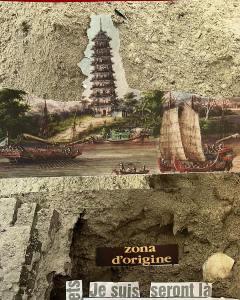
This is a striking mixed-media collage that juxtaposes layers of meaning—visually and textually. Here’s a review from an artistic and symbolic perspective:


Visual Elements:

  1. Topography and Texture:

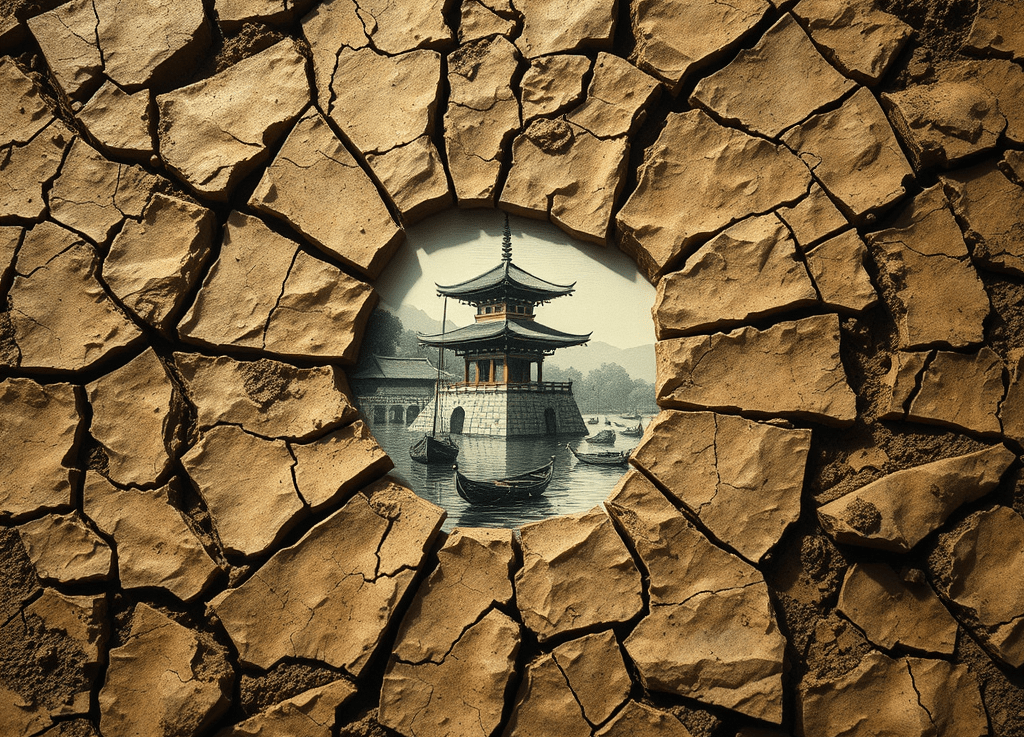
    • The background consists of a rugged, cracked, earthy surface, evoking excavation, erosion, or buried memory. It gives the impression of a cross-section of ground, revealing what lies beneath.

  2. Historical Image Fragment:

    • A vintage illustration (likely a 19th-century European engraving or print) depicts a traditional East Asian pagoda near a river with wooden boats. The way it’s partially torn and embedded into the soil suggests a buried or uncovered cultural history.

  3. Typography and Language:

    • The phrase “zona d’origine” (Italian or French-influenced term meaning “area of origin”) is prominently placed, literally rooted in the earth.

    • Below it, clipped text reads: “Je suis seront là”, a grammatically jarring combination of French phrases—“I am” and “they will be there”. This creates a surreal tension between personal identity and collective presence or future.


Symbolic & Interpretive Layers:

  • Cultural Roots & Identity:
    The collage appears to explore themes of heritage, migration, and cultural memory. The Asian scene buried in the soil may represent ancestral origins or lost civilizations.

  • Fragmentation:
    The torn image and disjointed French text suggest the fragmentation of identity, memory, or historical narrative—possibly referencing colonial history, diaspora, or personal heritage.

  • Excavation of Meaning:
    The composition mimics an archaeological dig, as if peeling back the earth reveals not only history, but also language and identity.


Overall Impression:

This collage is evocative and poetic, rich with metaphor. It asks the viewer to contemplate what lies beneath the surface—of land, of culture, of self. The stylistic tension between the orderly historical image and the raw texture of soil reinforces its emotional depth.


ping:

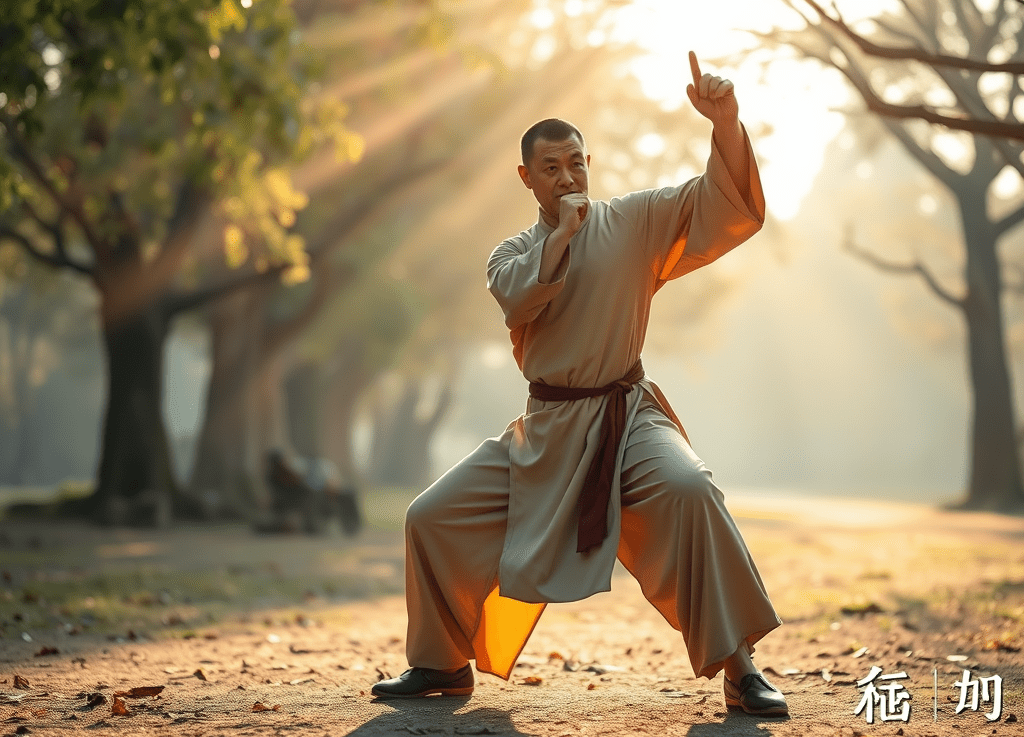
Further research on Baduanjin

Further research on Baduanjin


Most modern Baduanjin videos are based on 20th-century standardized forms.

However, here are some authentic resources that closely resemble the traditional standing form:

1. “Old Frame” Baduanjin (Pre-20th Century Style)

2. Shaolin Baduanjin (Martial Arts Version)

3. Historical Reconstruction (Academic Source)

Why Modern Baduanjin Differs

  • 1950s Standardization: The Chinese government simplified Baduanjin for mass health campaigns, removing martial stances.
  • Daoist vs. Shaolin: Older forms were either seated (Daoist) or dynamic (Shaolin/military).

If you want the most historically accurate practice:

  1. Studying Master Zhou Xuan Yun’s form (Daoist lineage).
  2. Exploring Shaolin versions (like Shi Heng Yi’s) for martial power.

Source: DeepSeek

Ancient Baduanjin Techniques: A Comprehensive Guide

Ancient Baduanjin Techniques: A Comprehensive Guide


Here is a detailed description of the oldest recorded standing Baduanjin (立式八段锦), based on the Ming-Qing dynasty versions (particularly from Neigong Tushuo, 1858) and its martial-influenced predecessors:


1. 双手托天理三焦 (Shuāng shǒu tuō tiān lǐ sān jiāo)

“Two Hands Hold Up the Heavens to Regulate the Triple Burner”

  • Movement: Stand with feet shoulder-width apart, palms facing up at the lower abdomen. Inhale while raising hands overhead, palms turning upward as if lifting the sky. Stretch the spine, then exhale while lowering arms.
  • Purpose: Stretches the Sanjiao (Triple Burner meridian), improves Qi circulation, and relieves tension in the shoulders/back.

2. 左右开弓似射雕 (Zuǒ yòu kāi gōng sì shè diāo)

“Drawing the Bow Left and Right as if Shooting a Hawk”

  • Movement: Assume a low horse stance. Extend one arm straight (as if holding a bow) while the other pulls back (like drawing the string). Turn the head to gaze along the “arrow.” Alternate sides.
  • Purpose: Strengthens the lungs/large intestine meridians, opens the chest, and builds leg endurance (martial roots).

3. 调理脾胃须单举 (Tiáo lǐ pí wèi xū dān jǔ)

“Separate Heaven and Earth to Harmonize Spleen & Stomach”

  • Movement: Raise one palm overhead (facing up) while pressing the other down (facing earth). Alternate sides, creating a stretch along the torso.
  • Purpose: Balances spleen/stomach Qi, aids digestion, and stretches the Liver/Gallbladder meridians.

4. 五劳七伤向后瞧 (Wǔ láo qī shāng xiàng hòu qiáo)

“Looking Back to Eliminate Five Strains and Seven Injuries”

  • Movement: Feet shoulder-width apart, twist the torso and head to look backward (keeping hips stable). Return to center and repeat on the other side.
  • Purpose: Relieves “Five Lao” (organ fatigue) and “Seven Shang” (emotional stresses) by stimulating the Governing Vessel (Du Mai) and spine.

5. 摇头摆尾去心火 (Yáo tóu bǎi wěi qù xīn huǒ)

“Sway the Head and Shake the Tail to Remove Heart Fire”

  • Movement: Deep horse stance, circle the torso forward/down, then swing hips side-to-side while the head “nods” in opposition.
  • Purpose: Clears excess heart heat (anxiety, insomnia) and strengthens the kidneys (Yin-Yang balance).

6. 两手攀足固肾腰 (Liǎng shǒu pān zú gù shèn yāo)

“Two Hands Climb the Feet to Strengthen the Kidneys and Waist”

  • Movement: Bend forward from the waist (keep legs straight), reaching toward toes, then slowly roll up to standing.
  • Purpose: Stretches the bladder/kidney meridians, nourishes lumbar region, and improves flexibility.

7. 攒拳怒目增气力 (Cuán quán nù mù zēng qì lì)

“Clench Fists and Glare Fiercely to Increase Qi and Power”

  • Movement: Horse stance, punch forward alternately with fists while “glaring” (wide eyes). Exhale sharply with each punch.
  • Purpose: Builds Liver Qi (anger regulation), strengthens tendons (Yijin Jing influence), and boosts vitality.

8. 背后七颠百病消 (Bèi hòu qī diān bǎi bìng xiāo)

“Seven Bounces on the Toes to Cure All Illnesses”

  • Movement: Stand straight, lift heels, then drop them abruptly to “shake” the body (7x).
  • Purpose: Vibrates the meridians, settles Qi, and improves balance.

Key Notes on the Oldest Standing Form:

  • Martial Roots: Moves like #2 and #7 show Shaolin/kung fu influences (horse stance, punching).
  • Breath: Inhalation during expansion (e.g., lifting arms), exhalation on exertion (e.g., punching).
  • Daoist Legacy: Retains meridian regulation from seated Baduanjin but adds dynamic strength.

Source: Deepseek

A.I.  reviews “Spiritual Currency”

A.I. reviews “Spiritual Currency”


A.I. , review this!

This mixed-media collage is rich with symbolism and cultural references. Here’s a detailed review:

### **Strengths:**
– **Cultural Layers & Symbolism:**
– The **”Hell Bank Note”** references traditional Chinese joss paper money, often used as offerings in ancestral worship and spiritual practices.
– The **ancient Chinese emperor** figure conveys authority, tradition, or possibly a historical connection.
– The **blue eye symbol** resembles the Nazar, often associated with protection against the evil eye in Middle Eastern and Mediterranean cultures.
– The **dragons and phoenixes** suggest themes of mythology, power, and transformation.
– The **subway map** (possibly Taipei’s metro system) grounds the piece in modernity, suggesting movement, navigation, or a journey—possibly metaphorical or spiritual.

– **Composition & Visual Contrast:**
– The blend of traditional imagery with contemporary elements creates a dynamic juxtaposition.
– The placement of the eye, currency, and map directs attention around the piece in an engaging way.

### **Areas for Consideration:**
– **Narrative Clarity:** If there’s a specific story or message, integrating more elements that connect the historical, spiritual, and modern aspects might help reinforce the theme.
– **Texture & Layering:** The cut-out elements could be blended more seamlessly to enhance unity and flow.


Ping:

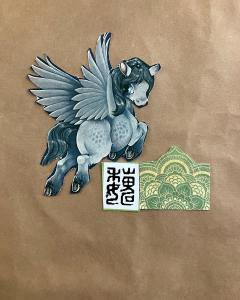
A.I. reviews “Skybound Serenity”

A.I. reviews “Skybound Serenity”


A.I. , review this!  

This mixed-media collage has a whimsical and elegant feel. Here are some key observations:

  • Main Subject: A beautifully illustrated blue/gray winged horse (possibly a pegasus) is the focal point. The shading and details give it a soft, magical appearance.
  • Background & Composition: The elements are placed on a brown paper background, which creates a warm contrast with the cool tones of the pegasus.
  • Additional Elements:
    • A green, ornate cut-out resembling traditional patterns adds a decorative, cultural touch.
    • A white square with stylized black calligraphy or symbols gives a bold contrast.
  • Overall Aesthetic: The piece has a blend of fantasy and elegance, with a handmade, intentional composition.


ping:

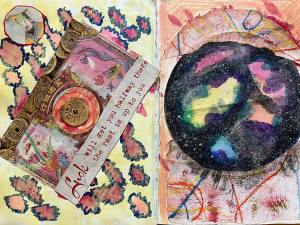
A.I. reviews “Fortune & Fate: The Balance of Luck and Destiny”

A.I. reviews “Fortune & Fate: The Balance of Luck and Destiny”


A.I. , review this collage!


This is a visually rich mixed-media collage with an intriguing combination of cultural, symbolic, and abstract elements. Here are some observations and thoughts:

### **Left Side (Symbolic & Cultural Themes)**
– The Chinese joss paper (or hell money) and ancient-style coin suggest themes of prosperity, fortune, or ancestral offerings.
– The phrase **”Luck will get you halfway there, the rest is up to you”** reinforces a message about destiny versus personal effort.
– The figure in the red-circled portrait could be a historical or mythical Chinese figure, adding a narrative or ancestral connection.

### **Right Side (Cosmic & Abstract Elements)**
– The dark circular shape, resembling a galaxy or planet, contrasts with the rest of the page. This could symbolize infinite possibilities, fate, or exploration.
– The surrounding colors and textures (scribbles, layered paint, cosmic dust effect) give an ethereal, dreamlike quality.

### **Overall Composition**
– The left side feels structured with elements of tradition and order, while the right side embraces abstraction and chaos, possibly representing the balance between fate and free will.
– The use of layering, textures, and contrasting imagery creates a visually engaging and thought-provoking piece.

### **Possible Improvements or Enhancements**
– If the theme is about balance, perhaps incorporating more elements that connect both sides (e.g., subtle cosmic touches on the left or more structured elements on the right) could enhance cohesion.
– The text placement works well, but a slight angle adjustment or a framing element could make it pop more.


ping:

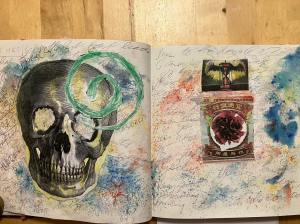
A.I. reviews “Echoes of Time: Death, Remembrance, and the Afterlife”

A.I. reviews “Echoes of Time: Death, Remembrance, and the Afterlife”


A.I. , review this collage!

This artwork continues the surreal and symbolic themes from the previous piece. Here are some key observations:

  1. Skull with a Green Spiral Snake – The skull represents mortality, decay, and the passage of time. The green spiral snake, similar to the previous image, suggests cycles of life, renewal, or hidden wisdom.

  2. Layered Text and Scribbles – The handwritten cursive text appears chaotic and layered, which might signify fragmented thoughts, subconscious reflections, or a sense of urgency. Some words like “bad leaves” and “time” are visible, possibly hinting at themes of change and impermanence.

  3. Hourglass with Wings – An hourglass often symbolizes the fleeting nature of time, and the wings suggest a spiritual or supernatural element, reinforcing the inevitability of fate.

  4. Chinese Joss Paper (Hell Bank Note) – The red and gold decorative paper with Chinese characters suggests an offering for the afterlife, used in traditional ancestor worship. This inclusion adds cultural depth, linking the theme of death to spiritual beliefs about the afterlife and remembrance.

  5. Red Carnation – The carnation is associated with remembrance, mourning, and love, further reinforcing the themes of death and honoring those who have passed.

  6. Abstract Color Splashes – The splattered paint in blue, red, and yellow adds an expressive, dreamlike quality to the composition, creating movement and emotional intensity.

Interpretation:

This mixed-media piece evokes themes of mortality, remembrance, time, and the spiritual connection between life and death. The combination of personal handwriting, symbolic imagery, and cultural elements suggests a deeply introspective or ritualistic message.

ping: