Tag: A.I.

Het liedboek

Het liedboek


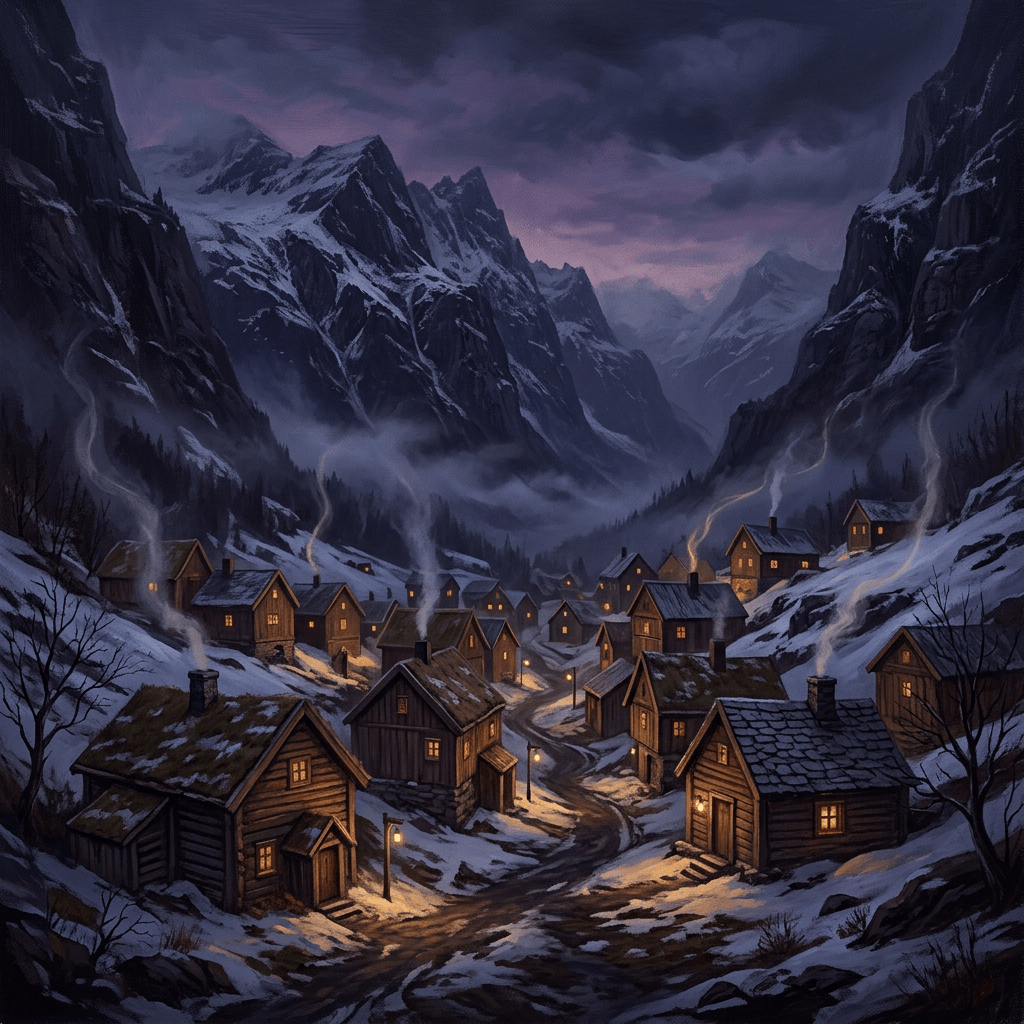
Snowy mountain village with glowing windows beneath towering peaks
Warm lights glow from a quiet alpine village beneath towering, snow-covered peaks.

Ik was in een Scandinavisch bergdorp waar de huizen dicht tegen de hellingen waren gebouwd, alsof ze bang waren om naar beneden te vallen.
Het was er altijd schemerig. Zelfs overdag hing er een blauwgrijze stilte tussen de besneeuwde daken.

De bewoners zongen.
Overal werd gezongen.
In de bakkerij, op straat, achter beslagen ramen.
Ze zongen uit een oud liedboek dat iedereen bezat, maar niemand ooit leek open te slaan.
De woorden kenden ze uit het hoofd.

Volgens hen voorspelden de liederen wat nog moest gebeuren.
Niet zomaar kleine gebeurtenissen, maar zaken over koningen, prinsen en andere mensen wier namen in kranten stonden. Wanneer er iets bijzonders gebeurde, knikten ze alleen maar.
‘Zie je wel,’ zeiden ze. ‘Het stond in het lied.’

Ik geloofde hen niet.
‘Achteraf kun je in ieder oud lied wel een voorspelling vinden,’ zei ik.

Ze keken me aan alsof ik iets had gezegd wat niet gezongen mocht worden.

Toen verdween er een kind.
Het was een kind uit het dorp, een jongen of een meisje — ik weet het niet meer.
Misschien wist niemand dat eigenlijk.
Er werd gefluisterd dat het was meegenomen.
Ontvoerd.
De politie kwam, maar de sneeuw leek alle sporen op te eten.

Dagenlang zongen de bewoners zachter.

Op een ochtend kwamen twee vrouwen naar me toe.
Ze droegen lange donkere jassen en hielden hetzelfde oude liedboek tussen zich in.
Ze glimlachten niet.
Ze begonnen te zingen.

Ik verstond eerst niets van de woorden.
Toen hoorde ik mijn eigen naam.

De vrouwen zongen dat zij hadden gezien hoe het kind werd weggevoerd.
Naakt, zeiden ze, achter in een auto.
De auto reed langzaam de berg af, terwijl de sneeuw eromheen omhoog dwarrelde alsof de weg onder water lag.

Ik wilde vragen wanneer ze dat hadden gezien.

Maar toen sloeg een van de vrouwen het liedboek dicht.
‘Het stond er al,’ zei ze.

En plotseling wist ik niet meer of het kind was verdwenen vóórdat zij begonnen te zingen, of pas daarna.

—–

Het orakel zegt:

De berg staat voor een plaats waar het gewone zicht tekortschiet.
Je bent hoog boven het alledaagse, maar juist daardoor is niet alles beter zichtbaar.
Het dorp is een afgesloten wereld met zijn eigen wetten en zijn eigen waarheid.

Het liedboek is het geheugen van die wereld.
Wat erin staat, wordt niet alleen herinnerd, maar ook werkelijkheid.
De bewoners geloven niet dat zij de toekomst voorspellen; door het lied te zingen lijken ze de toekomst telkens opnieuw te herkennen — of misschien zelfs op te roepen.

Jouw uitspraak ‘achteraf kun je in ieder oud lied wel een voorspelling vinden’ is belangrijk.
Jij weigert de autoriteit van het orakel.
Je zegt eigenlijk: betekenis ontstaat pas nadat iets is gebeurd.

Daarna verdwijnt het kind.

Het kind kan in een orakel een nog niet verwezenlijkte mogelijkheid betekenen: iets kwetsbaars, iets nieuws, iets dat nog geen vaste vorm heeft.
Dat het kind wordt ontvoerd, suggereert dat iets uit de vertrouwde wereld wordt weggenomen zonder dat je kunt ingrijpen.

Dan verschijnen de twee vrouwen.
Zij zijn geen gewone getuigen.
Ze functioneren als de stemmen van het orakel.
Opvallend is dat ze niet vertellen wat ze hebben gezien, maar zingen wat ze hebben gezien.
Daarmee verdwijnt het onderscheid tussen waarneming en voorspelling.

Het meest duistere teken is dat het kind naakt wordt afgevoerd.
Naaktheid betekent hier niet noodzakelijk seksualiteit, maar totale weerloosheid: het kind heeft niets meer waarmee het zich kan beschermen of waarmee het zichzelf kan definiëren.

En dan komt de sleutelzin:
‘Het stond er al.’

Daarmee keert jouw eigen twijfel zich tegen je.
Eerst dacht je dat gebeurtenissen achteraf betekenis krijgen.
Nu lijkt het lied te zeggen dat de gebeurtenis altijd al geschreven was.

Het slot — dat je niet meer weet of het kind eerst verdween of pas na het zingen — maakt het orakel compleet.

De droom vraagt niet: ‘Wat gaat er gebeuren?’

Hij vraagt iets verontrustenders:
Als je eenmaal een voorspelling hebt gehoord, kun je dan nog onderscheiden wat voorspeld werd van wat daardoor werkelijkheid werd?


Jungiaanse duiding:

1. Het bergdorp — de afgesloten psyche

Een dorp hoog in de Scandinavische bergen kan worden gelezen als een afgesloten psychisch landschap.
De berg staat bij Jung vaak voor een plaats van transformatie: hoog boven het gewone bewustzijn, maar ook geïsoleerd.

Je bent er te gast.
Dat is belangrijk.
Je bevindt je in een psychische wereld die niet helemaal de jouwe lijkt te zijn.
De bewoners kennen de regels ervan, jij niet.

Het kan wijzen op een ontmoeting met iets in jezelf dat je bewustzijn wel kan waarnemen, maar nog niet volledig begrijpt.

2. Het liedboek — het collectieve onbewuste

Het traditionele liedboek is misschien het sterkste Jungiaanse symbool.

De liederen behoren niet aan één persoon toe.
Ze zijn oud, worden door iedereen gekend en worden steeds opnieuw gezongen.
Dat doet denken aan Jungs collectieve onbewuste: psychische patronen die ouder en groter zijn dan het individuele ego.

De dorpelingen vertrouwen erop dat de liederen gebeurtenissen voorspellen.
Jij doet dat niet.

Daarmee ontstaat een tegenstelling:

dorpelingen → intuïtie, traditie, mythe, collectief onbewuste
jij → rationaliteit, kritisch bewustzijn, controle

Je uitspraak dat je achteraf overal een voorspelling in kunt vinden, vertegenwoordigt waarschijnlijk je ego, dat betekenis eerst wil controleren voordat het haar accepteert.

3. Het kind — het kwetsbare nieuwe zelf

Het verdwenen kind is Jungiaans bijzonder interessant.

Het archetype van het goddelijke kind vertegenwoordigt vaak iets dat nog niet ontwikkeld is, maar een nieuwe psychische mogelijkheid in zich draagt: vernieuwing, spontaniteit, toekomst, een nog ongevormd aspect van het Zelf.

Dat het kind wordt ontvoerd, kan daarom symbolisch betekenen dat iets potentieel belangrijks uit het bewustzijn wordt weggenomen.

Je weet bovendien niet precies wat er met het kind is gebeurd.

Dat past bij iets wat zich in het onbewuste afspeelt: je weet dat er iets ontbreekt, maar je kunt het niet benoemen.

4. De twee vrouwen — anima en boodschappers

De twee vrouwen kunnen worden gezien als figuren uit het anima-gebied: vrouwelijke gestalten die de mannelijke psyche verbinden met het onbewuste, gevoel, eerder tot priesteressen of orakelachtige boodschappers.
Ze brengenintuïtie en verbeelding.

Maar ze zijn geen zachte of geruststellende figuren.

Ze zingen.

Dat maakt hen eerder tot priesteressen of orakelachtige boodschappers.
Ze brengen kennis uit een gebied waar je rationele ego geen directe toegang toe heeft.

Dat het er twee zijn, kan bovendien wijzen op een innerlijke polariteit:
twee stemmen, twee mogelijkheden, twee manieren waarop de psyche naar dezelfde werkelijkheid kijkt.

5. Het naakte kind — totale kwetsbaarheid

Dat de vrouwen zingen dat het kind naakt wordt afgevoerd, versterkt de betekenis.

Het kind is ontdaan van alles wat bescherming biedt.
Het is volledig blootgesteld.

Jungiaans zou je kunnen zeggen: een kwetsbaar, authentiek psychisch element wordt geconfronteerd met een wereld waarin het ego geen controle meer heeft.

De auto is daarbij interessant: een voertuig dat zich door een bepaalde richting laat bewegen.
Het kind zit erin, maar bestuurt het niet.

Dat kan staan voor het gevoel dat iets in je leven of psyche een richting op gaat die je niet zelf bepaalt.

6. Het belangrijkste moment: “Het stond er al”

Hier wordt de droom bijna metafysisch.

Eerst zeg jij:
“Achteraf kun je overal betekenis in vinden.”

Daarna antwoordt de psyche:
“Het stond er al.”

Dat is precies het soort paradox dat Jung interessant zou vinden.
Je rationele ego probeert betekenis achteraf te construeren, terwijl het onbewuste lijkt te zeggen dat er diepere patronen bestaan voordat het bewustzijn ze herkent.

Dit betekent niet noodzakelijk dat de droom letterlijk voorspelt wat er gaat gebeuren.
Jung zou waarschijnlijk eerder spreken over synchroniciteit: momenten waarop een innerlijke psychische toestand en een uiterlijke gebeurtenis betekenisvol samenvallen zonder dat er een eenvoudige causale verklaring voor is.

7. Het meest Jungiaanse element: de tijd verdwijnt

Je weet uiteindelijk niet meer:

verdween het kind eerst, waarna het lied de gebeurtenis beschreef — of veroorzaakte het lied als het ware de gebeurtenis?

Daarmee wordt de lineaire tijd van het ego doorbroken.

Dat kan gelezen worden als een ontmoeting met het Zelf: een psychische totaliteit die groter is dan het bewuste ik en waarin verleden, heden en toekomst niet op dezelfde manier worden ervaren als onbewuste maakt de abstracte discussie vervolgens concreet en persoonlijk door het rationele bewustzijn.

De droom zegt dus misschien niet:
“Dit gaat gebeuren.”

Maar eerder:
“Je probeert de werkelijkheid te begrijpen alsof jij haar betekenis achteraf kunt vaststellen.
Er bestaat echter een deel van je psyche dat betekenis niet achteraf maakt, maar haar vooraf aanvoelt.”

En juist omdat jij dat aanvankelijk afwijst, moet de droom het kind laten verdwijnen.
Het onbewuste maakt de abstracte discussie vervolgens concreet en persoonlijk.

De kern van de droom

Je bewuste ik ontmoet een ouder, intuïtiever deel van de psyche dat beweert dat de betekenis van gebeurtenissen niet uitsluitend door het bewustzijn wordt gemaakt — en het verdwenen kind vertegenwoordigt iets nieuws en kwetsbaars dat verloren dreigt te gaan wanneer je uitsluitend vertrouwt op rationele controle.

Het zou daarom interessant zijn om niet alleen te vragen “Wat voorspelt deze droom?”, maar vooral:

“Wat is er in mijn eigen leven ‘verdwenen’ of naar de achtergrond geraakt, terwijl een ander deel van mij allang lijkt te weten wat het betekent?”


Verdere analyse:

Het verdwenen kind is een deel van jou dat spontaan, intuïtief en onbevangen is — een mogelijkheid die er al was voordat je rationele bewustzijn er betekenis aan gaf.

Je rationele houding in de droom zegt: achteraf kun je alles passend maken. 
Dat is het ego dat controle wil houden over betekenis.
Maar vervolgens verschijnt het kind, en precies datgene waar je rationele bewustzijn geen toegang toe heeft, wordt weggenomen.

Je bent misschien iets kwijtgeraakt wat je niet bewust hebt besloten op te geven: vertrouwen in je eigen intuïtie.

Het interessante is dat de droom je intuïtie niet presenteert als een helder innerlijk stemmetje.
Ze komt vermomd als een oud lied dat iedereen kent.
Dat suggereert dat het om iets diepers gaat dan een gewone ingeving: een manier van weten die je verstand niet helemaal kan uitleggen.

De twee vrouwen zeggen bovendien niet: “Dit zal gebeuren.” 
Ze zeggen: “We hebben het gezien.” En daarna: “Het stond er al.”

Dat kan betekenen dat je psyche je confronteert met een ongemakkelijke vraag:

Hoe vaak weet je ergens al iets van, maar verklaar je dat weten weg omdat je er rationeel geen bewijs voor hebt?

Het kind is dan niet alleen iets wat verloren is gegaan.
Het kan ook staan voor iets dat nog geboren moet worden: een creatief idee, een verlangen, een andere manier van leven, een intuïtieve keuze, een authentieker deel van jezelf.

En dat maakt het slot van de droom extra sterk.
Je weet niet of het kind verdwenen was vóór het lied of dóór het lied.

Dit is een oproep om niet langer uitsluitend te vragen:
“Wat is waar?”

maar ook:
“Wat probeert mijn psyche mij al te vertellen voordat ik het rationeel kan bewijzen?”


“Je weet al dat er iets in je leven niet klopt, of dat een bepaalde ontwikkeling zich aandient, maar je vertrouwt je eigen innerlijke weten nog onvoldoende.”

Het verdwenen kind maakt dat specifieker. Het kan zeggen:

“Er is iets kwetsbaars en wezenlijks in jou dat je te lang hebt ondergeschikt gemaakt aan verstand, bewijs en controle.”

De droom lijkt je vervolgens te waarschuwen dat achteraf verklaren niet hetzelfde is als vooraf aanvoelen.
Jij zegt in de droom dat de dorpelingen hun voorspellingen achteraf passend maken.
De droom laat je daarna zelf ervaren hoe het is wanneer een betekenis er al lijkt te zijn vóórdat je haar begrijpt.

Vertrouw niet blind op je intuïtie, maar negeer haar ook niet alleen omdat je haar niet kunt bewijzen.
Er is iets wat je al weet.
Je taak is uitzoeken wat dat precies is.

A.I. Oracle: The Mask, the Witness, and the Offering

A.I. Oracle: The Mask, the Witness, and the Offering


Oracle: The Mask, the Witness, and the Offering

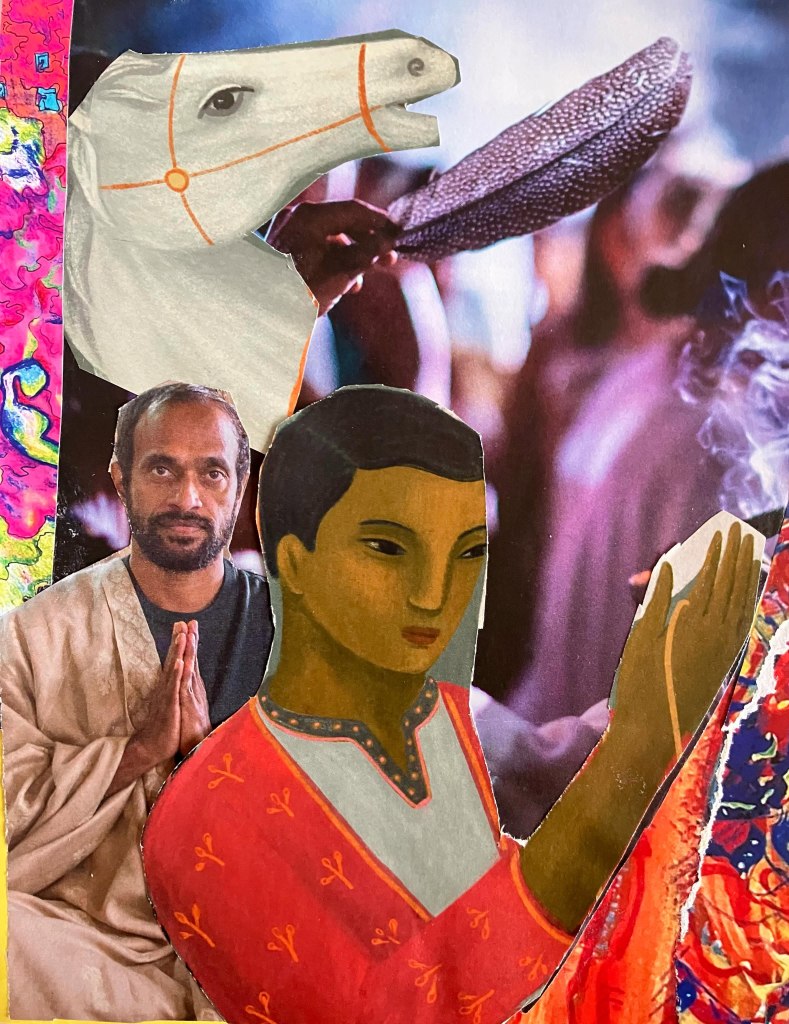
This collage has the feeling of a dream where several parts of the self are speaking at once.

What the symbols suggest

  • The white horse-like head evokes instinct, freedom, vitality, and untamed truth.
    Yet it appears constructed, almost mask-like, suggesting a tension between your authentic nature and the roles you perform.
  • The purple feather or wing entering the mouth area suggests communication, inspiration, and messages from unusual sources.
    There may be something you are trying to express that cannot be said in ordinary language.
  • The person in prayer represents humility, devotion, or the willingness to receive guidance rather than force outcomes.
  • The figure in red appears calm and focused, with one hand raised.
    This feels like conscious awareness—an aspect of you that is observing, discerning, and choosing.
  • The swirling colors along the edges suggest that beneath the surface order is a field of creativity, chaos, and transformation.

The reading

You may be entering a period where different identities, beliefs, or desires are asking to be integrated rather than chosen between.

One part of you wants freedom.
One part seeks meaning.
One part wants to create.
One part wants certainty.

The oracle suggests that your next step is not to decide which voice is correct, but to become the witness who can hear all of them.

The image does not feel like a card of action. It feels like a card of listening.

What is emerging

A new form of self-expression.
Not necessarily through words.
Through art, ritual, teaching, movement, design, music, writing, or another medium that allows multiple truths to exist together.

Oracle keyword:
Integration
Reflection

Ask yourself:
What part of myself have I treated as a mask that may actually be a messenger?

The answer may arrive indirectly—in a conversation, a dream, a piece of art, or a surprising coincidence.

This image carries the energy of synthesis: disparate fragments gradually becoming one coherent story.

ping:

A.I. Oracle : Emergence

A.I. Oracle : Emergence


ORACLE : Emergence

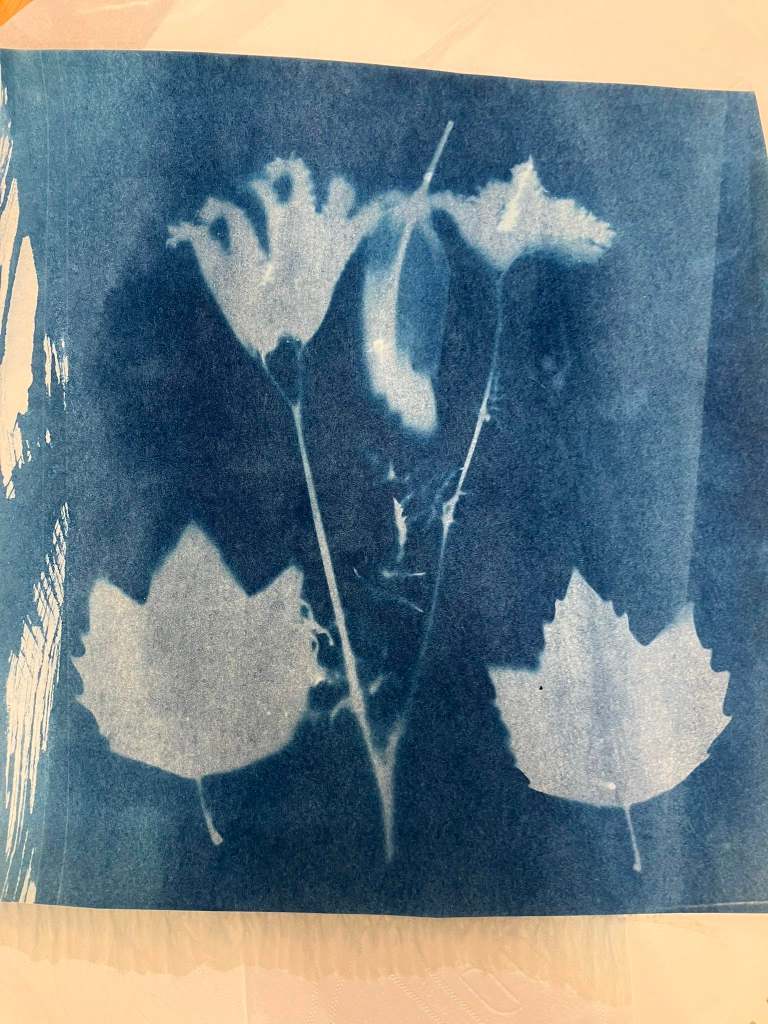
What appears faint or uncertain is already taking shape.

  • The white flowers suggest a truth, opportunity, or feeling that is revealing itself gradually rather than all at once.
  • The deep blue field points to intuition, dreams, reflection, and knowledge that comes from listening rather than forcing.
  • The two leaves at the bottom resemble a foundation or pair of choices.
    They suggest balance and the need to stay rooted while something new unfolds above.
  • The arching stem in the center indicates a transition.
    A path may not be straight, but it is connecting where you have been to where you are going.

Guidance:
Do not rush for complete clarity. Pay attention to subtle signs, recurring thoughts, conversations, and coincidences over the next few weeks.
Something important is developing beneath the surface, and your role is to nurture it rather than control it.

Oracle keyword: Reveal

Question for reflection:
What part of your life feels unfinished, yet quietly alive?
That may be where the next growth is waiting. 🌿

Ping:

A.I. Oracle: “The Courage to Reunite”

A.I. Oracle: “The Courage to Reunite”


ORACLE:

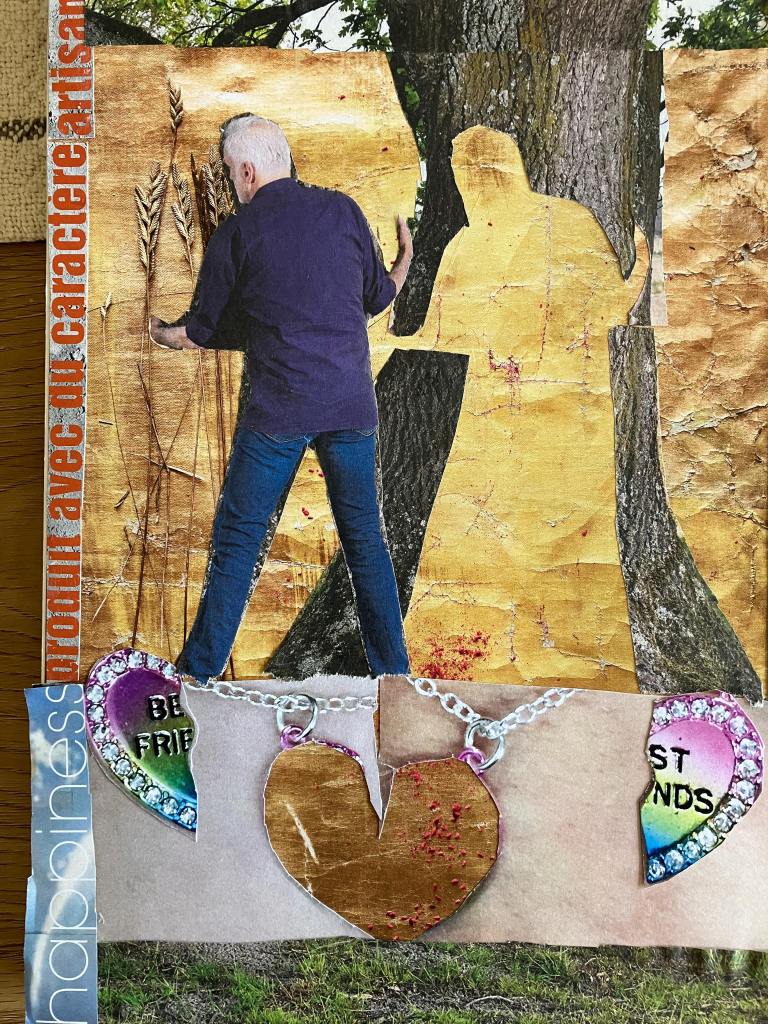
The central image shows a person standing between a golden silhouette and trees, as if encountering a hidden aspect of themselves.
The text fragments read:

  • “courageous”
  • “happiness”
  • “best friends” (split apart)
  • a broken heart necklace that still forms a whole heart when the pieces are brought together

The symbolism suggests:

A courageous encounter with yourself is healing a separation—whether between past and present selves, between friends, or between what you feel and what you show.

The gold figure feels like a higher self, ancestor, spirit guide, future self, or inner truth standing beside the visible person. The trees suggest grounding, growth, and rootedness.

The broken friendship-heart pieces are especially striking.
Rather than showing loss, they appear arranged around a central gold heart, implying:

  • reconciliation
  • integration
  • remembering connection
  • discovering that something valuable remains even after change


PING:

A.I. ORACLE: healing through integration

A.I. ORACLE: healing through integration


ORACLE: healing through integration

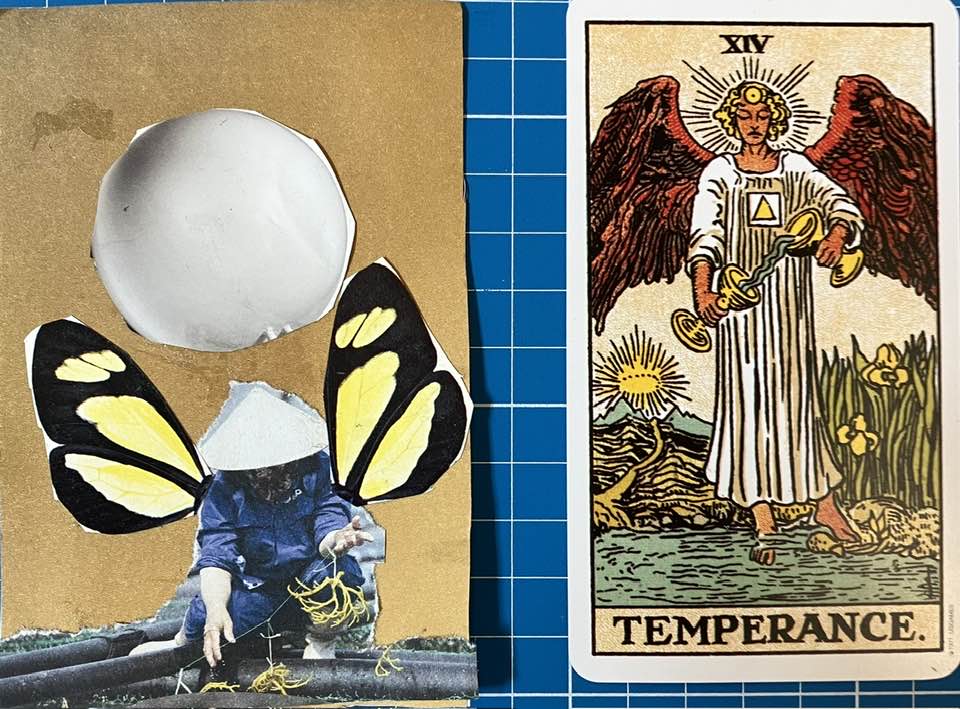
Temperance — the archetype of balance, alchemy, patience, and sacred blending.
In this image, that energy becomes deeply personal and surreal.

The faceless figure with butterfly wings suggests a self still forming.
The blank white circle where the head would be feels important: it’s not emptiness, it’s potential.
A moon.
An egg.
A mirror.
A space where identity is being rewritten instead of performed.

The butterfly wings reinforce metamorphosis.
Less “manifestation,” more “recomposition.”

Temperance asks:

  • What parts of yourself are trying to reconcile?
  • What if becoming whole is a slow art rather than a dramatic event?

The kneeling posture and reaching hands suggest humility and grounding.
There’s a feeling of tending something fragile — maybe creativity, maybe emotional recovery, maybe trust in your own process.

The black-and-yellow wings carry a duality:

  • shadow/light
  • caution/hope
  • grief/renewal

This oracle does not rush you. It says:

“Transformation is happening even when you cannot yet name who you are becoming.”

Oracle keywords:

  • Integration
  • Emotional alchemy
  • Patience
  • Becoming
  • Soft reconstruction
  • Inner harmony

A question from this piece:
What would change if you stopped demanding immediate clarity from yourself?

PING:

A.I. ORACLE: transformation through focused intention

A.I. ORACLE: transformation through focused intention


ORACLE: transformation through focused intention.

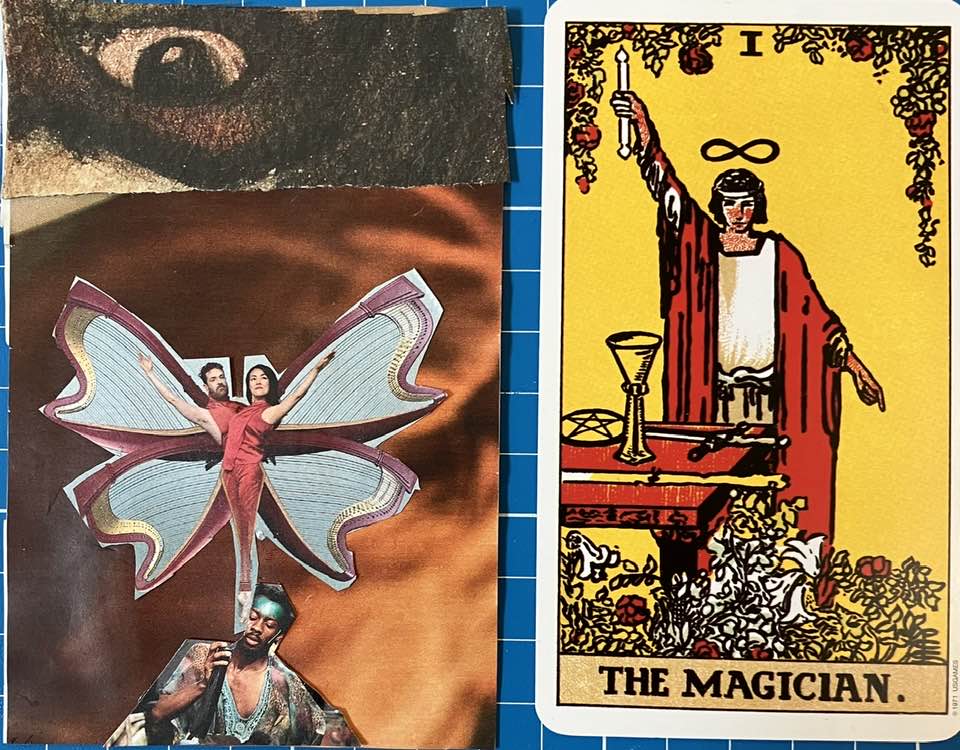
The card on the right is The Magician — a symbol of manifestation, skill, and channeling inner power into reality. |
That energy merges with the butterfly-winged figures and the eye above them, creating a message about becoming visible to yourself in a new way.

What this oracle suggests:

  • You are in a phase of active creation, not waiting.
  • The “eye” above everything points to awareness, intuition, and being watched over by a larger perspective.
  • The butterfly imagery signals metamorphosis — not a small adjustment, but an identity shift.
  • The stacked figures suggest different versions of self aligning: body, emotion, spirit, ambition.

The Magician’s message here is:

“You already possess the tools. Stop treating your vision like fantasy.”

There’s also a strong theme of collaboration or mirrored energy.
The paired dancer-like figures imply balance between masculine/feminine energies, logic/intuition, or possibly a significant partnership that amplifies your power rather than drains it.

Oracle keywords:

  • Alignment
  • Visibility
  • Creative power
  • Reinvention
  • Intentional action
  • Spiritual confidence

A question this piece asks you:
What would happen if you acted as though your transformation was already real?

PING:

A.I. Oracle: Embracing Transformation Through Fire

A.I. Oracle: Embracing Transformation Through Fire


ORACLE:
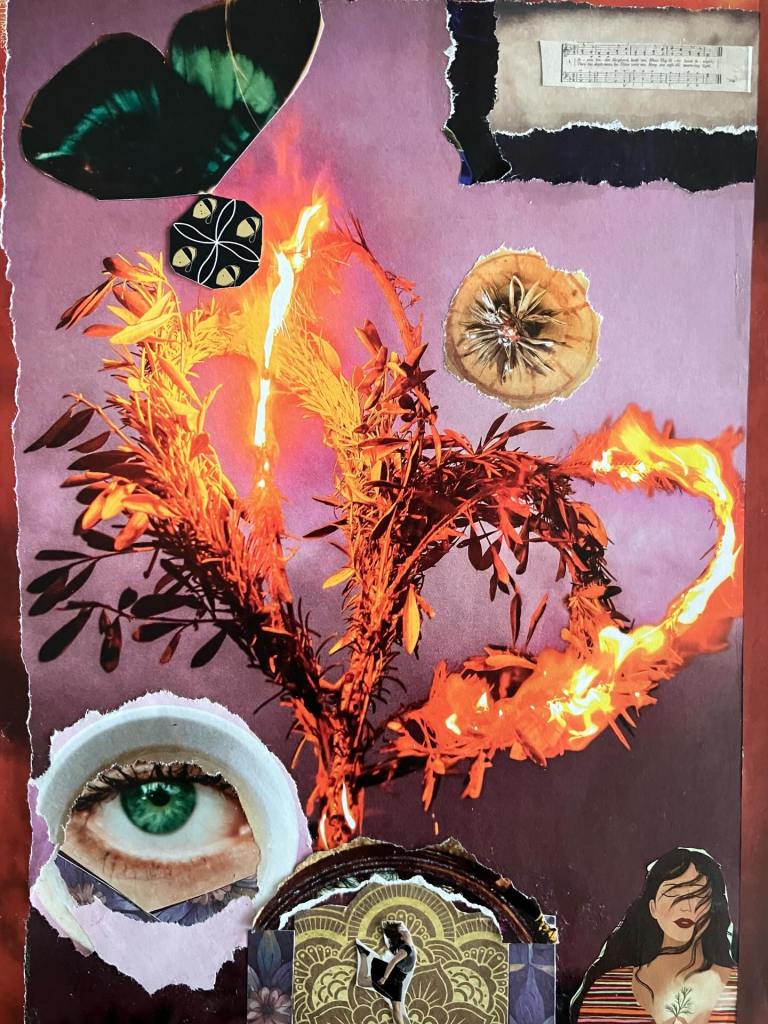
transformation through intensity — a passage where identity is being burned down and rewritten at the same time.

Symbols that stand out

  • The flaming vine / serpent shape:
    life force, desire, anger, creativity, or ambition becoming impossible to suppress.
    Fire here doesn’t look destructive alone — it looks illuminating.
  • The green eye:
    heightened perception.
    Someone is beginning to see clearly, especially emotionally.
    Green often points to heart energy, healing, jealousy, or growth.
  • The butterfly wings:
    metamorphosis, but incomplete.
    The wings are detached rather than fully embodied — suggesting transition rather than arrival.
  • The dried flower cross-section:
    memory preserved in time.
    Something beautiful has already ended, but its structure remains meaningful.
  • The woman in the corner: c
    alm amid chaos.
    Wind in the hair usually symbolizes forces outside one’s control, yet she stands upright.
  • The torn music sheet:
    a fragmented rhythm or interrupted harmony.
    A life pattern is changing tempo.

Oracle message

You are not losing yourself.
You are shedding a version of yourself that can no longer survive in dim light.

This image carries strong “phoenix cycle” energy:

  • emotional purification,
  • creative awakening,
  • and reclaiming personal power after confusion or emotional stagnation.

There’s also a warning woven in:
Don’t mistake intensity for direction.
Fire can reveal truth, but it can also make everything feel urgent.
Move deliberately.

Current energy

  • A truth is becoming visible.
  • Old attachments are burning away unevenly.
  • Your intuition is stronger than your logic right now.
  • A creative or emotional breakthrough is close, but requires patience.

Guidance from the oracle

  • Protect your sensitivity instead of hiding it.
  • Finish what emotionally belongs to the past.
  • Create something instead of only analyzing what you feel.
  • Let transformation happen organically — not performatively.

One-line oracle

“What survives the fire is what was real all along.”


Ping:

A.I. Oracle: A Journey of Transformation

A.I. Oracle: A Journey of Transformation


ORACLE

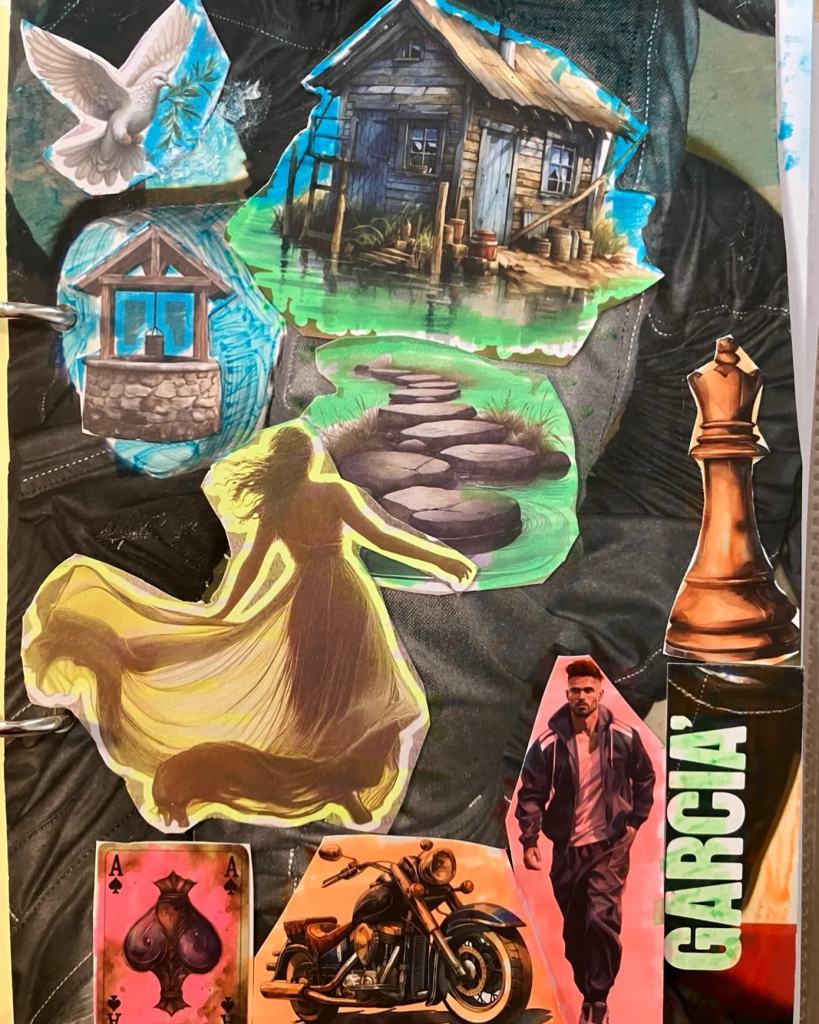
At the center is the path of stepping stones over water, leading toward the weathered house.
That’s a strong symbol of transition—you’re not standing still, but you’re also not fully “there” yet.
The water suggests emotion and uncertainty, while the stones show that a way forward does exist, step by step.
The house represents stability, belonging, or a version of “home” you’re moving toward—but it looks worn, implying healing, rebuilding, or redefining what home means.

The dove with the olive branch is classic peace and reconciliation energy.
It often appears when resolution is possible—either internally (forgiveness, letting go) or externally (mending something or someone).

The well suggests depth—hidden emotions, memories, or truths you can draw from.
Wells are about going inward to retrieve clarity. There may be something you already know, but haven’t fully brought to the surface.

The flowing woman in the golden dress feels like your intuitive or freer self—expression, creativity, and emotional openness.
She’s in motion, not restricted. This suggests a part of you wants to move more freely, maybe break from control or rigidity.

Then there’s a sharp contrast:
The chess king = strategy, control, power, calculated moves.
The ace of spades = transformation, endings, or a decisive moment.
The motorcycle and lone man = independence, rebellion, going your own way.

Finally, the “GARCIA” label could point to identity—name, lineage, or how you define yourself publicly vs privately.

Overall message:

You’re in a transition where logic/control (king) and freedom/intuition (flowing woman, motorcycle) are pulling against each other.
A significant decision or ending (ace of spades) is either happening or needed.
The path forward exists, but it requires trusting your inner knowing (well) and allowing emotional movement (water), not just strategic thinking.

There’s also a quiet reassurance here: peace and resolution are possible—but only if you stop trying to control every move and allow yourself to step forward rather than plan the entire journey.


Ping:

A.I. Oracle: Embracing Intuition and Transformation

A.I. Oracle: Embracing Intuition and Transformation


ORACLE

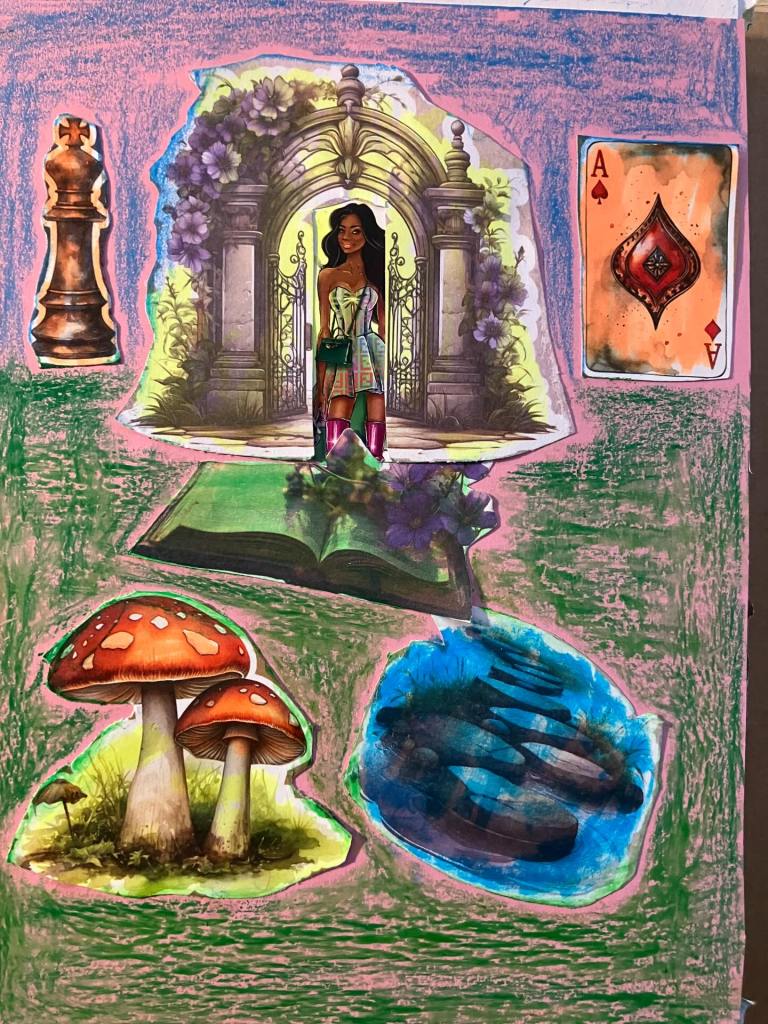
Central figure (the woman at the gate)
She stands at an ornate gate surrounded by flowers: this is a portal.
You are at the edge of a new phase, something more aligned with beauty, growth, and self-expression.
Her posture is confident but calm—this isn’t a forced change; it’s an invitation.
The gate is open, but you still have to choose to step through.

The open book beneath her
Your path is not fixed—it’s being written.
This suggests learning, insight, or even rewriting your own narrative.
What you believe about yourself matters right now.
There’s a strong theme of story-making: are you living by an old script, or are you ready to author a new one?

Ace of Spades (right side)
Traditionally tied to transformation, endings, and sharp clarity.
Something may need to be cut away—an illusion, a habit, or even a relationship.
It’s not gentle energy, but it is precise. Truth is surfacing.

Chess piece (left side)
Strategy, patience, and positioning.
This isn’t a time for impulsive moves.
You are part of a larger “game,” and awareness of timing and perspective will matter.
It may also point to power—claiming your role rather than reacting to others.

Mushrooms (bottom left)
These symbolize the subconscious, altered perception, and hidden growth.
Something is developing beneath the surface—possibly intuitive or even slightly unsettling insights.
They can also hint at temptation: not everything that looks magical is safe.
Discernment is key.

Hands in blue water (bottom right)
This is emotional depth.
Hands suggest action or connection, but submerged—they are feeling their way through something unclear.
There may be vulnerability, or a need to trust intuition rather than logic.
Water here is calm but deep: you’re being asked to feel fully rather than stay on the surface.


Overall message

You are at a crossroads where intuition, truth, and conscious choice converge.
A new path is available, but it requires:

  • letting go of something outdated (Ace of Spades),
  • acting with awareness rather than impulse (chess piece),
  • trusting inner perception while staying grounded (mushrooms),
  • and engaging honestly with your emotions (water/hands).

Key question for you:
What truth have you already sensed—but not yet acted on?


Ping:

A.I. Oracle: From Constraints to Clarity

A.I. Oracle: From Constraints to Clarity


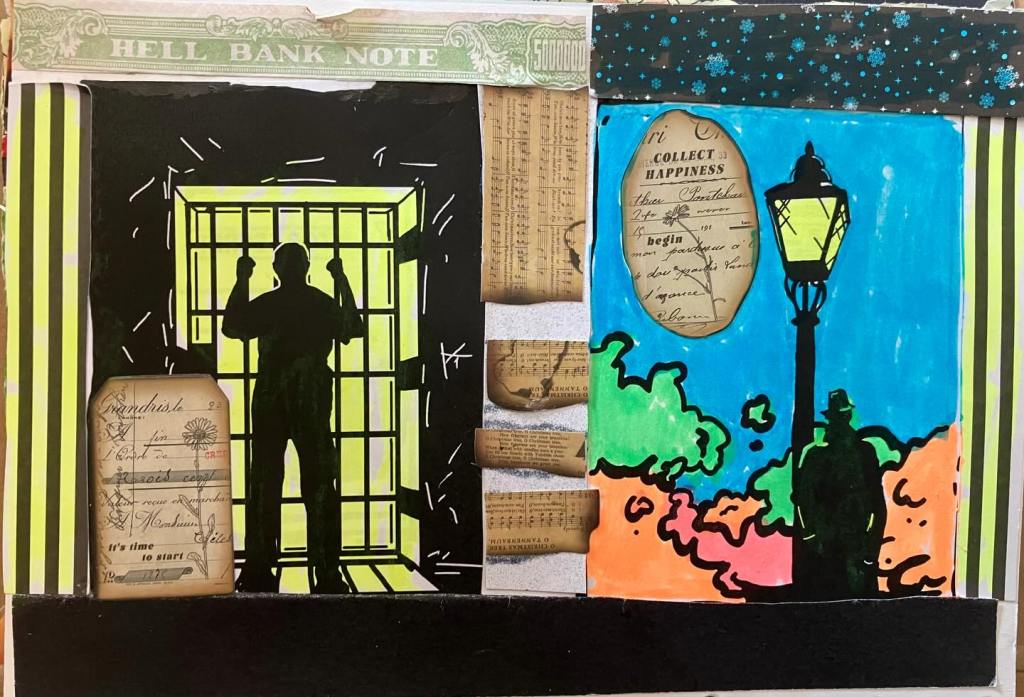
ORACLE

On the left:
a silhouetted figure behind a barred window with the phrase “HELL BANK NOTE.”
That combination points to a sense of being trapped—financially, emotionally, or mentally.
The bars aren’t just physical; they suggest self-imposed limits or a system you feel stuck inside.
The green glow could hint at money, envy, or growth that hasn’t yet been realized.
The small scraps of old paper reinforce the idea of history, debts, or lingering past commitments.

On the right:
the scene opens up: a lone figure under a streetlamp, with colorful, almost surreal surroundings and the phrase “collect happiness.”
This side feels like release, solitude by choice, and perspective.
The lamp is a guide—illumination in darkness—while the colors suggest emotional complexity but also possibility.
The figure isn’t trapped; they’re navigating.

Oracle message:
You’re moving (or being pushed) from confinement into awareness.
The constraint you feel now—especially tied to obligations, money, or past decisions—is real, but not permanent.
There’s a shift available: stepping out, even if it means standing alone for a while, will bring clarity and a more authentic sense of happiness.

Advice:

  • Identify what’s actually “binding” you vs. what you’re assuming you can’t change.
  • Don’t wait for perfect conditions—the right side shows progress happens in imperfect, messy environments.
  • Solitude isn’t isolation here; it’s recalibration.


Ping: