Tag: myth

Necronomicon & Chaosmagie

Necronomicon & Chaosmagie


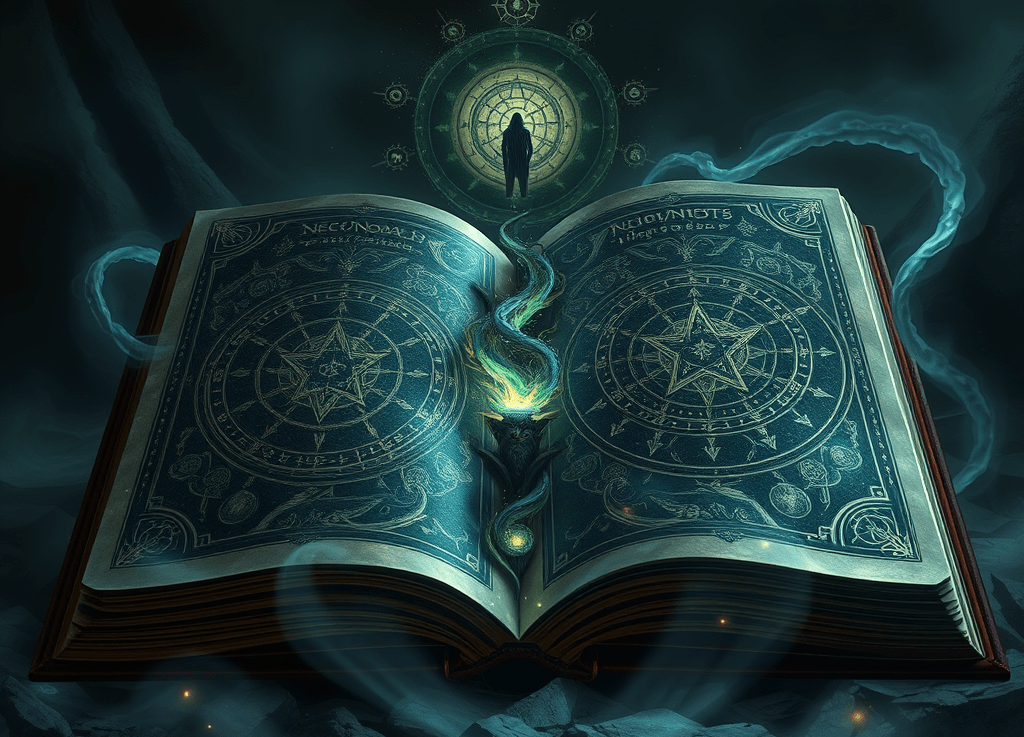
De Necronomicon is een fictief boek in de werken van de horror-schrijver H.P. Lovecraft.
Zie: http://en.wikipedia.org/wiki/Necronomicon

Echter, er bestaat een stroming in de magie, de zogenaamde Chaosmagie, die in principe in staat is om gebruik te maken van fictieve magische litteratuur om magie te bedrijven.

Het basisprincipe van chaosmagie is namelijk dat intentie & concentratie de meest belangrijke ingredienten zijn, het ritueel op zich is slechts een hulpmiddel.

Hoewel ik me heel goed kan vinden in de basisprincipes van Chaos-magie, heb ik zo mijn vraagtekens bij het gebruiken van de Ctulhu-mythos van Lovecraft, aangezien die bijzonder grote aandacht schenkt aan het oproepen van schaduw-entiteiten.

La Belle Dame Sans Merci

La Belle Dame Sans Merci


I

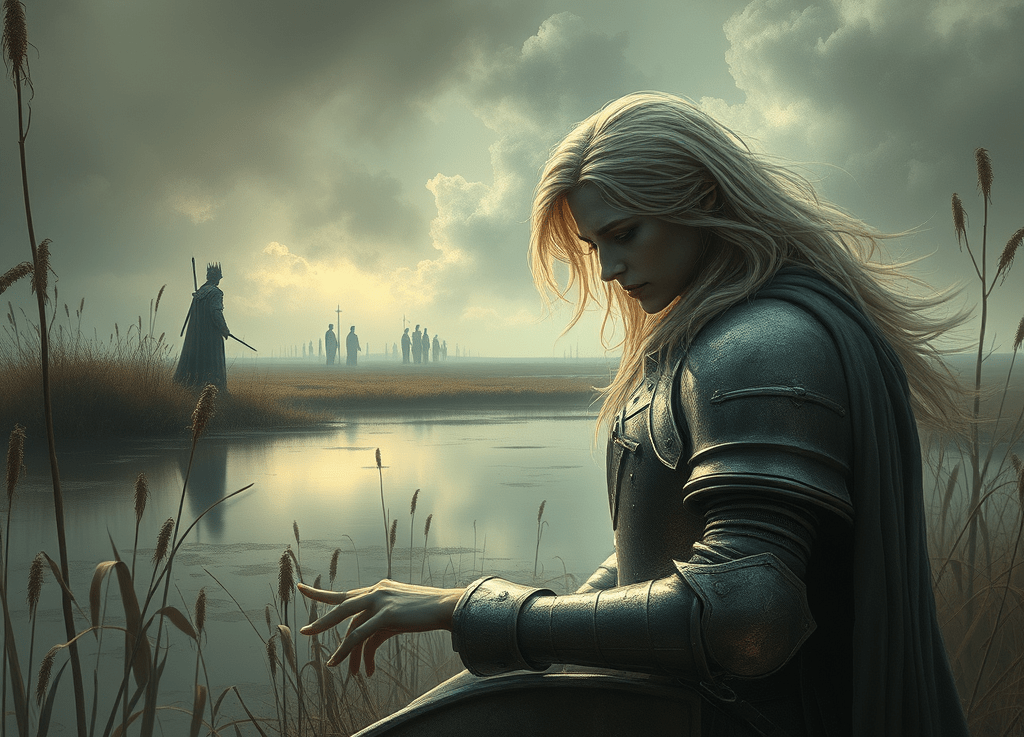
Oh what can ail thee, knight-at-arms,
Alone and palely loitering?
The sedge has withered from the lake,
And no birds sing.

                          II


Oh what can ail thee, knight-at-arms,
So haggard and so woe-begone?
The squirrel’s granary is full,
And the harvest’s done.

                          III


I see a lily on thy brow,
With anguish moist and fever-dew,
And on thy cheeks a fading rose
Fast withereth too.

                          IV


I met a lady in the meads,
Full beautiful – a faery’s child,
Her hair was long, her foot was light,
And her eyes were wild.

                          V


I made a garland for her head,
And bracelets too, and fragrant zone;
She looked at me as she did love,
And made sweet moan.

                          VI


I set her on my pacing steed,
And nothing else saw all day long,
For sidelong would she bend, and sing
A faery’s song.

                          VII

She found me roots of relish sweet,
And honey wild, and manna-dew,
And sure in language strange she said –
‘I love thee true’.

                          VIII


She took me to her elfin grot,
And there she wept and sighed full sore,
And there I shut her wild wild eyes
With kisses four.

                          IX


And there she lulled me asleep
And there I dreamed – Ah! woe betide! –
The latest dream I ever dreamt
On the cold hill side.

                          X


I saw pale kings and princes too,
Pale warriors, death-pale were they all;
They cried – ‘La Belle Dame sans Merci
Hath thee in thrall!’

                          XI


I saw their starved lips in the gloam,
With horrid warning gaped wide,
And I awoke and found me here,
On the cold hill’s side.

                          XII


And this is why I sojourn here
Alone and palely loitering,
Though the sedge is withered from the lake,
And no birds sing.

John Keats

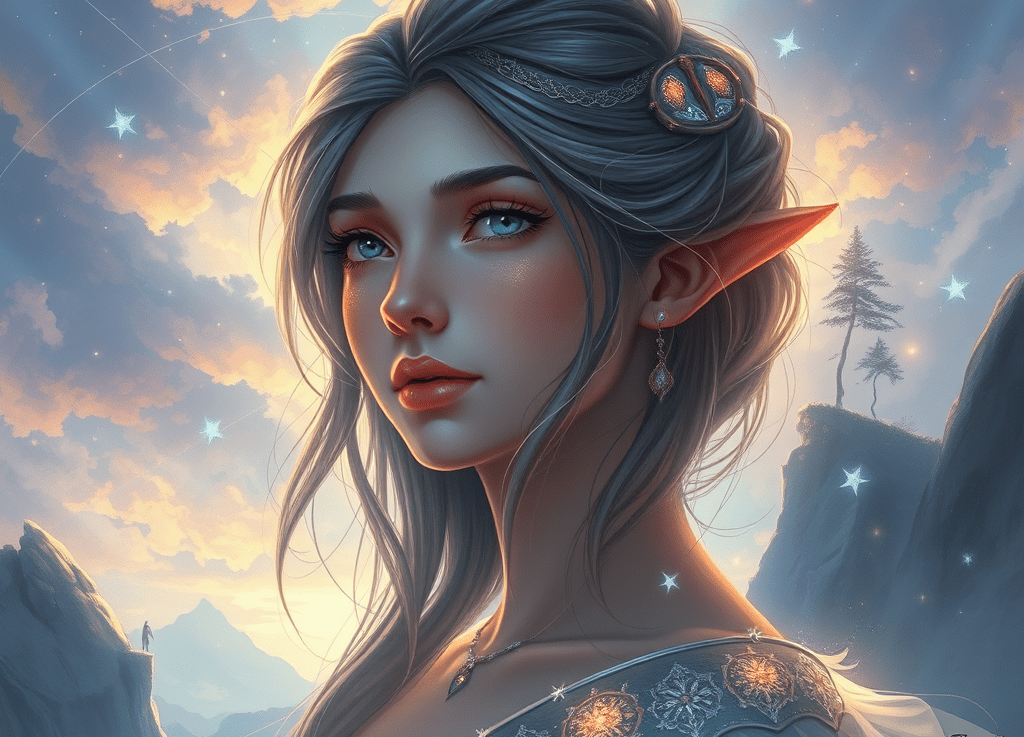
the King of Elflands Daughter

the King of Elflands Daughter


Who are you, he said,
    to the woman before his eyes
    I did not see you coming,
    and so I’m quite surprised
    To find that I can see the sky,
    looking through your eyes
    
    I cam across the void, said she,
    Yes, I’m a stranger here
    And I have need this moment,
    to whisper in your ear
    A favour I would ask of thee,
    and so will you draw near?
    
    She breathed herself like whiskey
    into his waiting brain,
    All in amaze he turned and asked
    the lady of her name,
    You know me from your waking dreams
    of when you were a boy,
    I am the king of Elfland’s Daughter.
    
    Now friend, will you drop everything
    and come away with me,
    Along the rocky cliffs so high
    and then across the sea
    Come and join our faerie band
    in our dance among the trees
    
    I will, he said, and took her hand
    and so they journeyed far,
    And called a dance together
    between the daylight and the dark,
    And if you should go seeking them
    you’ll find them dancing still
    
    
    She breathed herself like whiskey
    into his waiting heart,
    And in the end it mattered not
    they came from worlds apart,
    He a mortal man and she
    quite something else again,
    She was the King of Elfland’s Daughter.

Mark Unger

Atlantis

Atlantis


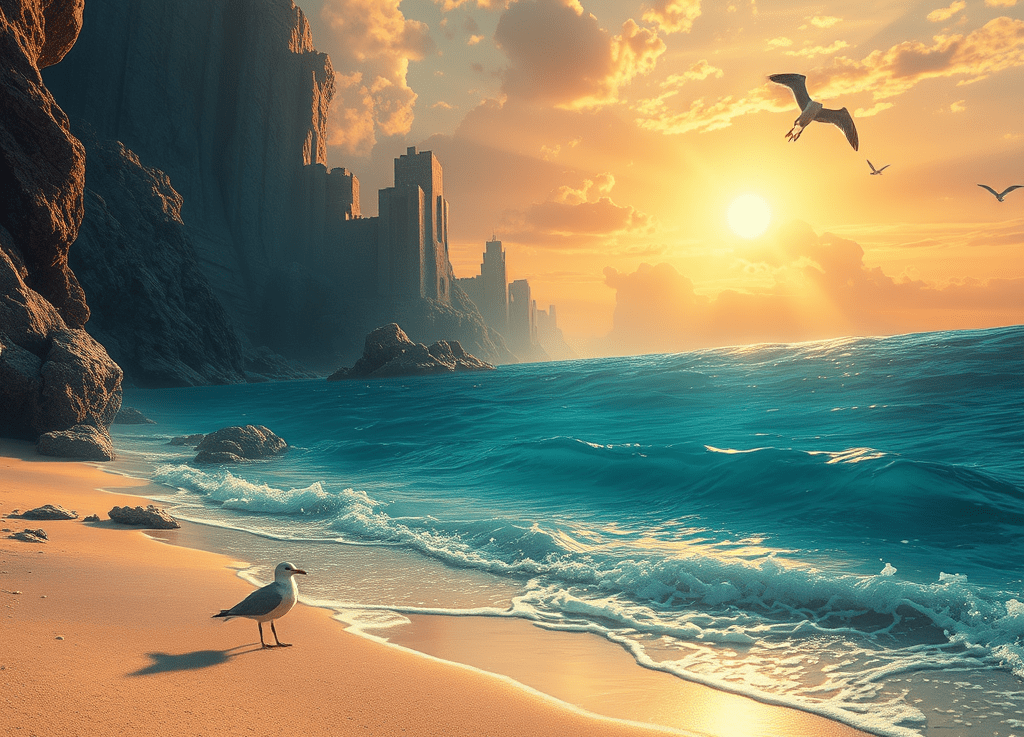
De zoute zeewind slijpt de duinen plat
En duwt de argonauten door ‘t zilte nat naar Atlantis
De morgen schrijft z’n rimpels in ‘t zand
De vroege branding schuimbekt tegen ‘t strand van Atlantis
Even zacht zonk ik in jouw armen en ben verdronken in jou
Ik ben verdronken in jou

Verschrikt ontwaakt de zeemeeuw uit z’n rust
De eerste vrouwen bouwen al hun nesten aan de kust van Atlantis
Een Attalanta vlindert langs de zee
de zachte wind brengt zeven argonauten aan de reep van Atlantis
Even zacht zonk ik in jouw armen en ben verdronken in jou
Ik ben verdronken in jou

De dag krijst als een pasgeboren kind
En uit de eb rijst langzaam ‘t trotse labyrinth van Atlantis
Neptunus stuurt z’n vrouwen naar ‘t strand
Zacht vouwen ze zich open voor de zeelui, in ‘t zand van Atlantis
Even zacht zonk ik in jouw armen en ben verdronken in jou
Ik ben verdronken in jou

Ze slapen in de golven van een vrouw
De nacht brengt weer de vloed en ‘t water spiegelt blauw boven Atlantis
De zoute zeewind strijkt de rimpels glad
Bedekt de argonauten, verdronken in de stad van Atlantis
Even zacht zonk ik in jouw armen en ben verdronken in jou
Ik ben verdronken in jou, in jou, in jou

Elly & Rikkert

Droomtijd

Droomtijd


Mijn visie over de Droomtijd is beinvloed door het Australische idee van Dreamtime:

Het komt er op neer dat alles (subjectief/objectief, verleden/heden/toekomst) tegelijkertijd aanwezig is in de Droomtijd.

Lineaire tijd is in deze visie een constructie van ons wakend bewustzijn.

Alles wat ooit is bedacht of bedacht zal worden is te vinden in Droomtijd, er zijn vele uitgestrekte gebieden, waarvan weerspiegelingen zijn terug te vinden in mythen, sagen, sprookjes.

Volgens mij is dat de plek waar je mythische landen terugvindt: Atlantis, Lemuria, Avalon, Camelot, Shamballa, Shangri-La, Firdauz; maar ook de diverse hemelen en hellen uit allerlei religies.

Droomtijd is de plek waar alles vandaan komt en naar terugkeert.

Erlkoenig

Erlkoenig


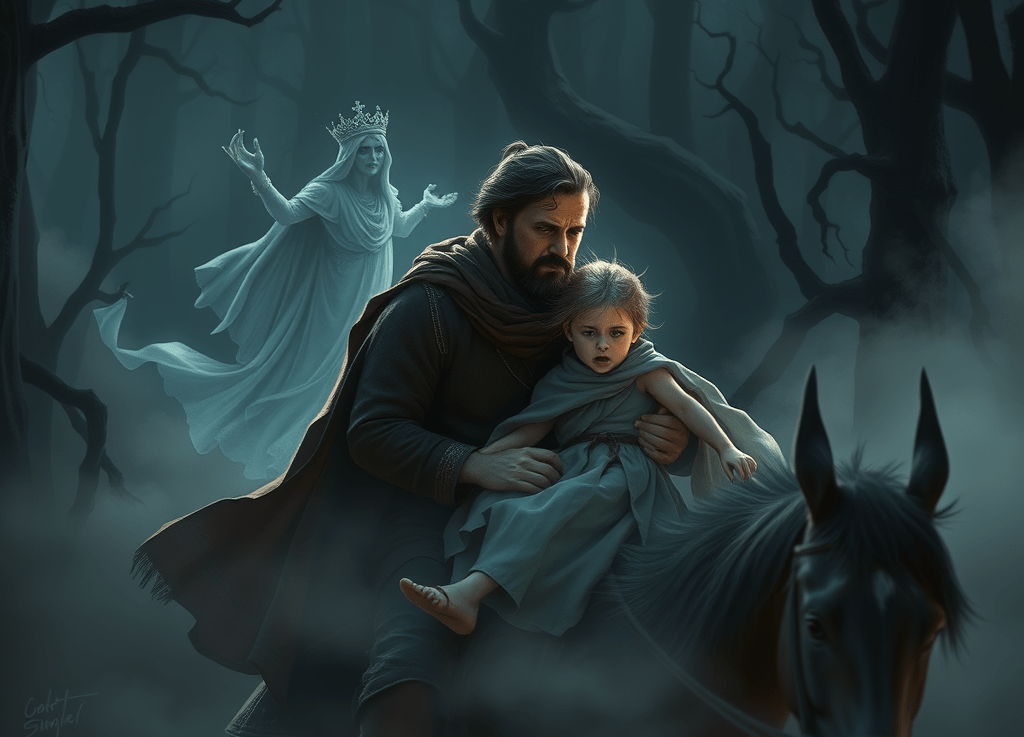
Wer reitet so spät durch Nacht und Wind?
Es ist der Vater mit seinem Kind;
Er hat den Knaben wohl in dem Arm,
Er faßt ihn sicher, er hält ihn warm.

“Mein Sohn, was birgst du so bang dein Gesicht?”
“Siehst, Vater, du den Erlkönig nicht?
Den Erlenkönig mit Kron und Schweif?”
“Mein Sohn, es ist ein Nebelstreif.”‘

“Du liebes Kind, komm, geh mit mir!
Gar schöne Spiele spiel’ ich mit dir;
Manch’ bunte Blumen sind an dem Strand,
Meine Mutter hat manch gülden Gewand.”

“Mein Vater, mein Vater, und hörest du nicht,
Was Erlenkönig mir leise verspricht?”
“Sei ruhig, bleibe ruhig, mein Kind;
In dürren Blättern säuselt der Wind.”

“Willst, feiner Knabe, du mit mir gehn?
Meine Töchter sollen dich warten schön;
Meine Töchter führen den nächtlichen Reihn,
Und wiegen und tanzen und singen dich ein.”

“Mein Vater, mein Vater, und siehst du nicht dort
Erlkönigs Töchter am düstern Ort?”
“Mein Sohn, mein Sohn, ich seh es genau:
Es scheinen die alten Weiden so grau.”

“Ich liebe dich, mich reizt deine schöne Gestalt;
Und bist du nicht willig, so brauch ich Gewalt.”
“Mein Vater, mein Vater, jetzt faßt er mich an!
Erlkönig hat mir ein Leids getan!”

Dem Vater grauset’s, er reitet geschwind,
Er hält in Armen das ächzende Kind,
Erreicht den Hof mit Müh’ und Not;
In seinen Armen das Kind war tot.

Goethe

Amergin’s song

Amergin’s song


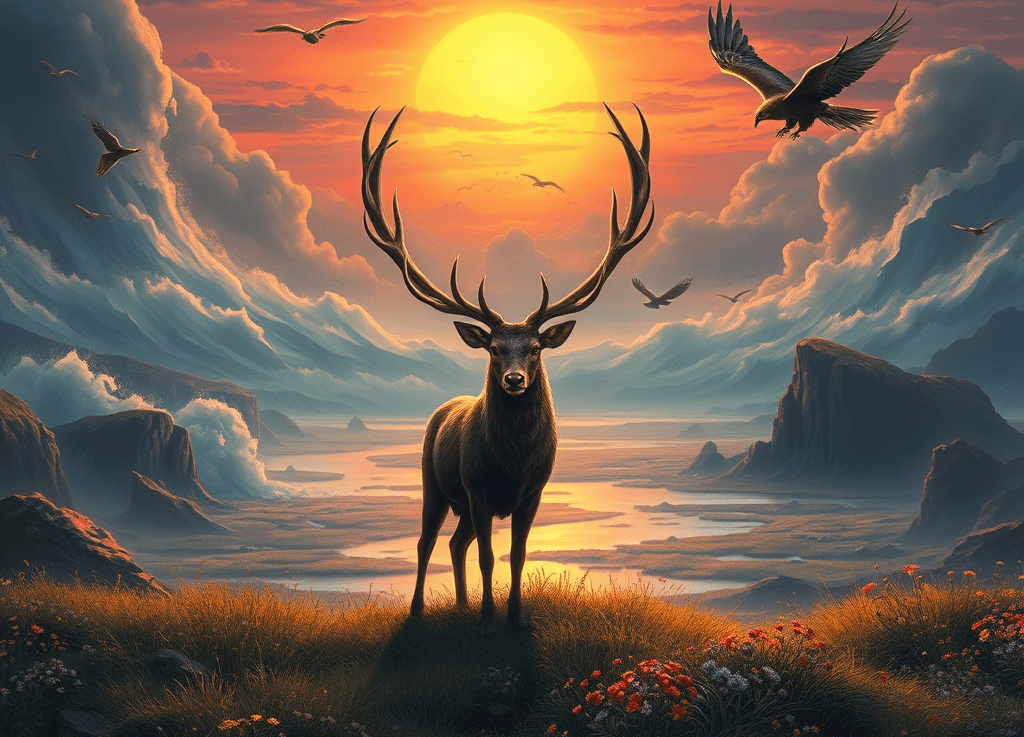
I am a Stag: of seven tines
I am a Flood: across a plain
I am a Wind: upon the waves
I am a Tear: the sun lets fall
I am a Hawk: above the cliff
I am a Thorn: beneath the nail
I am a Wonder: among flowers
I am a Wizard: who but I
sets the cool head aflame?

I am a Spear: that roars for blood
I am a Salmon: in a pool
I am a Lure: from Paradise
I am a Hill: where poets walk
I am a Boar: ruthless and red
I am a Breaker: threatening doom
I am a Tide: that drags to death
I am an Infant: who but I
peeps from the unhewn dolman arch?

I am the Womb: of every holt
I am the Blaze: on every hill
I am the Queen: of every hive
I am the Shield: for every head
I am the tomb: of every hope

John Barleycorn: A Ballad

John Barleycorn: A Ballad


There was three kings into the east,
Three kings both great and high,
And they hae sworn a solemn oath
John Barleycorn should die.

They took a plough and plough’d him down,
Put clods upon his head,
And they hae sworn a solemn oath
John Barleycorn was dead.

But the cheerful Spring came kindly on,
And show’rs began to fall;
John Barleycorn got up again,
And sore surpris’d them all.

The sultry suns of Summer came,
And he grew thick and strong;
His head weel arm’d wi’ pointed spears,
That no one should him wrong.

The sober Autumn enter’d mild,
When he grew wan and pale;
His bending joints and drooping head
Show’d he began to fail.

His colour sicken’d more and more,
He faded into age;
And then his enemies began
To show their deadly rage.

They’ve taen a weapon, long and sharp,
And cut him by the knee;
Then tied him fast upon a cart,
Like a rogue for forgerie.

They laid him down upon his back,
And cudgell’d him full sore;
They hung him up before the storm,
And turned him o’er and o’er.

They filled up a darksome pit
With water to the brim;
They heaved in John Barleycorn,
There let him sink or swim.

They laid him out upon the floor,
To work him farther woe;
And still, as signs of life appear’d,
They toss’d him to and fro.

They wasted, o’er a scorching flame,
The marrow of his bones;
But a miller us’d him worst of all,
For he crush’d him between two stones.

And they hae taen his very heart’s blood,
And drank it round and round;
And still the more and more they drank,
Their joy did more abound.

John Barleycorn was a hero bold,
Of noble enterprise;
For if you do but taste his blood,
‘Twill make your courage rise.

‘Twill make a man forget his woe;
‘Twill heighten all his joy;
‘Twill make the widow’s heart to sing,
Tho’ the tear were in her eye.

Then let us toast John Barleycorn,
Each man a glass in hand;
And may his great posterity
Ne’er fail in old Scotland!

Robert Burns, 1782

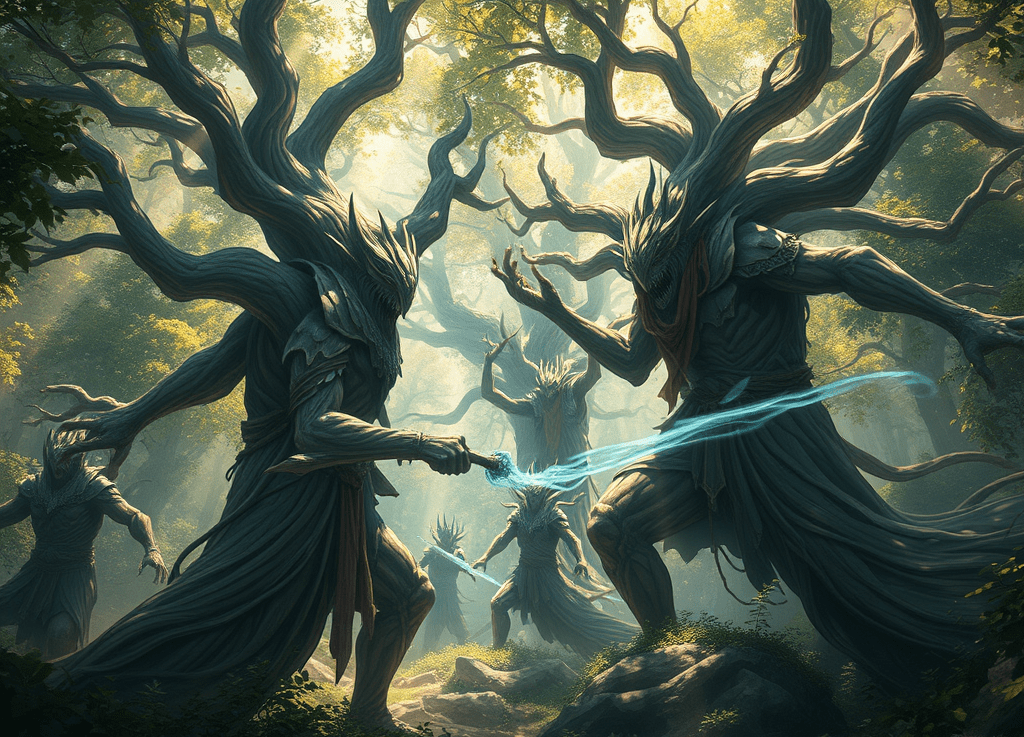
The Battle of the Trees

The Battle of the Trees


I have been in many shapes,
Before I attained a congenial form.
I have been a narrow blade of a sword.
(I will believe it when it appears.)
I have been a drop in the air.
I have been a shining Star.
I have been a word in a book.
I have been a book originally.
I have been a light in a lantern.
A year and a half.
I have been a bridge for passing over
Three-score rivers.
I have journeyed as an eagle.
I have been a boat on the sea.
I have been a director in battle.
I have been the string of a child’s swaddling clout.
I have been a sword in the hand.
I have been a shield in the fight.
I have been the string of a harp,
Enchanted for a year
In the foam of water.
I have been a poker in the fire.
I have been a tree in a covert.
There is nothing in which I have not been.
I have fought, though small,
In the Battle of Goddeu Brig,
Before the Ruler of Britain,
Abounding in fleets.
Indifferent bards pretend,
They pretend a monstrous beast,
With a hundred heads,
And a grievous combat
At the root of the tongue.
And another fight there is
At the back of the head.
A toad having on his thighs
A hundred claws,
A spotted crested snake,
For punishing in their flesh
A hundred souls on account of their sins.
I was in Caer efynedd,
Thither were hastening grasses and trees.
Wayfarers perceive them,
Warriors are astonished
At a renewal of the conflicts
Such as Gwydion made.
There is calling on Heaven,
And on Christ that he would effect
Their deliverance,
The all-powerful Lord.
If the Lord had answered,
Through charms and magic skill,
Assume the forms of the principal trees,
With you in array
Restrain the people
Inexperienced in battle.
When the trees were enchanted
There was hope for the trees,
That they should frustrate the intention
Of the surrounding fires….
Better are three in unison,
And enjoying themselves in, a circle,
And one of them relating
The story of the deluge,
And of the cross of Christ,
And of the Day of judgement near at hand.
The alder-trees in the first line,
They made the commencement.
Willow and quicken tree,
They were slow in their array.
The plum is a tree
Not beloved of men;
The medlar of a like nature,
Over coming severe toil.
The bean bearing in its shade
And army of phantoms.
The raspberry makes
Not the best of food.
In shelter live,
The privet and the woodbine,
And the ivy in its season.
Great is the gorse in battle.
The cherry-tree had been reproached.
The birch, though very magnanimous,
Was late in arraying himself;
It was not through cowardice,
But on account of his great size.
The appearance of the …
Is that of a foreigner and a savage.
The pine-tree in the court,
Strong in battle,
By me greatly exalted
In the presence of kings,
The elm-trees are his subjects.
He turns not aside the measure of a foot,
But strikes right in the middle,
And at the farthest end.
The hazel is the judge,
His berries are thy dowry.
The privet is blessed.
Strong chiefs in war
And the … and the mulberry.
Prosperous the beech-tree.
The holly dark green,
He was very courageous:
Defended with spikes on every side,
Wounding the hands.
The long-enduring poplars
Very much broken in fight.
The plundered fern;
The brooms with their offspring:
The furze was not well behaved
Until he was tamed
The heath was giving consolation,
Comforting the people –
The black cherry-tree was pursuing.
The oak-tree swiftly moving,
Before him tremble heaven and earth,
Stout doorkeeper against the foe
Is his name in all lands.
The corn-cockle bound together,
Was given to be burnt.
Others were rejected
On account of the holes made
By great violence
In the field of battle.
Very wrathful the …
Cruel the gloomy ash.
Bashful the chestnut-tree,
Retreating from happiness.
There shall be a black darkness,
There shall be a shaking of the mountain,
There shall be a purifying furnace,
There shall first be a great wave,
And when the shout shall be heard,
Putting forth new leaves are the tops of the beech,
Changing form and being renewed from a withered state;
Entangled are the tops of the oak.
From the Gorchan of Maelderw.
Smiling at the side of the rock
(Was) the pear-tree not of an ardent nature.
Neither of mother or father,
When I was made,
Was my blood or body;
Of nine kinds of faculties,
Of fruit of fruits,
Of fruit God made me,
Of the blossom of the mountain primrose,
Of the buds of trees and shrubs,
Of earth of earthly kind.
When I was made
Of the blossoms of the nettle,
Of the water of the ninth wave,
I was spell-bound by Math
Before I became immortal.
I was spell-bound by Gwydion,
Great enchanter of the Britons,
Of Eurys, of Eurwn,
Of Euron, of Medron,
In myriads of secrets,
I am as learned as Math….
I know about the Emperor
When he was half burnt.
I know the star-knowledge
Of stars before the earth (was made),
Whence I was born,
How many worlds there are.
It is the custom of accomplished bards
To recite the praise of their country.
I have played in Lloughor,
I have slept in purple.
Was I not in the enclosure
With Dylan Ail Mor,
On a couch in the centre
Between the two knees of the prince
Upon two blunt spears?
When from heaven came
The torrents into the deep,
Rushing with violent impulse.
(I know) four-score songs,
For administering to their pleasure.
There is neither old nor young,
Except me as to their poems,
Any other singer who knows the whole of the nine hundred
Which are known to me,
Concerning the blood-spotted sword.
Honour is my guide.
Profitable learning is from the Lord.
(I know) of the slaying of the boar,
Its appearing, its disappearing,
Its knowledge of languages.
(I know) the light whose name is Splendour,
And the number of the ruling lights
That scatter rays of fire
High above the deep.
I have been a spotted snake upon a hill;
I have been a viper in a lake;
I have been an evil star formerly.
I have been a weight in a mill.
My cassock is red all over.
I prophesy no evil.
Four score puffs of smoke
To every one l who will carry them away:
And a million of angels,
On the point of my knife.
Handsome is the yellow horse,
But a hundred times better
Is my cream-coloured one,
Swift as the sea-mew,
Which cannot pass me
Between the sea and the shore.
Am I not pre-eminent in the field of blood?
I have a hundred shares of the spoil.
My wreath is of red jewels,
Of gold is the border of my shield.
There has not been born one so good as I,
Or ever known,
Except Goronwy,
From the dales of Edrywy.
Long and white are my fingers,
It is long since I was a herdsman.
I travelled over the earth
Before I became a learned person.
I have travelled, I have made a circuit,
I have slept in a hundred islands;
I have dwelt in a hundred cities.
Learned Druids,
Prophesy ye of Arthur?
Or is it me they celebrate,
And the Crucfixion of Christ,
And the Day of Judgement near at hand,
And one relating
The history of the Deluge ?
With a golden jewel set in gold
I am enriched;
And I am indulging in pleasure
Out of the oppressive toil of the goldsmith.

De Vrouwelijke kant van God

De Vrouwelijke kant van God


Als rooms-katholiek meisje opgegroeid in Limburg, voelde Annine van der Meer (52) van kinds af aan een intuïtieve verbondenheid met Maria. Op de universiteit, waar zij kerkgeschiedenis en theologie ging studeren, vertaalde zich dat in een intellectuele en wetenschappelijke fascinatie voor de vrouwelijke kant van God.

In de colleges die ze in Utrecht volgde bij de vorige week in Egypte plotseling overleden professor Gilles Quispel, maakte ze voor het eerst kennis met Sophia, de vrouw van God in de gnosis. En met vrouwelijke priesters, predikers en bisschoppen. „Dat vond ik geweldig. In de gnosis stuitte ik op het goddelijk vrouwelijke dat in het orthodoxe christendom al was zoekgeraakt.” Ze besloot bij Quispel te promoveren en was in 1989, na tien jaar studie, de enige vrouw die ooit bij hem de doctorsbul heeft behaald.

Dit proefschrift was pas het begin. Van der Meer werd lerares en ging in haar vrije tijd door met onderzoek naar de vrouw en het vrouwelijke in religie en godsbeelden. Gaandeweg ontdekte ze hoe enorm groot de rol van de vrouw is geweest in de geschiedenis en prehistorie.

Het was een moeizame zoektocht, vertelt ze in haar pas betrokken huis in Honselersdijk, „want hoe verder je teruggaat in de tijd, hoe schaarser de bronnen. En de bronnen díe er zijn, zijn vanuit een vrouwvijandig perspectief geschreven. Dat geldt ook voor heilige teksten. Het zijn vaak de mannen in de geschiedenis, die de geschiedenis gemaakt lijken te hebben. Dat komt doordat zijzelf de geschiedenis geschréven hebben. Dat zie ik nu, na alles wat ik heb ontdekt.”

Ze noemt zichzelf geen feministe, maar de schat aan materiaal die ze in haar vuistdikke boek ’Van Venus tot Madonna’ heeft verzameld over de rol van vrouwen in de (religie)geschiedenis, zou een feministisch onderzoeker niet misstaan. Eigenlijk waren het juist de studies van feministen – over godinnencultuur, de godin in de vrouw en zo – die zij niet vertrouwde, en die haar er extra toe aanzetten het in haar eigen onderzoek beter te doen.

„Die feministen sloegen in mijn ogen zo door. Ze gebruikten lukraak en klakkeloos allerlei termen door elkaar heen, zoals dé grote godin, dé moeder, dé moedergodin. Ik wilde juist heel zuiver zijn in mijn definiëring, want waar heb je het anders over?”

De echte eyeopener, en prikkel om haar onderzoek door te zetten, kreeg ze in 2000, tijdens een vakantie op Malta. „Op Malta staan prachtige tempels. Die had ik gezien, voor ik naar het nationaal museum ging. Daar waren zalen vol met vrouwenbeeldjes, waar dan bij stond ’idol’, ’statuette’ of in het gunstigste geval ’lady’. Er was er één die de ’Venus van Malta’ mocht heten: een staande vrouwe met de hand op haar buik, naakt en met rode oker besprenkeld. Hand op de buik betekent: ’ik ben zwanger’ en naakt zijn wil zeggen ’ik ben goddelijk’. ’Venus’ is een verkeerde aanduiding voor deze kunst, die met seksualiteit of wulpsheid niks te maken heeft: dit is gewoon de godin die baart. Maar dat had ik op dat moment nog allemaal niet door, want ik ging af op de bordjes in het museum en op de literatuur die ik kon vinden. En daarin wordt het woord godin geen een keer genoemd.”

Vanwaar dan toch al die tempels, vroeg Van der Meer zich af, en waar komen die vrouwenbeeldjes dan vandaan? Wat wil dit alles zeggen?

„Ik ben heel cynisch begonnen. Het woord priesteres kwam niet in mij op, ik had er eigenlijk geen rekening mee gehouden dat ik die ooit zou vinden, hetzij op Malta hetzij elders in die oude culturen. Nu weet ik dat ze daar zijn en dat ze ver in de meerderheid zijn vergeleken met de mannelijke priesters, en dat er vele malen meer godinnen zijn dan goden. Ik heb op Malta het topje van de ijsberg voor het eerst gevoeld.”

Na Malta volgden reizen naar andere landen en culturen: Kreta, Egypte, Syrië, Griekenland, Turkije, Israël. „Daar openden zich prachtige steden, opgravingen en musea voor mij. Er ging een wereld voor me open, zo kleurrijk, zo prachtig van kunst, zo verfijnd en vooral zo vrouwelijk. Weer thuis dook ik dan de bibliotheek in, waar alles wat ik met moeite ver weg had verzameld, gewoon in één keer werd weggeredeneerd. Ik kwam in een wespennest van interpretaties terecht. Traditionele archeologen, zoals bijvoorbeeld meneer Bonanno, archeloog op Malta, erkennen het vrouwelijke in de kunst gewoon niet. En verklaren ook heel veel wat vrouwelijk is tot mannelijk.”

Van der Meer wijst een figuurtje aan in haar enorme glazen vitrinekast vol vrouwenbeeldjes. „Kijk, dit is een kopie van een vondst op Malta uit de late steentijd – ongeveer vanaf 4000 voor Chr. In het boekje van Bonanno staat: ’de priester’. Maar dit beeldje is een vrouw, een priesteres naar mijn mening. Dat het stellig om een vrouw gaat, kun je zien aan de afbeelding op haar jurk. Een driehoek met de punt naar beneden of, zoals in dit geval, een omgekeerde u is een oeroud symbool van de vulva.

De vulva staat voor de baarmoeder. De oude prehistorische mens is zich bewust geweest van het kosmische karakter van de godin van leven. De baarmoeder baart de melkweg, de aarde, de sterren. Net zo goed als het kind zich als eerste zijn moeder bewust is, bestond in die oude culturen het bewustzijn dat het leven voortkomt uit een goddelijke moeder.”

Ook in Frankrijk en Spanje, vertelt Van der Meer, vind je deze vulvasymbolen, in grotten uit het paleolithicum – de late oude steentijd, zo’n 15000 voor Chr. „De prehistorische mens met zijn archaïsch bewustzijn dacht in abstracte symbolen. Er is dus eerst het symbool van de vulva, scheppingsmechanisme waaruit alles voortkomt, voordat het goddelijk vrouwelijke als mens wordt afgebeeld.”

Van der Meer legde archeologische vondsten en geschreven mythen uit verschillende culturen naast elkaar. „Je ziet eerst een speldenknopje, daarna een groter geheel van mensen die zich op dezelfde manier gedragen, die dezelfde symbooltaal gebruiken. Het symbool is de sleutel om een groter geheel in beeld te krijgen.”

Al vergelijkend trof zij in de prehistorische periode overal vruchtbaarheidsreligies aan, waarin het draait om de moedergodin, of zij nu Asjera heet (Israël), Isis (Egypte) of Inanna (Mesopotamië). De rol van de mannelijke godheid in deze religies is die van de sterfelijke jaargod: het mannelijke maakt onderdeel uit van de vrouwelijke cultus, de vrouwelijke altaarrituelen. De godin baart, schept en onderhoudt leven, terwijl de jaargod staat voor de wisselende natuur, die elk jaar opbloeit en weer afsterft.

Na tienduizenden jaren van vreedzaam voortbestaan („verdedigingsmuren en wapens hadden ze niet”) kwam er vanaf 2400 voor Chr. geleidelijk een einde aan de ’gynandrische’ culturen, zoals Van der Meer ze noemt, waarin man en vrouw elkaar aanvulden. De omslag van matriarchaat naar patriarchaat begon volgens Marija Gimbutas, de archeologe van het oude Europa, met de invasies van Indo-Europeanen in Mesopotamië, Turkije (Hettieten) en Griekenland (Doriërs en Achaeërs).

Van der Meer deelt haar visie. „De samenleving wordt grimmiger en mannen gaan steeds meer in hun macht staan. De vruchtbaarheidsgod, die ooit als partner van de godin begon, wordt stormgod die met bliksem en wapens smijt, en groeit uit tot de ene oppergod.”

Het archaïsche bewustzijn wijkt voor het rationele, moedercultuur wordt vadercultuur. „Dat heeft grote gevolgen gekregen, waarmee vrouwen in verschillende delen van de wereld nog dagelijks worden geconfronteerd: niet naar school mogen, besnijdenis, weduwenverbranding, vrijheidsbeperking en andere misstanden.”

Van der Meer denkt dat vrouwen, als ze hun roemrijk verleden herontdekken, gemakkelijker zullen opkomen voor hun zelfstandigheid – sociaal, economisch en religieus. „Ik breng het vergeten beeld van de moedercultuur en het goddelijk vrouwelijke in herinnering.”