Tag: spirituality

Hekserij en Sjamanisme in de Lage Landen

Hekserij en Sjamanisme in de Lage Landen


Volgens mij zijn de termen ‘heks’ of ‘sjamaan’ slechts etiketjes.

Er is veel overlap tussen de praktijken van mensen die zich bezighouden met hekserij of sjamanisme, en diverse onderzoekers hebben geen consensus over het gebruik van de terminologie:
Mensen die in de negentiende eeuw onderzoek deden in Afrika, signaleerden ‘witch-doctor’, andere onderzoekers in Amerika categoriseerden vergelijkbare verschijnselen als ‘medicine-man’, terwijl onderzoekers in Siberie spraken over ‘shaman’.

De genoemde termen zijn ook hype-gevoelig:
In bepaalde periodes is het ‘cool’ om je heks, medicijnman of sjamaan te noemen.

In Nederland zijn die hypes komen overwaaien vanuit verschillende cultuurgebieden:
Witch/wicca vanuit Engeland, Medicine-man vanuit Amerika, Sjamaan vanuit Oost-Europa.

Maar hoe zit het met de oorspronkelijke hekserij/sjamanisme van de Lage Landen?

Mijn indruk is, dat heel veel hiervan ondergronds is gegaan tijdens de invoering van het Christendom, en dat een groot deel van de heidense tradities van de Lage Landen verloren zijn gegaan.
Vandaar het verschijnsel, dat  varianten van hekserij of sjamanisme geimporteerd moest worden van elders.

Er zijn van die groepen in de Lage Landen, die zich presenteren als:
‘Hereditary Witches’ of ‘Traditional Shamanic’ etc., maar wat hebben die te maken met de tradities van de Lage Landen?

Volgens mij is er in de Lage Landen geen ongebroken traditie van hekserij of sjamanisme; wat je nu tegenkomt is Neo-Paganisme onder de naam van ‘hekserij’ of ‘sjamanisme’, import uit het Angelsaksisch cultuurgebied of Oost-Europa.

Hekserij en Gnostiek

Hekserij en Gnostiek


Op verschillende heksenforums wordt gespeculeerd mbt de Gnostische oorsprong van Wicca en/of hekserij, daar heb ik zo mijn bedenkingen over:

Elke godsdienst maakt gebruik van de bouwstenen van vorige godsdiensten maar ook van concurrenten/tijdgenoten.
Het Christendom maakte gebruik van Joodse bronnen, maar werd zeer zeker ook beinvloed door het Hellenisme, dat kan je het beste zien bij Paulus de Romein.
In het Christendom kan je sporen zien van de Gnostiek maar ook van de Mithras-cultus, en onlangs wees een schrijver op de overeenkomsten tussen de Julius Caesar-symbolieken en die van Jezus.

Europese Hekserij is beinvloedt door Vrijmetselaars, Rozenkruizers, Alchemisten, Hermetici, Qabbalisten en ongetwijfeld ook Gnostici.
Maar om te spreken dat Wiccans/heksen rechtstreekse afstammen van Gnostici voert me veel te ver.
Gnostiek is ‘in’, een nieuwe theologische hype, maar moet dat gebruikt worden om Wicca en/of hekserij een sjiek tintje te geven?

En volgens mij is het een stuk lastiger om voor hekserij uit Afrika of Azie een verband te leggen naar de NeoPlatonische stromingen zoals de Gnostici.

Hekserij: een religie, een filosofie?

Hekserij: een religie, een filosofie?


Ik beschouw mezelf als agnostische heks.

Eerlijk gezegd geen idee of de goden wel of niet bestaan buiten mijn eigen subjectieve ervaring.

Offeren en spreken met ‘de goden’ doe ik wel, alsof ze wel bestaan.

‘To sacrifice as if present’ , een idee dat minstens zo oud is als Confucius.

Dus voor mij is hekserij meer een levenswijze dan een religie;  zwart-wit zie ik die tegenstelling echter niet.

La Belle Dame Sans Merci

La Belle Dame Sans Merci


I

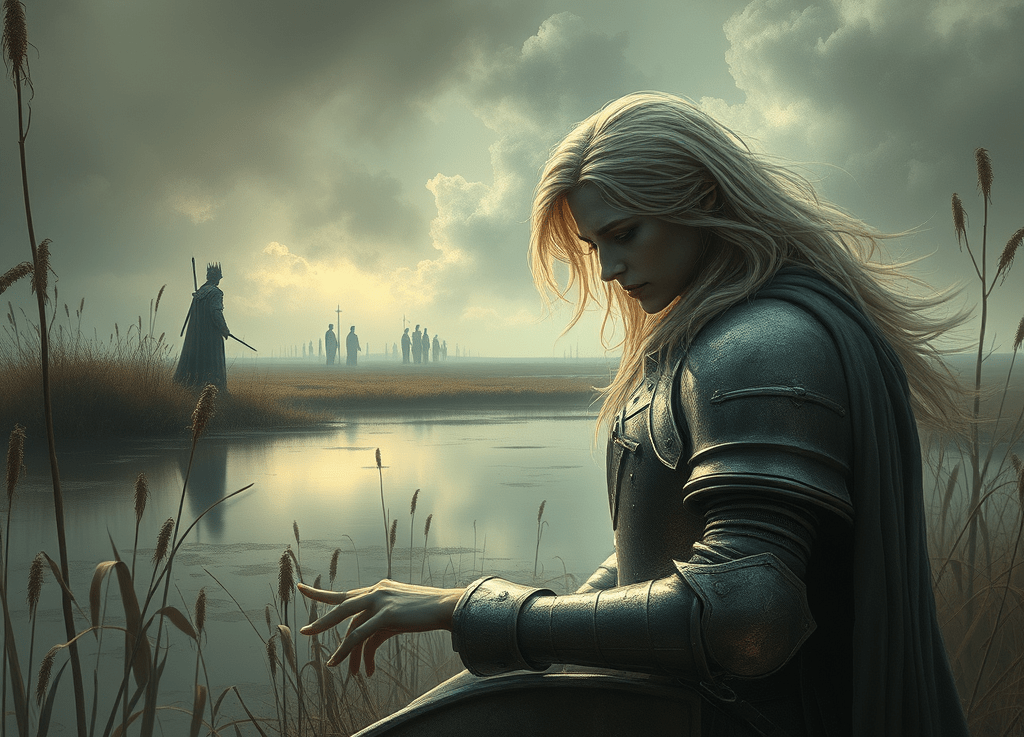
Oh what can ail thee, knight-at-arms,
Alone and palely loitering?
The sedge has withered from the lake,
And no birds sing.

                          II


Oh what can ail thee, knight-at-arms,
So haggard and so woe-begone?
The squirrel’s granary is full,
And the harvest’s done.

                          III


I see a lily on thy brow,
With anguish moist and fever-dew,
And on thy cheeks a fading rose
Fast withereth too.

                          IV


I met a lady in the meads,
Full beautiful – a faery’s child,
Her hair was long, her foot was light,
And her eyes were wild.

                          V


I made a garland for her head,
And bracelets too, and fragrant zone;
She looked at me as she did love,
And made sweet moan.

                          VI


I set her on my pacing steed,
And nothing else saw all day long,
For sidelong would she bend, and sing
A faery’s song.

                          VII

She found me roots of relish sweet,
And honey wild, and manna-dew,
And sure in language strange she said –
‘I love thee true’.

                          VIII


She took me to her elfin grot,
And there she wept and sighed full sore,
And there I shut her wild wild eyes
With kisses four.

                          IX


And there she lulled me asleep
And there I dreamed – Ah! woe betide! –
The latest dream I ever dreamt
On the cold hill side.

                          X


I saw pale kings and princes too,
Pale warriors, death-pale were they all;
They cried – ‘La Belle Dame sans Merci
Hath thee in thrall!’

                          XI


I saw their starved lips in the gloam,
With horrid warning gaped wide,
And I awoke and found me here,
On the cold hill’s side.

                          XII


And this is why I sojourn here
Alone and palely loitering,
Though the sedge is withered from the lake,
And no birds sing.

John Keats

Last Christmas

Last Christmas


Last Christmas, I gave you my heart
But the very next day, you gave it away
This year, to save me from tears
I’ll give it to someone special
(repeat)

Once bitten and twice shy
I keep my distance but you still catch my eye
Tell me baby do you recognize me?
Well it’s been a year, it doesn’t surprise me
(Happy Christmas)
I wrapped it up and sent it
With a note saying “I Love You” I meant it
Now I know what a fool I’ve been
But if you kissed me now I know you’d fool me again

Chorus

A crowded room, friends with tired eyes
I’m hiding from you and your soul of ice
My God I thought you were someone to rely on
Me? I guess I was a shoulder to cry on
A face on a lover with a fire in his heart
A man undercover but you tore me apart

Now I’ve found a real love you’ll never fool me again

Chorus

Wham

Pseudo-wetenschap

Pseudo-wetenschap


stel dat… is niet hetzelfde als: het is zo dat…

dat is het verschil tussen fictie en feit.

je fantasie uitleven is prima oefening voor de geest, zolang het onderscheid tussen fictie en feit helder blijft, anders is de kans voor geestesziekte groot.

Bijvoorbeeld:
Ik kan prima een Ufo visualiseren, maar het wordt toch iets heel anders als ik erna ga geloven dat ik die Ufo ook daadwerkelijk heb gezien in de fysieke werkelijkheid.

Ik krijg de indruk dat in menig sensatie-forum het onderscheid tussen fantasie en werkelijkheid verloren gaat.

De eigen ‘waarnemingen’ ondergaan dan te weinig de ‘reality-check’.

Als ik dingen waarneem die een ander niet waarneemt onder dezelfde omstandigheden, dan is de enige mogelijke conclusie dat er een verschil in waarneming is.
In zo’n geval kan ik niet zeggen: het is waarheid omdat ik het heb gezien.

Overigens is uit diverse onderzoeken gebleken dat ooggetuigenverslagen lang niet altijd zo betrouwbaar zijn als de politie zou willen.
Vandaar dat men dan ook graag fysiek tastbaar bewijs.

Nu kom ik dus op het punt waaraan ik me stoor in forums die gespecialiseerd zijn in ‘onverklaarbare waarnemingen’ (ufo’s, éntiteiten, aliens): de pretentie dat degenen die zoiets waarnemen zeer bijzondere mensen zijn, verheven boven degenen die het niet waarnemen, en bovendien het blind geloven in samenzweringstheorietjes mbt doofpotaffaires etc.

Dat soort forums wordt volgeschreven met allerlei ‘bijzondere waarnemingen’, de ene nog buitenissiger dan de ander, het lijkt wel eens een wedstrijdje ‘ghost-spotting’.

Zelf heb ik onder specifieke omstandigheden ‘iets’ in die richting waar kunnen nemen, nou en?
Wat is daar zo bijzonders aan? Word ik daarmee een beter mens?

Wat is een sekte?

Wat is een sekte?


Een  lijst van kenmerken van het sektarisme is opgesteld door de Belgische professor E. Vermeersch uit zijn cursus ‘Historisch overzicht van de wijsbegeerte’:

  1. Inpalming : de mate waarin men een meer of minder belangrijk deel van zijn leven, denken en handelen door de wereldbeschouwing laat bepalen (men kan bijvoorbeeld driemaal in het leven naar de kerk gaan of in een slotklooster intreden, met alle varianten daartussen).
  2. Groepsvorming : de mate van wederzijdse controle die de groepsleden op elkaar kunnen uitoefenen (in grote mate mogelijk bij het samen in één huis wonen).
  3. Hiërarchie : de mate van macht die de leidende figuren op de volgelingen kunnen uitoefenen, inclusief de mogelijkheid tot straffen en het verwekken van angst.
  4. Charismatische leider : de macht kan ook volledig in handen zijn van een figuur die door iedereen als de ‘verlichte’, of de ‘Messias’ wordt beschouwd.
  5. Afzondering van de wereld: de mate waarin de handelingen en gebruiken (bijvoorbeeld voeding, kledij, arbeid) afwijken van die van de omgeving of van het eigen verleden; afzondering van familie en vroegere vrienden, werkkring, enzovoort.
  6. Uitverkiezing : de leden van de groep kunnen ervan overtuigd zijn dat ze een apart statuut van ‘uitverkorenen’ hebben; ze menen bepaalde informatie te hebben, of bepaalde dingen te kunnen, waarvan ze menen dat andere mensen die niet hebben of kunnen.
  7. Geslotenheid voor informatie: de mate waarin het contact met de media en met kritische of alternatieve informatie wordt verbroken.
  8. Irrationalisme van geloofsovertuigingen: de mate waarin de groepsleden bepaalde overtuigingen hebben die in strijd zijn met algemeen aanvaarde of wetenschappelijk onderbouwde opvattingen (bijvoorbeeld complottheorieën, het geloof in buitenaardse wezens, niet werkzame ‘geneesmethodes’, enzovoort).
  9. Proselytisme : de mate waarin de leden van de groep intense pogingen aanwenden om nieuwe leden te werven

Bron: http://nl.wikipedia.org/wiki/Sekte

Amergin’s song

Amergin’s song


I am a Stag: of seven tines
I am a Flood: across a plain
I am a Wind: upon the waves
I am a Tear: the sun lets fall
I am a Hawk: above the cliff
I am a Thorn: beneath the nail
I am a Wonder: among flowers
I am a Wizard: who but I
sets the cool head aflame?

I am a Spear: that roars for blood
I am a Salmon: in a pool
I am a Lure: from Paradise
I am a Hill: where poets walk
I am a Boar: ruthless and red
I am a Breaker: threatening doom
I am a Tide: that drags to death
I am an Infant: who but I
peeps from the unhewn dolman arch?

I am the Womb: of every holt
I am the Blaze: on every hill
I am the Queen: of every hive
I am the Shield: for every head
I am the tomb: of every hope

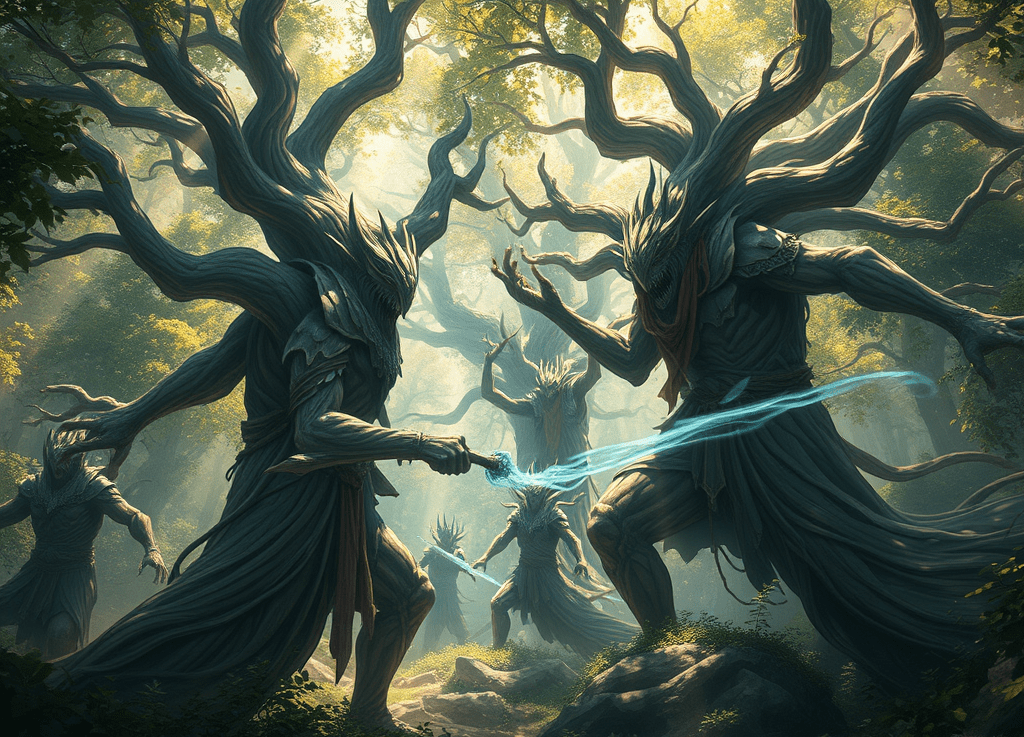
The Battle of the Trees

The Battle of the Trees


I have been in many shapes,
Before I attained a congenial form.
I have been a narrow blade of a sword.
(I will believe it when it appears.)
I have been a drop in the air.
I have been a shining Star.
I have been a word in a book.
I have been a book originally.
I have been a light in a lantern.
A year and a half.
I have been a bridge for passing over
Three-score rivers.
I have journeyed as an eagle.
I have been a boat on the sea.
I have been a director in battle.
I have been the string of a child’s swaddling clout.
I have been a sword in the hand.
I have been a shield in the fight.
I have been the string of a harp,
Enchanted for a year
In the foam of water.
I have been a poker in the fire.
I have been a tree in a covert.
There is nothing in which I have not been.
I have fought, though small,
In the Battle of Goddeu Brig,
Before the Ruler of Britain,
Abounding in fleets.
Indifferent bards pretend,
They pretend a monstrous beast,
With a hundred heads,
And a grievous combat
At the root of the tongue.
And another fight there is
At the back of the head.
A toad having on his thighs
A hundred claws,
A spotted crested snake,
For punishing in their flesh
A hundred souls on account of their sins.
I was in Caer efynedd,
Thither were hastening grasses and trees.
Wayfarers perceive them,
Warriors are astonished
At a renewal of the conflicts
Such as Gwydion made.
There is calling on Heaven,
And on Christ that he would effect
Their deliverance,
The all-powerful Lord.
If the Lord had answered,
Through charms and magic skill,
Assume the forms of the principal trees,
With you in array
Restrain the people
Inexperienced in battle.
When the trees were enchanted
There was hope for the trees,
That they should frustrate the intention
Of the surrounding fires….
Better are three in unison,
And enjoying themselves in, a circle,
And one of them relating
The story of the deluge,
And of the cross of Christ,
And of the Day of judgement near at hand.
The alder-trees in the first line,
They made the commencement.
Willow and quicken tree,
They were slow in their array.
The plum is a tree
Not beloved of men;
The medlar of a like nature,
Over coming severe toil.
The bean bearing in its shade
And army of phantoms.
The raspberry makes
Not the best of food.
In shelter live,
The privet and the woodbine,
And the ivy in its season.
Great is the gorse in battle.
The cherry-tree had been reproached.
The birch, though very magnanimous,
Was late in arraying himself;
It was not through cowardice,
But on account of his great size.
The appearance of the …
Is that of a foreigner and a savage.
The pine-tree in the court,
Strong in battle,
By me greatly exalted
In the presence of kings,
The elm-trees are his subjects.
He turns not aside the measure of a foot,
But strikes right in the middle,
And at the farthest end.
The hazel is the judge,
His berries are thy dowry.
The privet is blessed.
Strong chiefs in war
And the … and the mulberry.
Prosperous the beech-tree.
The holly dark green,
He was very courageous:
Defended with spikes on every side,
Wounding the hands.
The long-enduring poplars
Very much broken in fight.
The plundered fern;
The brooms with their offspring:
The furze was not well behaved
Until he was tamed
The heath was giving consolation,
Comforting the people –
The black cherry-tree was pursuing.
The oak-tree swiftly moving,
Before him tremble heaven and earth,
Stout doorkeeper against the foe
Is his name in all lands.
The corn-cockle bound together,
Was given to be burnt.
Others were rejected
On account of the holes made
By great violence
In the field of battle.
Very wrathful the …
Cruel the gloomy ash.
Bashful the chestnut-tree,
Retreating from happiness.
There shall be a black darkness,
There shall be a shaking of the mountain,
There shall be a purifying furnace,
There shall first be a great wave,
And when the shout shall be heard,
Putting forth new leaves are the tops of the beech,
Changing form and being renewed from a withered state;
Entangled are the tops of the oak.
From the Gorchan of Maelderw.
Smiling at the side of the rock
(Was) the pear-tree not of an ardent nature.
Neither of mother or father,
When I was made,
Was my blood or body;
Of nine kinds of faculties,
Of fruit of fruits,
Of fruit God made me,
Of the blossom of the mountain primrose,
Of the buds of trees and shrubs,
Of earth of earthly kind.
When I was made
Of the blossoms of the nettle,
Of the water of the ninth wave,
I was spell-bound by Math
Before I became immortal.
I was spell-bound by Gwydion,
Great enchanter of the Britons,
Of Eurys, of Eurwn,
Of Euron, of Medron,
In myriads of secrets,
I am as learned as Math….
I know about the Emperor
When he was half burnt.
I know the star-knowledge
Of stars before the earth (was made),
Whence I was born,
How many worlds there are.
It is the custom of accomplished bards
To recite the praise of their country.
I have played in Lloughor,
I have slept in purple.
Was I not in the enclosure
With Dylan Ail Mor,
On a couch in the centre
Between the two knees of the prince
Upon two blunt spears?
When from heaven came
The torrents into the deep,
Rushing with violent impulse.
(I know) four-score songs,
For administering to their pleasure.
There is neither old nor young,
Except me as to their poems,
Any other singer who knows the whole of the nine hundred
Which are known to me,
Concerning the blood-spotted sword.
Honour is my guide.
Profitable learning is from the Lord.
(I know) of the slaying of the boar,
Its appearing, its disappearing,
Its knowledge of languages.
(I know) the light whose name is Splendour,
And the number of the ruling lights
That scatter rays of fire
High above the deep.
I have been a spotted snake upon a hill;
I have been a viper in a lake;
I have been an evil star formerly.
I have been a weight in a mill.
My cassock is red all over.
I prophesy no evil.
Four score puffs of smoke
To every one l who will carry them away:
And a million of angels,
On the point of my knife.
Handsome is the yellow horse,
But a hundred times better
Is my cream-coloured one,
Swift as the sea-mew,
Which cannot pass me
Between the sea and the shore.
Am I not pre-eminent in the field of blood?
I have a hundred shares of the spoil.
My wreath is of red jewels,
Of gold is the border of my shield.
There has not been born one so good as I,
Or ever known,
Except Goronwy,
From the dales of Edrywy.
Long and white are my fingers,
It is long since I was a herdsman.
I travelled over the earth
Before I became a learned person.
I have travelled, I have made a circuit,
I have slept in a hundred islands;
I have dwelt in a hundred cities.
Learned Druids,
Prophesy ye of Arthur?
Or is it me they celebrate,
And the Crucfixion of Christ,
And the Day of Judgement near at hand,
And one relating
The history of the Deluge ?
With a golden jewel set in gold
I am enriched;
And I am indulging in pleasure
Out of the oppressive toil of the goldsmith.

Ten Native American Commandments

Ten Native American Commandments


quote:
Treat the Earth and all that dwell thereon with respect Remain close to the Great Spirit Show great respect for your fellow beings Work together for the benefit of all Mankind Give assistance and kindness wherever needed Do what you know to be right Look after the well-being of mind and body Dedicate a share of your efforts to the greater good Be truthful and honest at all times Take full responsibility for your actions

Anonymus