Begin van de herfst, het begint al te schemeren om zeven uur… Vanochtend werd ik wakker met het Chanson ‘Paris s’eveille’
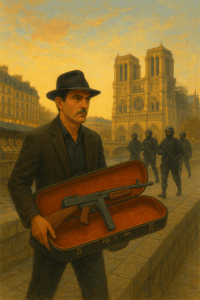
Deze dag vloog voorbij met alles wat ik had willen zien en doen in Parijs. Daarom ben ik hier toch? Dingen zien en doen in Parijs! … Langs de Seine lopend passeer ik de boekenstalletjes, op weg naar de Notre-Dame in reparatie zie ik zwaarbewapende M.E. met machinegeweren en schilden…. Ik hoop dat ze niet met die wapens gaan schieten op een verdachte in de menigte, dat wordt een bloedbad! … Zou zo’n wapen passen in de koffer van een contrabas? Beeld: Antonio Banderas El Mariachi met machinegeweer in vioolkoffer! Wat voor geluid maakt zo’n ding eigenlijk? Heb ik het nu over een machinegeweer of een contrabas? Ik heb nog nooit gelet op het geluid van een contrabas. Wel de altviool van Maya Friedman! Ze gaat volledig in trance, maakt intens contact met de andere wereld.
Maar een machinegeweer? Ik ken wel het geluid van een geweerschot in de nacht tijdens de coup van 1965
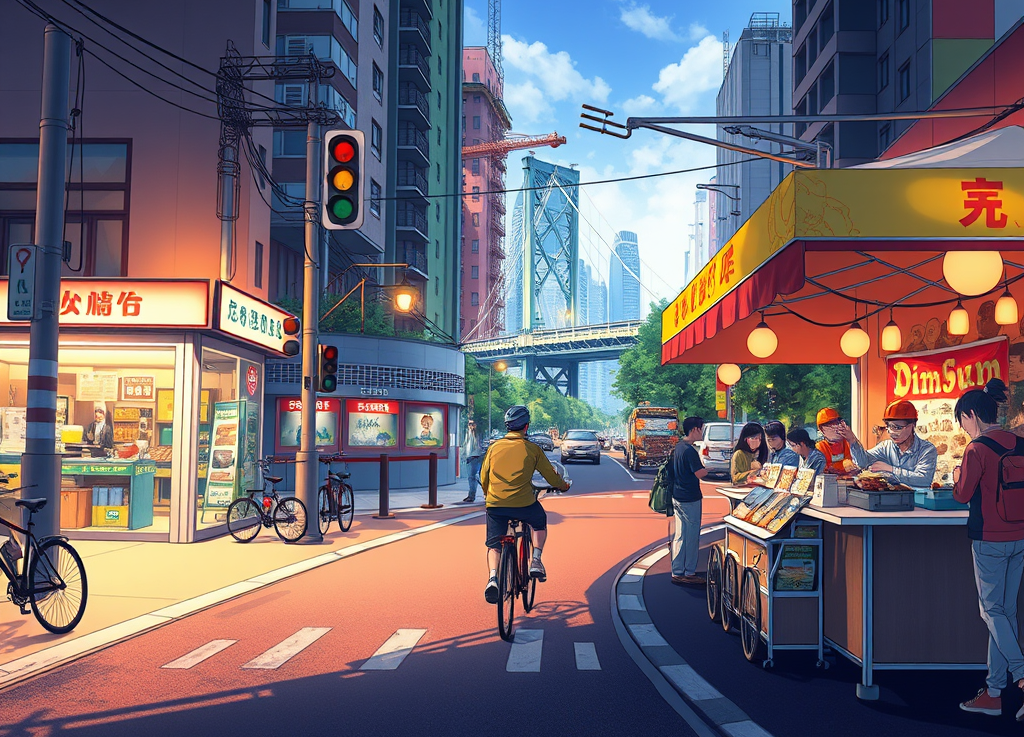
Dit is wat ik zag op weg naar jou Met luid gerinkel maak ik fiets los Het fietspad druk, voorzichtig trap ik Rechts is de tent, de dimsum altijd vol
Met luid gerinkel maak ik fiets los Over de brug, de vaart stroomt traag voorbij Rechts is de tent, de dimsum altijd vol Links staat Domela, held van sociaal strijd
Over de brug, de vaart stroomt traag voorbij Lastige kruising, chaos, rood licht Links staat Domela, held van sociaal strijd Rechts is de bouwput, waar de man viel stil
Lastige kruising, chaos, rood licht Links de fietsenmaker, hij groet zacht Rechts is de bouwput, waar de man viel stil Buurvrouws raam donker, bedekt door groen
Links de fietsenmaker, hij groet zacht De box vol bakfietsen, zwaar en vol Buurvrouws raam donker, bedekt door groen Snel naar de trap, naar huis, naar jou
De box vol bakfietsen, zwaar en vol Het fietspad druk, voorzichtig trap ik Snel naar de trap, naar huis, naar jou Dit is wat ik zag op weg naar jou
Ik maak de ketting van de fiets los met luid gerinkel… Het fietspad is druk, voorzichtig alert fietsen! Aan mijn rechterhand de dimsum tent, altijd druk, lekker eten! Over de brug… Aan mijn linkerhand Domela Nieuwenhuis, heroisch sociaal! Lastige kruising, chaos, stoplicht, fatbikes! Langs de vaart… Rechts de bouwput waar een vakman doodviel Links de aardige fietsenmaker Naast buurvrouw, haar raam verduisterd door dichtbegroeide geveltuin De fietsenbox is overvol met electro bakfietsen Snel het trappenhuis op naar huis!
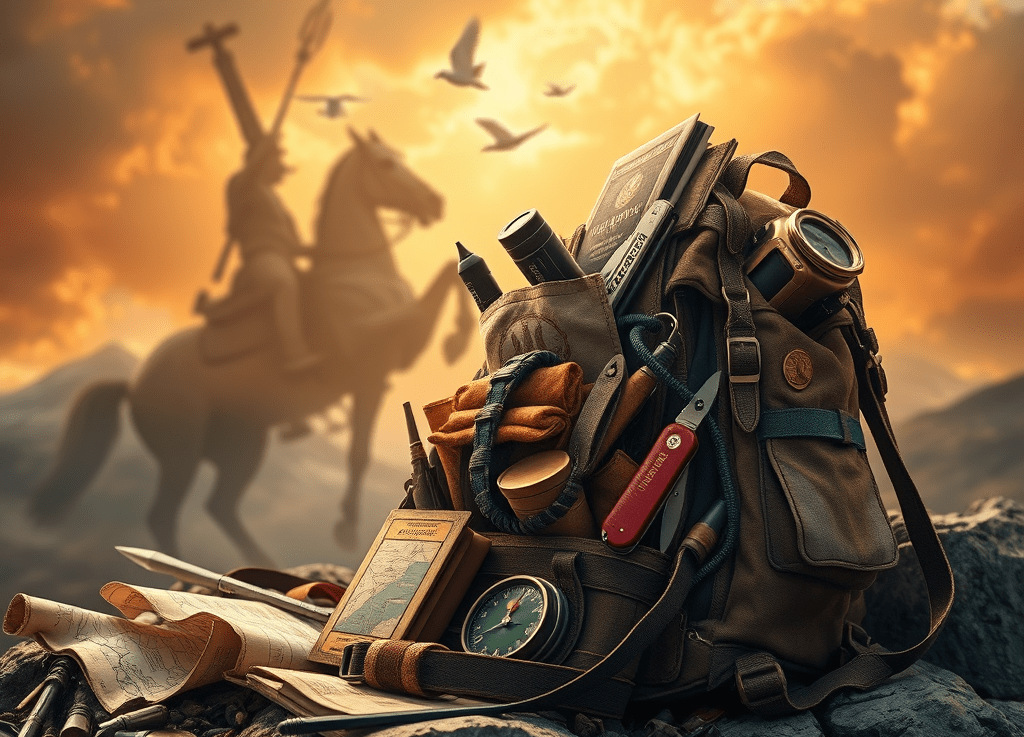
Ik ben op reis en ik neem mee… Waarom ga ik op reis? Op de vlucht voor de vier ruiters van de Apocalyps: Ziekte, honger, oorlog, dood…
Waarom ga ik op reis? Wat is urgent: Ziekte, honger, oorlog, dood… Zwitsers zakmes, vuursteen, veldfles, rugzak…
Wat is urgent: Poncho, handboek survival, potlood, dagboek, kompas… Zwitsers zakmes, vuursteen, veldfles, rugzak… Knijpkat, EHBO-kist, powerbank met zonnepaneel…
Poncho, handboek survival, potlood, dagboek, kompas… Mobiel, miniradio, kleren, I Ching, speelkaarten… Knijpkat, EHBO-kist, powerbank met zonnepaneel… Gedroogd voedsel, landkaart,is alles wat ik neem.
Mobiel, miniradio, kleren, I Ching, speelkaarten… Gedroogd voedsel, landkaart, is alles wat ik neem. Gedroogd voedsel, landkaart, is alles wat ik neem… Ik ben op reis en ik neem mee…
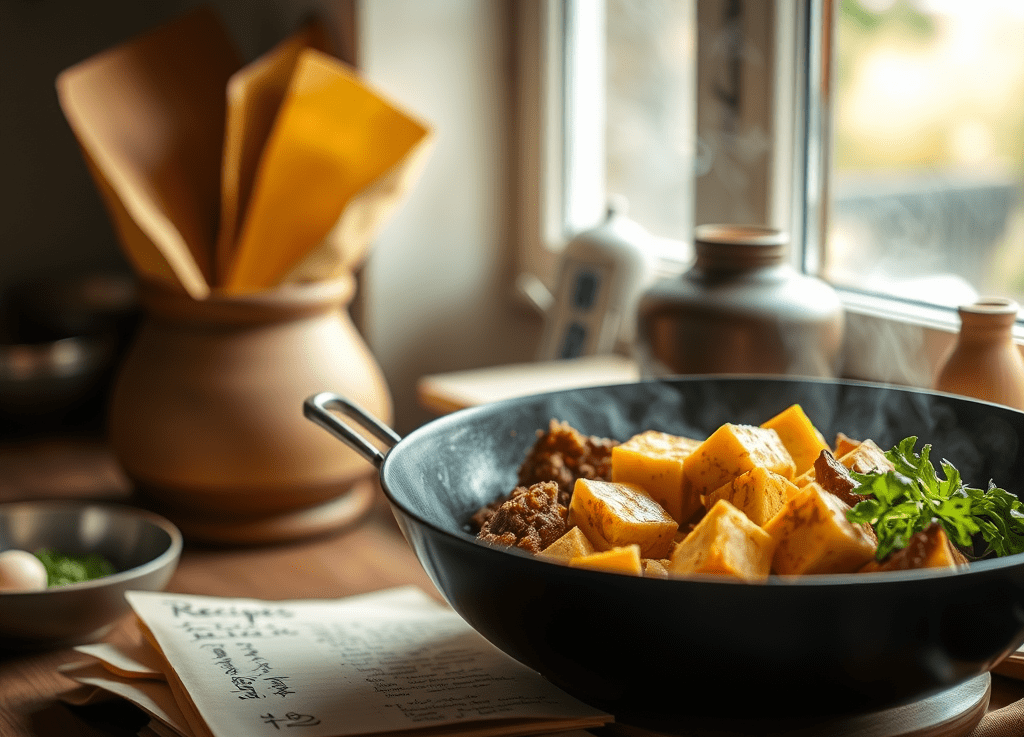
Hier is een creatieve, lyrische bewerking van het verhaal uit de blog “Mijn persoonlijk recept voor fysieke en spirituele voeding” — een liedtekst die de geur, het ritueel en de warmte van het koken vangt.
Homeopathisch Hart (Pantoum in Kroncong-ritme)
Rijst in de hooikist, zacht bewaard in warmte, handgeschreven recepten, een erfenis van geur. Tofu donkergeel, tempeh lichtbruin, de wok vult zich met leven, eenvoudig in beweging.
Handgeschreven recepten, een erfenis van geur, een handje van dit, een beetje van dat. De wok vult zich met leven, eenvoudig in beweging, ritme van snijden, adem van vuur.
Een handje van dit, een beetje van dat, kliekjes die verhalen dragen van vroeger. Ritme van snijden, adem van vuur, wat rest wordt goud in de pan van de ziel.
Kliekjes die verhalen dragen van vroeger, tofu donkergeel, tempeh lichtbruin. Wat rest wordt goud in de pan van de ziel, rijst in de hooikist, zacht bewaard in warmte.
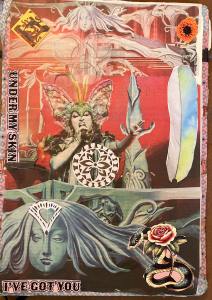
This piece has a cool, surreal vibe with an eclectic mix of imagery. It feels very experimental and artistic. Here’s my take on some of its elements:
Collage Aesthetic: There’s a clear sense of layering and blending between different textures and styles, from the vintage-style illustrations to the modern, bold cut-out shapes. This mix gives the artwork depth and energy.
Central Figure: The figure with butterfly wings seems to be the focal point, giving the composition a sense of movement and dramatic flair, like someone in performance. The design choice to make the figure large and prominent in the center is effective for drawing the viewer’s eye.
Symbolism and Visual Language: The use of symbols like the flower pattern and snake with the rose adds to the work’s mystical, layered storytelling. The snake could evoke themes of transformation, while the heart-shaped symbol could speak to themes of love, passion, or vulnerability.
Typography: The “I’VE GOT YOU!!” at the bottom seems to add a playful, assertive element to the collage, creating a contrast with the more somber, ethereal vibe of the visuals.
Overall Vibe: The artwork feels like it’s exploring themes of fantasy, identity, and emotion, but also has a slightly dark and mysterious undertone. The combination of facial expressions, symbolism, and bold typography creates a unique visual dialogue.
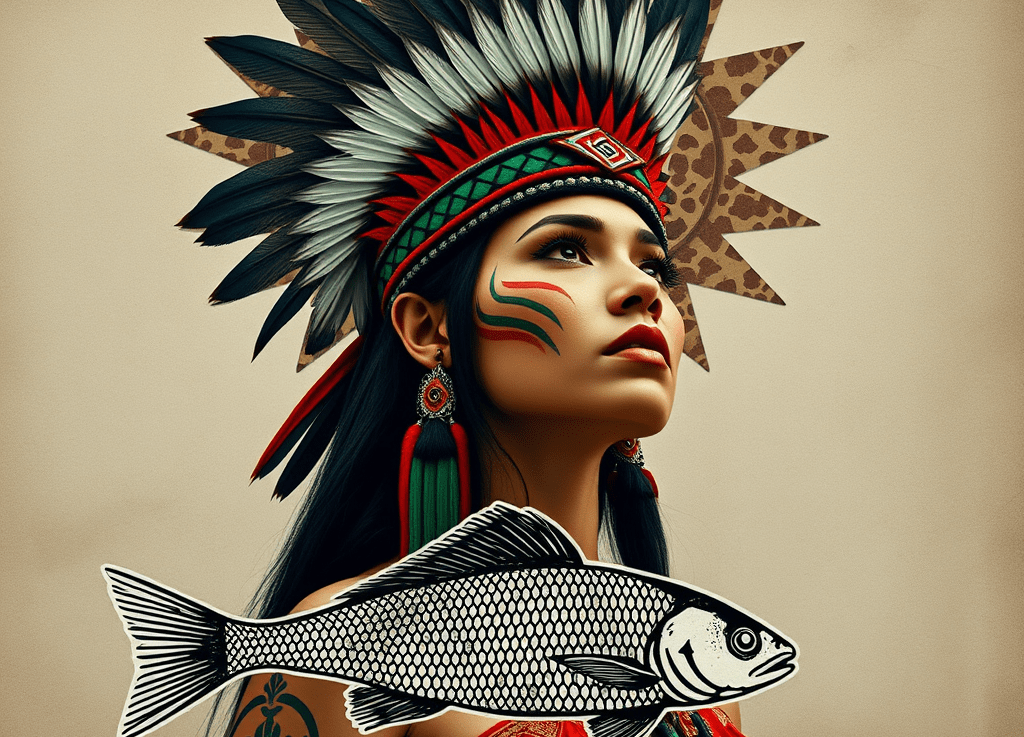
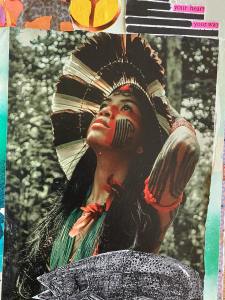
This collage is striking and layered with symbolic energy.
Visual elements
Central figure: A woman dressed in traditional feather headdress, painted with bold tribal markings and body paint. Her upward gaze conveys a sense of connection, reverence, or aspiration—almost as if she is looking towards the sky, the sun, or the divine.
Color palette: Muted natural tones dominate the background, with bursts of red, green, and black in the body paint and adornments. These colors emphasize strength, vitality, and rootedness in tradition.
Collage additions:
At the top: Abstract cutouts of sun-like forms, animal skin patterns, and strips of text, including the words “your heart” and “your way”—suggesting individuality and authenticity.
At the bottom: An etched, black-and-white fish image overlays the figure, evoking themes of water, sustenance, or transformation.
Interpretation
The figure embodies ancestral strength and spiritual connection. The headdress and body paint are traditional symbols of identity, status, or ritual, grounding the piece in indigenous heritage.
The upward gaze suggests a search for guidance, hope, or transcendence, perhaps symbolizing a bridge between earth and sky, body and spirit.
The collage’s mixed-media additions (fish, abstract symbols, text) expand the narrative:
The fish could represent nourishment, adaptability, or the fluidity of life.
The text “your heart / your way” places emphasis on authentic self-expression and agency, tying the ancient imagery to a contemporary message of empowerment.
The bright, almost playful cutouts above create a contrast between tradition and modern collage art, blurring cultural timelines.
Overall feel The work is dreamlike and layered, oscillating between portrait, ritual, and symbolic collage. It merges ancestral heritage with modern artistic experimentation, ultimately becoming a meditation on identity, resilience, and the path of the heart.
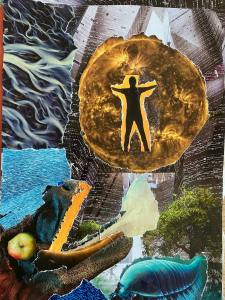
This collage is very striking and layered with symbolism.
Visual Composition
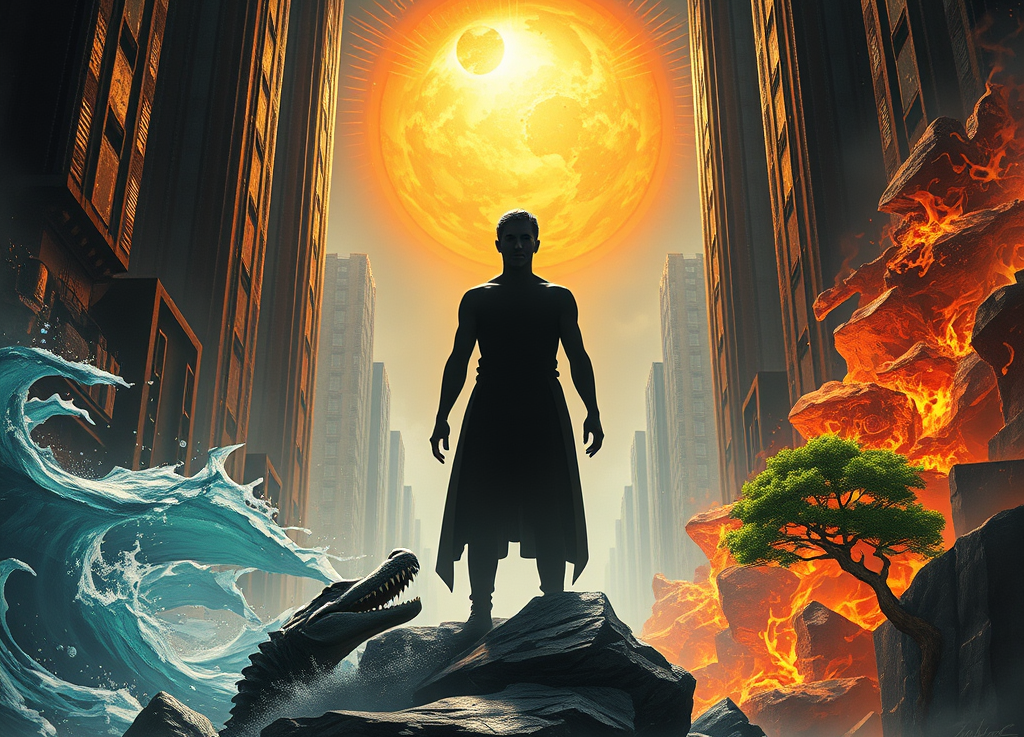
Central Figure: At the heart of the piece is a silhouetted human figure, cut out and placed against a burning, radiant sun-like orb. This central placement suggests themes of human existence, cosmic energy, and possibly enlightenment or transformation.
Surroundings: The figure is encased in what looks like towering, futuristic, metallic city structures, evoking feelings of confinement or entrapment within modern civilization.
Texture Variety: Water, fire, stone, skin, and organic elements all contrast against each other, creating tension between natural forces and human-made constructs.
Symbolism & Interpretation
The Human Silhouette within the Sun
Could represent humankind’s search for meaning in the cosmos, or the struggle between being a small silhouette against the vast forces of nature and energy.
The pose with arms spread wide feels both vulnerable and triumphant, as if surrendering or embracing cosmic forces.
The Crocodile-like Mouth with the Apple
The open jaws suggest danger, primal instincts, or the cycle of predation.
The apple, classically tied to knowledge, temptation, and original sin, seems precariously placed—hinting at the fragility of wisdom and survival within dangerous systems.
Water vs. Fire
On the left, swirling water contrasts with the fiery solar circle in the center. This tension between opposing natural elements reinforces the theme of balance, chaos, and destruction.
Urban Cage
The towering, grid-like buildings closing in give a claustrophobic sense, as if humanity (the silhouette) is simultaneously illuminated and trapped by technological progress.
Prehistoric Creature (Trilobite)
At the bottom right, the trilobite suggests deep time, evolution, and the persistence of life across epochs. Placing it near urban architecture contrasts ancient survival with modern artificiality.
Tree Emerging
A green tree rises amid the urban canyon, symbolizing resilience of nature, a reminder of organic growth within man-made environments.
Overall Impression
The collage feels like a meditation on humanity caught between nature, technology, and time. It explores:
The tension between survival instincts and higher consciousness.
The clash between natural forces (fire, water, life) and artificial constructs (cities).
The danger of knowledge (the apple in the jaws).
Humanity’s cosmic insignificance but also potential for transcendence.
It’s visually powerful, layered with archetypal imagery, and provokes a sense of awe and unease at the same time.
While many vigilante Guardian Angels fought the Reality Storm incursions in the wilderness outside Gotham, the Administration took power by announcing Martial Law ‘to fight the ‘enemy within’ : aliens,criminals, crooks, counterculture, genderbending, heresy, outlaws, vagrants. All vigilante groups were outlawed! The Guardian Angels went underground to organise resistance.
A covert team went to the night market for information. … It was more busy than usual: buying and selling, gossiping, meeting people. A few groups were clustering together: burly construction workers, scarred corps students, colourful ladies of the night. … The workers were angry because their union was disbanded , the students were upset because one of their outspoken spokesmen was arrested, the ladies were complaining of police harassment. …
Talking with several groups, the covert team discovered mister Johnson, a secret police member, lurking around!
… The ladies shared some pillow-talk information about the place where the student was held: Arkham!
Using their black market connections, the covert team was able to get some police uniforms to infiltrate the Asylum, while the workers and the students combined their actions: While the students organized a riot downtown, attracting a strong respons from the police, the workers attacked the Asylum! .. Using the distraction of the riots, the covert team was able to infiltrate the Asylum and delivering the prisoner: it was the grandson of Triad leader Wang! … The team was invited at the Triad headquarters to receive great honors: food, drink and gold! They agreed to undertake another mission, to take a special group of six secret police operators into custody. … The ladies of the night provided some information about the whereabouts of the operators: a large single safehouse at a vacant spot in the middle of Crime Alley. … Infiltrating the safehouse, they surprised the operators while conducting a ritual: six persons stood chanting around an altar where a dense smoke came out of a cauldron. Immediately a grand melee ensued! Blades flashing, shots flying around, a smoke bomb went off! One by one the operators fell down, the smoke cleared…. At the centre of the cauldron a smoke pillar was condensing into a human-like shape, that immediately started attacking our heroes! Using the demonbane charm and lightning staff , they were able to banish the demon. Our heroes were victorious…for now!
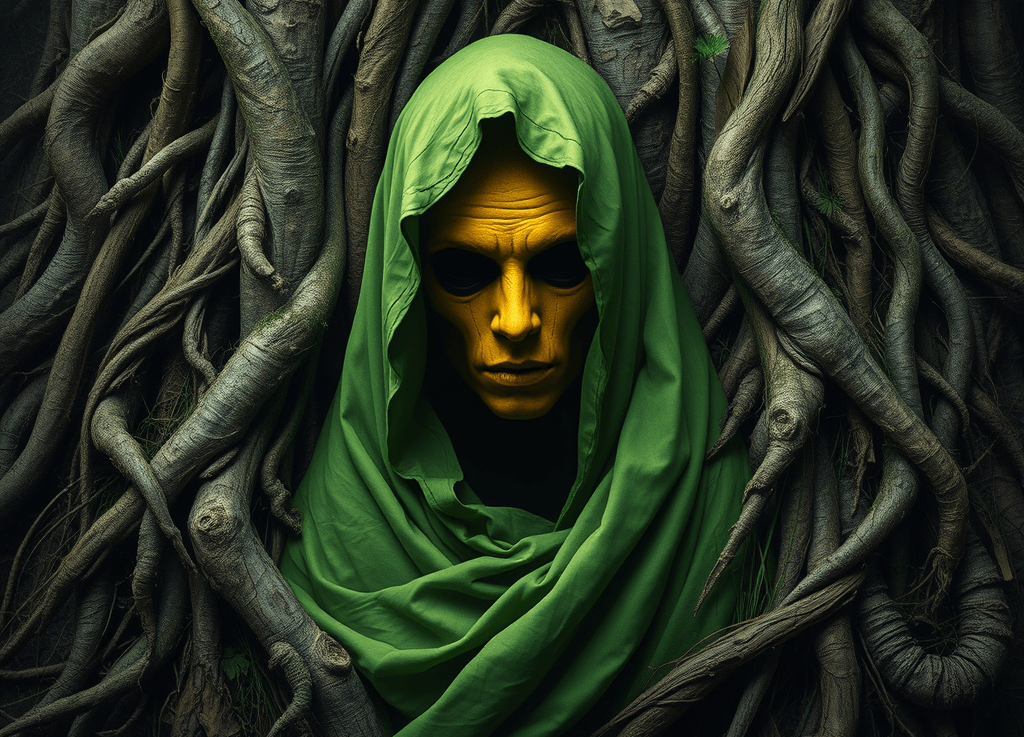
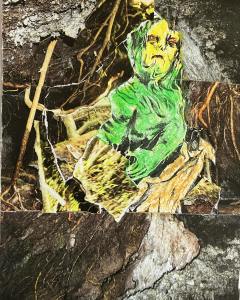
This collage-style artwork is a compelling blend of natural textures and surreal human-like imagery, producing an eerie and layered visual experience. Here’s a detailed review:
🎨 Visual Composition & Media
The piece merges photographic elements—tree roots, bark, stone, and grass textures—with a painted figure that appears almost sculptural. The layered, torn-edge collage technique emphasizes fragmentation and transformation.
The painted form is humanoid but alien, draped in a vivid green cloak and possessing a yellowish, distorted face. It appears integrated into the environment—possibly emerging from it or decaying back into it.
🧠 Interpretation & Themes
Nature vs. Humanity: The fusion of organic textures and the grotesque figure suggests a commentary on the interconnectedness (or clash) between humans and the natural world.
Decay and Transformation: The torn edges and mismatched layers evoke entropy and mutation—something once whole is now fractured and remade into a new, unsettling form.
Mythic or Archetypal Undertones: The figure resembles a forest spirit, dryad, or golem—rooted in myth, yet distorted by modernity. There’s a suggestion of ancient life forces or forgotten folklore re-emerging in a post-industrial context.
🎭 Mood & Atmosphere
The overall tone is dark, mysterious, and slightly unsettling. The contrast between the organic, earthy tones and the vivid, almost unnatural green of the figure creates tension.
The eyes and expression of the central figure are vacant yet accusatory, inviting the viewer to reflect on their own relationship with the environment or with self-transformation.
🔍 Noteworthy Techniques
Collage Juxtaposition: The torn collage layers are meticulously chosen to disrupt visual continuity while guiding the viewer’s eye toward the figure.
Color Accents: The limited but intense use of green and yellow draws focus to the figure and conveys a sickly vitality.
Texture Harmony: Despite the surreal quality of the image, all textures belong to the same “material world,” which helps ground the fantasy in something tactile.
🧾 Overall Impression
This work is visually rich, conceptually layered, and emotionally provocative. It lives somewhere between dream and nightmare, forest and flesh. It could work well in a series exploring ecological myths, psychological states, or the uncanny in natural environments.
“She was once a name, —but the forest forgot. Now roots braid her bones,_ moss drinks from her mouth,_ and the earth wears her shape like memory.”


 Wat voor geluid maakt zo’n ding eigenlijk?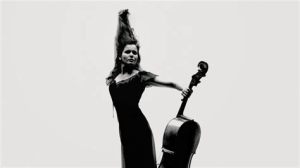










 Dreamquest
You must be logged in to post a comment.