A.I.  reviews “I Am / They Will Be”

A.I. reviews “I Am / They Will Be”


A.I. , review this!

This is a striking mixed-media collage that juxtaposes layers of meaning—visually and textually. Here’s a review from an artistic and symbolic perspective:


Visual Elements:

  1. Topography and Texture:

    • The background consists of a rugged, cracked, earthy surface, evoking excavation, erosion, or buried memory. It gives the impression of a cross-section of ground, revealing what lies beneath.

  2. Historical Image Fragment:

    • A vintage illustration (likely a 19th-century European engraving or print) depicts a traditional East Asian pagoda near a river with wooden boats. The way it’s partially torn and embedded into the soil suggests a buried or uncovered cultural history.

  3. Typography and Language:

    • The phrase “zona d’origine” (Italian or French-influenced term meaning “area of origin”) is prominently placed, literally rooted in the earth.

    • Below it, clipped text reads: “Je suis seront là”, a grammatically jarring combination of French phrases—“I am” and “they will be there”. This creates a surreal tension between personal identity and collective presence or future.


Symbolic & Interpretive Layers:

  • Cultural Roots & Identity:
    The collage appears to explore themes of heritage, migration, and cultural memory. The Asian scene buried in the soil may represent ancestral origins or lost civilizations.

  • Fragmentation:
    The torn image and disjointed French text suggest the fragmentation of identity, memory, or historical narrative—possibly referencing colonial history, diaspora, or personal heritage.

  • Excavation of Meaning:
    The composition mimics an archaeological dig, as if peeling back the earth reveals not only history, but also language and identity.


Overall Impression:

This collage is evocative and poetic, rich with metaphor. It asks the viewer to contemplate what lies beneath the surface—of land, of culture, of self. The stylistic tension between the orderly historical image and the raw texture of soil reinforces its emotional depth.


ping:

A.I.  reviews “The Sacred We Seek”

A.I. reviews “The Sacred We Seek”


A.I. , review this!

This collage artwork titled “The Search for Meaning” presents a rich and layered visual narrative. Here’s a breakdown and review of its elements:


🌟 Overall Theme

The central theme, as indicated by the title, appears to be an exploration of human purpose, knowledge, and cultural identity. The visual juxtapositions suggest a journey — intellectual, spiritual, and communal.


🖼️ Visual Elements and Interpretation

  1. Title Fragment: “The Search for Meaning”

    • Positioned at the top, this gives the viewer an immediate philosophical framework.

    • The partial visibility of text reinforces the idea that the search for meaning is incomplete or ongoing.

  2. Red and Gold Balinese Mask Sticker (likely a Barong)

    • The mask, a symbol of protection and good in Balinese mythology, adds a spiritual and cultural dimension.

    • Suggests the importance of myth and cultural tradition in understanding life’s purpose.

  3. Girl Holding a Book Upward

    • This is the emotional and thematic centerpiece.

    • Her posture — holding the book reverently toward the light — symbolizes the pursuit of knowledge, truth, or perhaps even sacred scripture.

    • The textured, warm red background suggests passion, intensity, or inner fire.

  4. Four Hands Interlocked

    • Represents unity, support, or solidarity.

    • Reinforces the communal aspect of meaning — we find it not just alone but in connection with others.

  5. Cacao Pods

    • This natural image evokes origin, nourishment, and possibly transformation.

    • Cacao, often associated with ritual in many indigenous cultures, could symbolize spiritual or emotional sustenance.

  6. Green Batik-like Pattern on Top Border

    • Traditional and organic, it balances the modern collage with a sense of heritage or rootedness.


Artistic Style

  • Collage Technique: Strong use of contrast and layering. It feels personal and tactile, almost like a scrapbook of philosophical inquiry.

  • Color Palette: A mix of earthy, vibrant tones with symbolic warmth (red) and grounding neutrals.

  • Composition: Thoughtfully asymmetrical. The different images are not perfectly aligned, which echoes the unpredictable, non-linear nature of life’s search for meaning.


🧠 Conceptual Depth

  • The artwork could be interpreted as a journey through stages of understanding:

    • Tradition and myth (mask) → Knowledge and exploration (book) → Connection (hands) → Nourishment and growth (cacao).

  • Alternatively, it suggests that meaning is multifaceted: spiritual, intellectual, relational, and physical.


Strengths

  • Strong thematic cohesion despite diverse imagery.

  • Symbolism is accessible but open to interpretation.

  • Use of cultural elements gives the piece global depth.


❗Suggestions (Optional)

  • The white cutout of the title could be more integrated or stylized to blend with the visual tone.

  • Adding a small handwritten or textured element (e.g., a quote, symbol) could enhance the personal feel.


Final Thoughts

This collage is a compelling meditation on life’s deeper questions. It feels both intimate and universal — a visual poem about how we seek, learn, and connect.


Ping:

Further research on Baduanjin

Further research on Baduanjin


Most modern Baduanjin videos are based on 20th-century standardized forms.

However, here are some authentic resources that closely resemble the traditional standing form:

1. “Old Frame” Baduanjin (Pre-20th Century Style)

2. Shaolin Baduanjin (Martial Arts Version)

3. Historical Reconstruction (Academic Source)

Why Modern Baduanjin Differs

  • 1950s Standardization: The Chinese government simplified Baduanjin for mass health campaigns, removing martial stances.
  • Daoist vs. Shaolin: Older forms were either seated (Daoist) or dynamic (Shaolin/military).

If you want the most historically accurate practice:

  1. Studying Master Zhou Xuan Yun’s form (Daoist lineage).
  2. Exploring Shaolin versions (like Shi Heng Yi’s) for martial power.

Source: DeepSeek

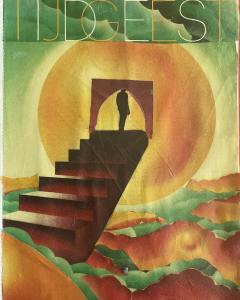
A.I.  reviews “The Watcher on the Roof”

A.I. reviews “The Watcher on the Roof”


A.I. , review this!

This image appears to be a mixed-media collage combining surreal and architectural elements. Here’s a breakdown of what’s going on:

### Central Imagery:

* The focal point is a drawing or painting of a house with a steep triangular roof. A shadowy human figure stands at the peak, creating a dramatic, even eerie focal point.
* The background includes faint outlines of skyscrapers and construction cranes, giving the setting an urban, industrial feel.
* The color palette is muted browns and greys for the central building, enhancing a vintage or dreamlike atmosphere.

### Border & Collage Elements:

* Surrounding the central image are intricate, biomorphic forms resembling *Ernst Haeckel*-style illustrations of microscopic sea life or alien organisms. These appear to be cut out and pasted around the central image.
* The bottom strip features a patterned green design with an organic, cell-like texture.

### Notable Detail:

* Near the bottom center of the house, a small inset image (possibly a photograph) shows what looks like a close-up of a golden emblem or crest—maybe a crown over a shield. This insertion disrupts the otherwise consistent color and tone, adding a mysterious or symbolic note.

### Interpretation:

This piece has a surreal and slightly dystopian tone. The juxtaposition of organic forms, urban development, and a lone figure atop a house suggests themes of alienation, evolution, or surveillance. It could also be a commentary on the contrast between natural forms and human-made environments.


ping:

Ancient Baduanjin Techniques: A Comprehensive Guide

Ancient Baduanjin Techniques: A Comprehensive Guide


Here is a detailed description of the oldest recorded standing Baduanjin (立式八段锦), based on the Ming-Qing dynasty versions (particularly from Neigong Tushuo, 1858) and its martial-influenced predecessors:


1. 双手托天理三焦 (Shuāng shǒu tuō tiān lǐ sān jiāo)

“Two Hands Hold Up the Heavens to Regulate the Triple Burner”

  • Movement: Stand with feet shoulder-width apart, palms facing up at the lower abdomen. Inhale while raising hands overhead, palms turning upward as if lifting the sky. Stretch the spine, then exhale while lowering arms.
  • Purpose: Stretches the Sanjiao (Triple Burner meridian), improves Qi circulation, and relieves tension in the shoulders/back.

2. 左右开弓似射雕 (Zuǒ yòu kāi gōng sì shè diāo)

“Drawing the Bow Left and Right as if Shooting a Hawk”

  • Movement: Assume a low horse stance. Extend one arm straight (as if holding a bow) while the other pulls back (like drawing the string). Turn the head to gaze along the “arrow.” Alternate sides.
  • Purpose: Strengthens the lungs/large intestine meridians, opens the chest, and builds leg endurance (martial roots).

3. 调理脾胃须单举 (Tiáo lǐ pí wèi xū dān jǔ)

“Separate Heaven and Earth to Harmonize Spleen & Stomach”

  • Movement: Raise one palm overhead (facing up) while pressing the other down (facing earth). Alternate sides, creating a stretch along the torso.
  • Purpose: Balances spleen/stomach Qi, aids digestion, and stretches the Liver/Gallbladder meridians.

4. 五劳七伤向后瞧 (Wǔ láo qī shāng xiàng hòu qiáo)

“Looking Back to Eliminate Five Strains and Seven Injuries”

  • Movement: Feet shoulder-width apart, twist the torso and head to look backward (keeping hips stable). Return to center and repeat on the other side.
  • Purpose: Relieves “Five Lao” (organ fatigue) and “Seven Shang” (emotional stresses) by stimulating the Governing Vessel (Du Mai) and spine.

5. 摇头摆尾去心火 (Yáo tóu bǎi wěi qù xīn huǒ)

“Sway the Head and Shake the Tail to Remove Heart Fire”

  • Movement: Deep horse stance, circle the torso forward/down, then swing hips side-to-side while the head “nods” in opposition.
  • Purpose: Clears excess heart heat (anxiety, insomnia) and strengthens the kidneys (Yin-Yang balance).

6. 两手攀足固肾腰 (Liǎng shǒu pān zú gù shèn yāo)

“Two Hands Climb the Feet to Strengthen the Kidneys and Waist”

  • Movement: Bend forward from the waist (keep legs straight), reaching toward toes, then slowly roll up to standing.
  • Purpose: Stretches the bladder/kidney meridians, nourishes lumbar region, and improves flexibility.

7. 攒拳怒目增气力 (Cuán quán nù mù zēng qì lì)

“Clench Fists and Glare Fiercely to Increase Qi and Power”

  • Movement: Horse stance, punch forward alternately with fists while “glaring” (wide eyes). Exhale sharply with each punch.
  • Purpose: Builds Liver Qi (anger regulation), strengthens tendons (Yijin Jing influence), and boosts vitality.

8. 背后七颠百病消 (Bèi hòu qī diān bǎi bìng xiāo)

“Seven Bounces on the Toes to Cure All Illnesses”

  • Movement: Stand straight, lift heels, then drop them abruptly to “shake” the body (7x).
  • Purpose: Vibrates the meridians, settles Qi, and improves balance.

Key Notes on the Oldest Standing Form:

  • Martial Roots: Moves like #2 and #7 show Shaolin/kung fu influences (horse stance, punching).
  • Breath: Inhalation during expansion (e.g., lifting arms), exhalation on exertion (e.g., punching).
  • Daoist Legacy: Retains meridian regulation from seated Baduanjin but adds dynamic strength.

Source: Deepseek

A.I. reviews “He Who Walks with the Watchers”

A.I. reviews “He Who Walks with the Watchers”


A.I. , review this!

This image is a powerful collage with strong symbolic and cultural elements, blending photography, mixed media, and text. Here’s a detailed review:

### **Visual Elements & Composition**

* **Central Figure**: The focal point is a person in traditional, warrior-like attire, including a large feathered headdress and red costume, possibly referencing indigenous or tribal heritage. Their pose is dynamic and powerful, suggesting movement, purpose, or ritual.
* **Textures & Layers**: The image is composed of torn-paper textures, adding depth and a tactile quality. It evokes a sense of rawness and layered meaning.
* **Color Palette**: Dominated by reds, blacks, and earthy tones with bursts of gold and deep blues. The use of red signifies energy, passion, and power, while the dark background emphasizes contrast and drama.
* **Tattoo & Costume**: The tattoos and costume further reinforce cultural identity and storytelling, potentially representing ancestry, strength, or spirituality.

### **Symbolism**

* **Eye at the Top**: The eye (possibly human-animal hybrid) watching from above implies heightened awareness, spirituality, or ancestral presence. It could symbolize the “eye of the cosmos” or a guardian force.
* **Lantern**: The lantern at the bottom suggests guidance, illumination, and a journey through darkness—both literal and metaphorical.
* **Text Fragments**: The words “calling” and possibly “earth” or “spirit” evoke a spiritual or ancestral summons, grounding the image in themes of identity, connection to land, and purpose.

### **Interpretation**

This collage seems to speak to **heritage, strength, ritual, and connection to nature or the cosmos**. The warrior figure could be answering a spiritual or ancestral “calling,” guided by inner vision (the eye) and external light (the lantern). The cosmic background reinforces a theme of universality or destiny.

### **Overall Impression**

The artwork is emotionally potent, culturally rich, and visually engaging. It’s a compelling mix of traditional and contemporary aesthetics that invites viewers to reflect on identity, history, and inner power.

Ping:
A.I.  reviews “The Sky Remembers the Sea”

A.I. reviews “The Sky Remembers the Sea”


A.I. , review this!

This collage-style artwork is visually engaging and rich in texture and color. Here are some observations and a brief critique:

### **Visual Elements**

* **Central Focus**: The central image appears to be a parrot, possibly a macaw, mid-motion with its wings outstretched. The vivid greens and subtle red highlights make it a dynamic centerpiece.
* **Texture and Contrast**: The addition of shell-like and microscopic organisms (resembling diatoms or radiolarians) in teal and green hues creates a strong textural contrast with the feathers. This juxtaposition draws attention and invites curiosity.
* **Color Palette**: The artist uses a harmonious palette of greens, blues, and turquoises, with accents of yellow and black to guide the viewer’s eye. The subtle blue background shading adds dimensionality without distracting.
* **Composition**: The collage is well-balanced. The organic, rounded shapes of the seashell forms echo the curved lines of the bird’s wings, enhancing the sense of unity. The layering of elements adds depth.

### **Themes and Interpretation**

* **Nature and Microcosm**: This piece seems to explore connections between the macro (the parrot) and the micro (shells, plankton-like structures). It may reflect on the complexity and beauty of life forms across scales.
* **Surrealism and Abstraction**: The surreal combination of disparate biological forms gives it a dreamlike, almost otherworldly quality.

### **Suggestions**

* If this is part of a series, consider experimenting with other animals or plant life paired with microscopic or abstract patterns.
* Adding slight dimensionality with shadows or raised collage elements could further emphasize the texture.
* The transitions between elements could be slightly smoother or intentionally rougher, depending on whether you want a seamless or disruptive effect.

ping:
A.I. reviews “Symphony of Culture: Rituals in Harmony”

A.I. reviews “Symphony of Culture: Rituals in Harmony”


A.I. , review this!

  1. Musical Manuscript: The background is a handwritten musical score, likely classical, with expressive annotations. Words like “Langsam” (German for “slow”) and “Muster” (possibly “Mutter” for “mother” or “muster” for “pattern”) suggest German origins—potentially referencing composers like Mahler, Schubert, or Beethoven.
  2. Typography and Text: The word “Culture” or “Cultural” appears vertically on the left, reinforcing a theme of heritage, identity, or artistic tradition.
  3. Photographs:
    In the center: A patterned image of uniformed figures, possibly ceremonial soldiers or dancers in red and white.
    Bottom left: A historical or religious scene, perhaps from a film or a staged performance, showing figures in elaborate robes, possibly a pope and cardinals or a monarch with attendants.
  4. Visual Composition: The collage format suggests a deliberate juxtaposition of music, heritage, ritual, and performance. It could be interpreted as a commentary on how culture is constructed from layers of tradition, discipline, and aesthetics.

This piece invites reflection on cultural memory and identity, especially how music, ceremony, and tradition interweave.

A.I. reviews “Beneath the Watchful Stars”

A.I. reviews “Beneath the Watchful Stars”


A.I. , review this!

  • Background: The grand, ancient stone pyramid immediately sets a scene of mystery, history, and sacred power. The dramatic lighting against the deep blue sky makes it feel timeless and monumental.

  • Top Element: The green, almost alien-looking organic form floating above the pyramid gives the feeling of a spiritual or extraterrestrial presence — like something watching or guarding the ancient site.

  • Middle Element: The teal, ornamental object placed on the slope of the pyramid feels like a secret artifact, half-symbolic, half-technological, suggesting lost knowledge or a forgotten ritual.

  • Bottom Element: The red abstract figure emerging from a fossil-like shell is fascinating. It looks like it’s calling out or reaching upward — a gesture of invocation, awakening, or communication between realms (earth, sky, and spirit). The fossil with plant-like patterns hints at the deep interconnection of life, history, and growth.

Overall Vibe:

  • Feels like a cosmic myth unfolding at an ancient sacred site.

  • Themes of rebirth, guardianship, hidden knowledge, and transcendence.

  • There’s a strong upward movement — as if everything is rising toward a hidden truth or sky spirit.


Ping: A.I. reviews “Through the Gate of Shadows” – Dreamquest

A.I. reviews “Through the Gate of Shadows”

A.I. reviews “Through the Gate of Shadows”


A.I, review this!

  • Top Section: The dark silhouette of the monument with palm trees and a red sunset behind it creates a striking, almost cinematic opening. It suggests a distant land or an ancient memory.

  • Middle Section: This area is the most intricate and intriguing. It looks almost like an abstract creature made from fossils, seashells, leaves, and organic patterns. There’s a mix of natural history and fantasy here that feels very alive, almost like a guardian or spirit of nature.

  • Bottom Section: The use of classical figures — one reaching out, the other cloaked in thought — ties the collage back to human experience and myth. The text “commencer la journée” (“start the day” in French) grounds the whole piece, giving it a sense of ritual or beginning, like stepping into a mythic version of the day.

  • Border: The leafy border nicely frames everything, emphasizing the organic and slightly wild feeling of the work.

Overall, it feels like a visual poem about embarking on a new journey, blending ancient wisdom, nature, and human emotion. It’s beautifully layered and invites the viewer to keep looking and discovering new connections.


ping: