
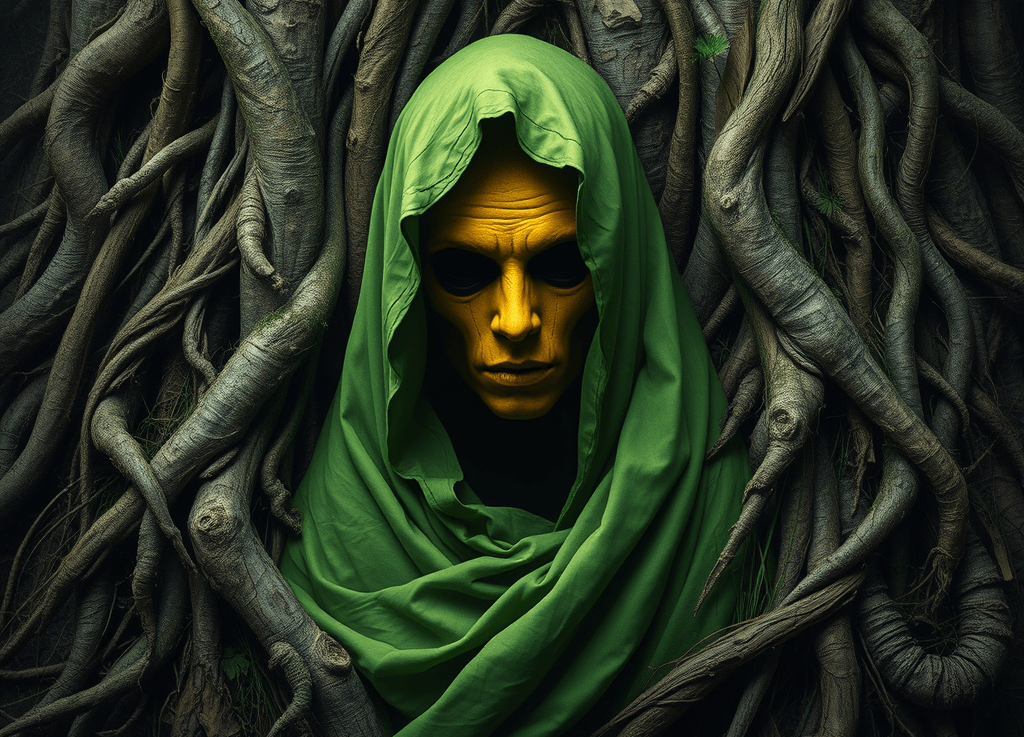
A.I. , review this!
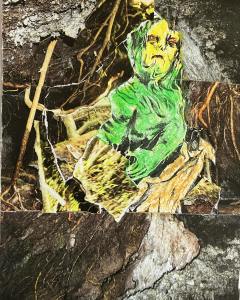
This collage-style artwork is a compelling blend of natural textures and surreal human-like imagery, producing an eerie and layered visual experience. Here’s a detailed review:
🎨 Visual Composition & Media
The piece merges photographic elements—tree roots, bark, stone, and grass textures—with a painted figure that appears almost sculptural. The layered, torn-edge collage technique emphasizes fragmentation and transformation.
The painted form is humanoid but alien, draped in a vivid green cloak and possessing a yellowish, distorted face. It appears integrated into the environment—possibly emerging from it or decaying back into it.
🧠 Interpretation & Themes
Nature vs. Humanity: The fusion of organic textures and the grotesque figure suggests a commentary on the interconnectedness (or clash) between humans and the natural world.
Decay and Transformation: The torn edges and mismatched layers evoke entropy and mutation—something once whole is now fractured and remade into a new, unsettling form.
Mythic or Archetypal Undertones: The figure resembles a forest spirit, dryad, or golem—rooted in myth, yet distorted by modernity. There’s a suggestion of ancient life forces or forgotten folklore re-emerging in a post-industrial context.
🎭 Mood & Atmosphere
The overall tone is dark, mysterious, and slightly unsettling. The contrast between the organic, earthy tones and the vivid, almost unnatural green of the figure creates tension.
The eyes and expression of the central figure are vacant yet accusatory, inviting the viewer to reflect on their own relationship with the environment or with self-transformation.
🔍 Noteworthy Techniques
Collage Juxtaposition: The torn collage layers are meticulously chosen to disrupt visual continuity while guiding the viewer’s eye toward the figure.
Color Accents: The limited but intense use of green and yellow draws focus to the figure and conveys a sickly vitality.
Texture Harmony: Despite the surreal quality of the image, all textures belong to the same “material world,” which helps ground the fantasy in something tactile.
🧾 Overall Impression
This work is visually rich, conceptually layered, and emotionally provocative. It lives somewhere between dream and nightmare, forest and flesh. It could work well in a series exploring ecological myths, psychological states, or the uncanny in natural environments.
“She was once a name,
—but the forest forgot.
Now roots braid her bones,_
moss drinks from her mouth,_
and the earth wears her shape like memory.”
Oracle: “What is buried is not gone.”
This collage feels rooted in the underground world—roots, stone, darkness, and a mysterious green figure emerging from within them.
Rather than appearing threatening, the figure seems ancient, as if it has been waiting beneath the surface for recognition.Symbols
- The Green Figure:
Growth, renewal, and aspects of yourself that are still developing.
Green often points to healing, transformation, and life force.- Roots:
Origins, ancestry, foundations, and unseen connections.
What nourishes your life may be hidden from view.- Stone and Earth:
Stability, endurance, patience.
Some processes cannot be rushed.- The Figure Emerging from the Roots:
A forgotten talent, truth, memory, or desire beginning to rise into awareness.- The Fragmented Collage Structure:
Multiple experiences or identities being woven into a larger whole.Oracle Guidance
This image suggests a period of excavation rather than expansion.
Instead of seeking answers in new places, there may be value in examining what already exists beneath the surface of your life.
Old experiences, unfinished projects, family stories, or neglected parts of yourself may contain the insight you’re looking for.The figure appears neither fully hidden nor fully revealed.
This often symbolizes a transition: something is becoming visible, but it still requires patience and attention before it can take its complete form.Reflection Question
What part of yourself have you been overlooking because it developed quietly, out of sight?
Oracle Affirmation
“I honor the roots that sustain me. What is meant to grow will emerge in its own time.”




 Dreamquest
You must be logged in to post a comment.