Tag: Han

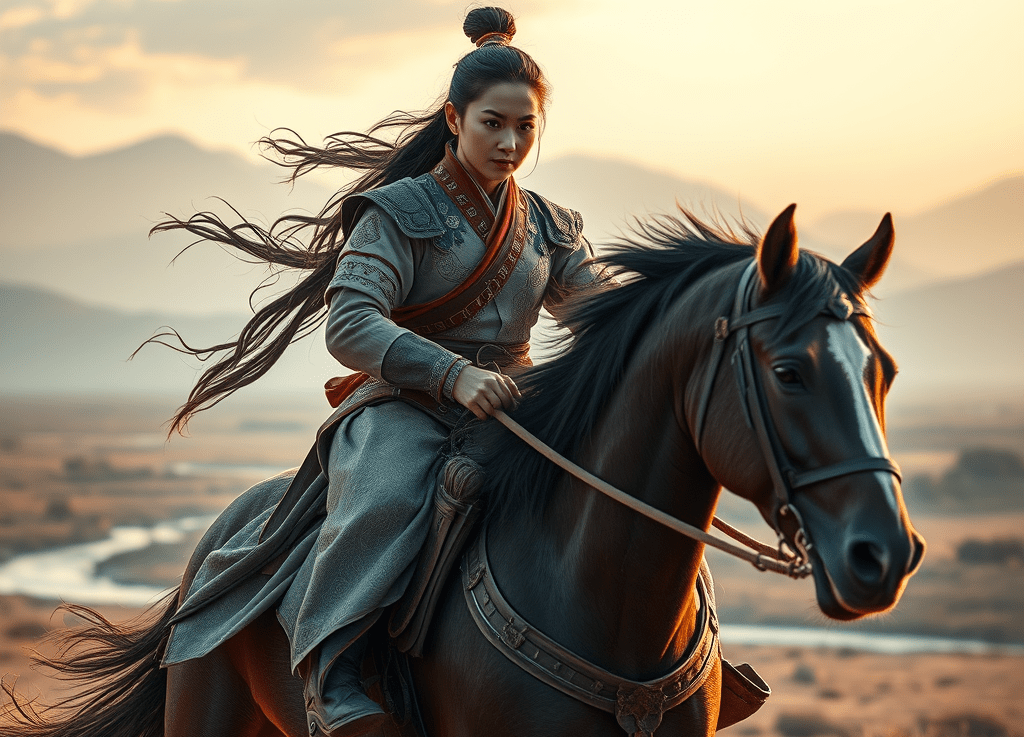
MuLan

MuLan


Tsiek tsiek and again tsiek tsiek,
Mu-lan weaves, facing the door.
You don’t hear the shuttle’s sound,
You only hear Daughter’s sighs.

They ask Daughter who’s in her heart,
They ask Daughter who’s on her mind.
“No one is on Daughter’s heart,
No one is on Daughter’s mind.

Last night I saw the draft posters,
The Khan is calling many troops,
The army list is in twelve scrolls,
On every scroll there’s Father’s name.

Father has no grown-up son,
Mu-lan has no elder brother.
I want to buy a saddle and horse,
And serve in the army in Father’s place.”

In the East Market she buys a spirited horse,
In the West Market she buys a saddle,
In the South Market she buys a bridle,
In the North Market she buys a long whip.

At dawn she takes leave of Father and Mother,
In the evening camps on the Yellow River’s bank.
She doesn’t hear the sound of Father and Mother calling,
She only hears the Yellow River’s flowing water cry tsien tsien.

At dawn she takes leave of the Yellow River,
In the evening she arrives at Black Mountain.
She doesn’t hear the sound of Father and Mother calling,
She only hears Mount Yen’s nomad horses cry tsiu tsiu.

She goes ten thousand miles on the business of war,
She crosses passes and mountains like flying.
Northern gusts carry the rattle of army pots,
Chilly light shines on iron armor.

Generals die in a hundred battles,
Stout soldiers return after ten years.
On her return she sees the Son of Heaven,
The Son of Heaven sits in the Splendid Hall.

He gives out promotions in twelve ranks
And prizes of a hundred thousand and more.
The Khan asks her what she desires.
“Mu-lan has no use for a minister’s post.

I wish to ride a swift mount
To take me back to my home.”
When Father and Mother hear Daughter is coming
They go outside the wall to meet her, leaning on each other.

When Elder Sister hears Younger Sister is coming
She fixes her rouge, facing the door.
When Little Brother hears Elder Sister is coming
He whets the knife, quick quick, for pig and sheep.

“I open the door to my east chamber,
I sit on my couch in the west room,
I take off my wartime gown
And put on my old-time clothes.”

Facing the window she fixes her cloudlike hair,
Hanging up a mirror she dabs on yellow flower powder
She goes out the door and sees her comrades.
Her comrades are all amazed and perplexed.

Traveling together for twelve years
They didn’t know Mu-lan was a girl.
“The he-hare’s feet go hop and skip,
The she-hare’s eyes are muddled and fuddled

Two hares running side by side close to the ground,
How can they tell if I am he or she?

Anonymous (c.5 A.D.)

Reiki, hoe zit dat?

Reiki, hoe zit dat?


Reiki is van oorsprong veel meer dan alleen maar een inwijding (ter waarde van een paar duizend eurie) in handoplegging.

Volgens de overlevering:
Usui, een Tendai Boeddhist, mediteert en vast op een berg, en ontvangt inzichten die hem ertoe zetten om zijn spirituele leer te formuleren, waarbij spirituele ontwikkeling centraal staat.
Oorspronkelijk was de Reiki-inwijding ingebed in een complete spirituele leer, waarin men via meditaties en leefstijl de mogelijkheid verwerft om tot (zelf)genezer te ontwikkelen.
Zelfs tijdens het leven van Usui was het systeem continu in ontwikkeling.
Zijn leerling Hayashi, ontwikkelde het systeem meer in de richting van healing, en verliet de oorspronkelijke organisatie na de dood van Usui.
Zo onstond reeds in Japan allerlei afsplitsing van Reiki.

Een belangrijke ontwikkeling werd ingezet door de leerling van Hayashi, Takata: zij introduceerde het sterk veranderde Reiki-systeem in Amerika, compleet met gestructureerde symbolen en hand-opleggingen (en een hoog prijskaartje).
Nu onstond dus een Amerikaanse afsplitsing van Reiki, en dit is de versie die we in Europa het meeste tegenkomen, de Reik Alliantie.

Daarnaast nog allerlei andere afsplitsingen, waarbij het soms lijkt op een wedstrijdje ‘extra geheime symbolen ontdekken/channellen’.

Tenslotte is er ook nog een streven van een aantal groepen om ‘de oorspronkelijke Reiki te herstellen’, een nobel streven met als probleem dat Usui zo weinig documentatie heeft achtergelaten mbt zijn oorspronkelijk systeem en de ontwikkeling daarvan tot aan zijn dood.

http://en.wikipedia.org/wiki/Reiki#History
http://www.aetw.org/reiki_history_tl.html

Xiao Ao Jiang Hu

Xiao Ao Jiang Hu


A Laugh at the World” The seas laugh, lashing on both shores.
Carried in the waves, we only know the here and now.
The heavens laugh at the troubled world.
Only they know who is to win and lose.
The mountains laugh, the rain is afar.
When the waves grow old, the world still goes on.
The clear winds laugh, such a feeling of solitude.
Bygone camaraderie, leaving behind a tinge of melancholy.
The earth laughs, solitude no more.
My sentiments laughing still

Reiki

Reiki


Reiki-overdenkingen, met dank aan http://www.aetw.org/reiki.html
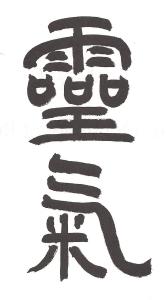
De symbolen die gebruikt worden voor Rei Ki komen uit het Chinees:


Ling Qi, ook te vertalen met “universele levensenergie”.
De overige ReiKi symbolen komen uit het Chinees of het Sanskriet.

De Ling-Qi symbolen worden in het Japans uitgesproken als Rei Ki, maar de betekenis blijft wel hetzelfde.
Overigens zijn er ook andere Rei Ki symbolen die van oorsprong Chinese varianten van Sanskriet-tekens zijn.
Er zijn dan ook onderzoekers die menen dat Usui zijn inwijding oorspronkelijk ontving in een Buddhistische stroming die uit China kwam overwaaien.

Het is niet voor het eerst dat een Japanner iets overneemt van China.

Iets dergelijks gebeurde ook met Aikido toen Ueshiba uit china terugkeerde (men zegt dat hij trainingen heeft ondergaan in het Shaolin-klooster).

Tegenwoordig zijn er zoveel verschillende soorten Reiki inwijdingen en symbolen, er komen er steeds meer bij.

Daar ‘horen’ dan weer van die discussies bij in de trant van:
Deze Reiki is beter dan die, omdat het traditioneler is en/of meer symbolen heeft en/of extra magnified kleurensysteem etc etc etc…

Er is heel veel legendevorming over de diverse varianten van Reiki, daar is ook veel kaf onder het koren, dus enige bronnenkennis is belangrijk om je niet zomaar te laten verleiden voor een dure onzinnige inwijding van iemand die beweert dat hij/zij iets gechanneld heeft op dat gebied.

In mijn visie zijn de inwijdingen & symbolen slechts hulpmiddelen, de sleutel zit echter in het richten van de intentie op een specifieke manier

Er wordt gezegd dat Usui’s Reiki beinvloedt is door het Japanse Kotodama (??)
taal-magie, waarbij vanuit wordt gegaan dat specifieke klanken, woorden of symbolen macht hebben.
Dit principe kom je in diverse magische stromingen tegen, in Azie is het ontstaan in India.

Als je kijkt naar het tweede symbool van Kotodama (??), namelijk ?, zie je het symbool dat het eerste deel is van ReiKi, namelijk Rei (?).
Dus hetzelfde symbool wordt in Japan op twee verschillende manieren uitgesproken!

In mijn visie zit de magie echter niet in de klank of het symbool, maar de lading die je toekent aan de klank of het symbool.

Zo sprak ik ooit met iemand die zijn runen oplaadde met Reiki; en ik dacht, waarom niet?

En voor hetzelfde geld kan je ook Runen (of andere symbolen en klanken) gebruiken om te genezen.

Het is natuurlijk wel gemakkelijker, als je kan aansluiten bij een bestaande traditie waar je affiniteit mee hebt.

Huichang

Huichang


In het oosten breekt de dag aan.
Zeg niet dat we vroeg op mars zijn.
Struikelend nemen we de groene heuvels
maar oud zijn we nog niet.
En van hier is het landschap puur goed.

Voorbij de muren van Huichang tuimelen
hoge pieken recht achtereen tot aan de zee
De soldaten wijzen elkaar het zuiden:
ui-groen, welig Guangdong.

Mao Zedong

De Ballade van Li Po

De Ballade van Li Po


Dit is de ballade van Li-Po
Chinese dichter van ‘t moment en van de wij
Van het lied der korte vreugde
Met wind en regen als gevrij

Misschien had hij enkel een zwerversnatuur
En was hij een blad in de wind
Misschien zocht hij daarom geen rust en geen duur
Verwond’ring kent ieder moment
Hij bouwde geen huis met een drempel, een tuin
Een brandkast voor d’ winter die komt
Hij zwierf door het hemelse rijk maar wat rond
Als een blad, als een steen, als een hond

Hij zong van de vrijheid, hij zong van de wijn
Hij zong van het korte moment
Het korte moment, dat een parel kan zijn
In ‘t leven dat ieder wel kent
Hij kende het troostende liefdesgebaar
Hij kende de as van het vuur
Hij voelde de pijn van het mens’lijk tekort
Maar hij zong naar z’n eigen natuur

In de Gele Rivier, op een maanlichte nacht
Zong hij zomaar met ‘t oog op de maan
Maar hij reikte te ver, en het is daar te diep
Veel te diep voor een mens om te staan
Een boot die leeg aankwam vertelde het nieuws
Aan de oever die schuilging in ‘t riet
En nog steeds zingt Hong-Ho z’n troosteloos lied
Om Li-Po, maar Li-Po hoort het niet

Lenny Kuhr

The Chariots Go Forth to War

The Chariots Go Forth to War


The chariots go forth to war,

Rumbling, roaring as they go;

The horses neigh and whinny loud,

Tugging at the bit.

The dust swirls up in great dense clouds,

And hides the Han Yang bridge.

In serried ranks the archers march,

A bow and quiver at each waist;

Fathers, mothers, children, wives

All crowd around to say farewell.

Pulling at clothes and stamping feet,

They force the soldiers’ ranks apart,

And all the while their sobs and cries

Reach to the skies above.

"Where do you go to-day ?" a passer-by

Calls to the marching men.

A grizzled old veteran answers him,

Halting his swinging stride:

"At fifteen I was sent to the north

To guard the river against the Hun;

At forty I was sent to camp,

To farm in the west, far, far from home.

When I left, my hair was long and black;

When I came home, it was white and thin.

Today they send me again to the wars,

Back to the north frontier,

By whose gray towers our blood has flowed

In a red tide, like the sea–

And will flow again, for Wu Huang Ti

Is resolved to rule the world.

"Have you not heard how in far Shantung

Two hundred districts lie

With a thousand towns and ten thousand homes

Deserted, neglected, weed-grown?

Husbands fighting or dead, wives drag the plow,

And the grain grows wild in the fields.

The soldiers recruited in Shansi towns

Still fight; but, with spirit gone,

Like chickens and dogs they are driven about,

And have not the heart to complain."

"I am greatly honored by your speech with me.

Dare I speak of my hatreds and grief ?

All this long winter, conscription goes on

Through the whole country, from the east to the west,

And taxes grow heavy. But how can we pay,

Who have nothing to give from our land ?

A son is a curse at a time like this,

And daughters more welcome far;

For, when daughters grow up, they can marry, at least,

And go to live on a neighbor’s land.

But our sons? We bury them after the fight,

And they rot where the grass grows long.

"Have you not seen at far Ching Hai,

By the waters of Kokonor,

How the heaped skulls and bones of slaughtered men

Lie bleaching in the sun?

Their ancient ghosts hear our own ghosts weep,

And cry and lament in turn;

The heavens grow dark with great storm-clouds,

And the specters wail in the rain."

DuFu

Chang Sha

Chang Sha


Alone I stand in the autumn cold
On the tip of Orange Island,
The Xiang flowing northward;
I see a thousand hills crimsoned through,
By their serried woods deep-dyed,
And a hundred barges vying
Over crystal blue waters.
Eagles cleave the air,
Fish glide under the shallow water;
Under freezing skies a million creatures contend in freedom.
Brooding over this immensity,
I ask, on this bondless land
Who rules over man’s destiny?

I was here with a throng of companions,
Vivid yet those crowded months and years.
Young we were, schoolmates,
At life’s full flowering;
Filled with student enthusiasm
Boldly we cast all restraints aside.
Pointing to our mountains and rivers,
Setting people afire with our words,
We counted the mighty no more than muck.
Remember still
How, venturing midstream, we struck the waters
And the waves stayed the speeding boats?

Mao Zedong

Whitecrane magick

Whitecrane magick


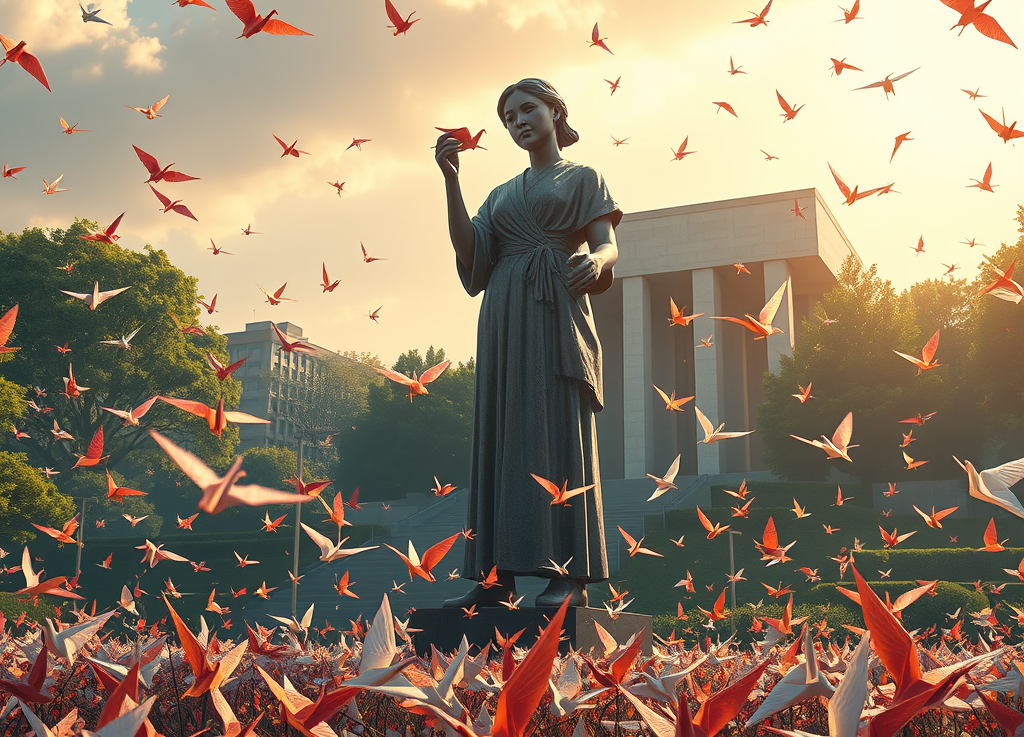
The paper crane has become an international symbol of peace in recent years as a result of it’s connection to the story of a young Japanese girl named Sadako Sasaki born in 1943.
Sadako was two years old when the atom bomb was dropped on Hiroshima, Japan on August 6, 1945.
As she grew up, Sadako was a strong, courageous and athletic girl. In 1955, at age 11, while practicing for a big race, she became dizzy and fell to the ground.
Sadako was diagnosed with Leukemia, "the atom bomb" disease.
Sadako’s best friend told her of an old Japanese legend which said that anyone who folds a thousand paper cranes would be granted a wish. Sadako hoped that the gods would grant her a wish to get well so that she could run again. She started to work on the paper cranes and completed over 1000 before dying on October 25, 1955 at the age of twelve.

The point is that she never gave up.
She continued to make paper cranes until she died.
Inspired by her courage and strength,
Sadako’s friends and classmates put together a book of her letters and published it.
They began to dream of building a monument to Sadako and all of the children killed by the atom bomb.
Young people all over Japan helped collect money for the project.

In 1958, a statue of Sadako holding a golden crane was unveiled in Hiroshima Peace Park. The children also made a wish which is inscribed at the bottom of the statue and reads:

"This is our cry, This is our prayer, Peace in the world".

Today, people all over the world fold paper cranes and send them to Sadako’s monument in Hiroshima.

http://www.sadako.org/

Het Munt-orakel

Het Munt-orakel


Hiervoor heb je drie munten nodig, als je Nederlandse munten gebruikt dan heeft Kop een vrouwelijke beeltenis, dus is het Yin en heeft het getalswaarde 2 (twee).

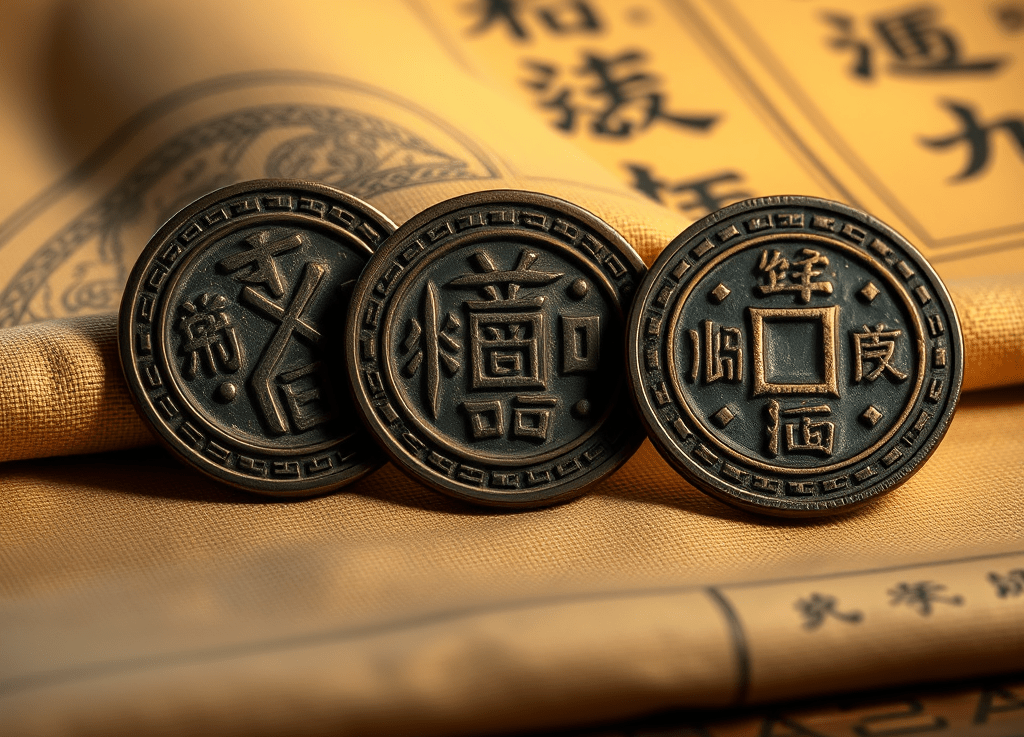
Zelf heb ik chinese munten (authentieke antieke munten kan je kopen in Amsterdam, maar er zijn ook aardige goedkope replica’s in de handel).
Meestal hebben ze aan de ene kant chinese tekens, en aan de andere kant mongoolse tekens

Mijn munten zijn uit de QianLong periode (1736-1795), aan de chinese kant staat Qian, dat is Yang, dus de mongoolse kant is dan Yin.

Kop = Yin = 2
Munt = Yang = 3

Als je met drie chinese munten gooit, heb je dus de volgende mogelijke uitkomsten:

2 + 2 + 2 = 6, een Yin lijn die verandert in Yang
2 + 2 + 3 = 7, een stabiele Yang lijn
2 + 3 + 3 = 8, een stabiele Yin lijn
3 + 3 + 3 = 9, een Yang lijn die verandert in Yin

Dus muntworpen die resutleren in waarde 6 en 9 geven veranderlijke lijnen, die terug te vinden zijn in de grondtekts:
”zes op de zoveelste lijn”
“negen op de zoveelste lijn”

Bij het vormen van een hexagram werp je zesmaal met de drie munten, er zijn dus zes lijnen die potentieel kunnen veranderen, waardoor een hexagram potentieel kan veranderen in een ander hexagram.
Een hexagram is zelden 100 % statisch onveranderlijk, meestal verandert er ergens wel iets.

Het Boek der Veranderingen legt dan ook de nadruk op het gegeven dat elke situatie onderhevig is aan veranderingen.