Tag: mystery

The enemy of my enemy

The enemy of my enemy


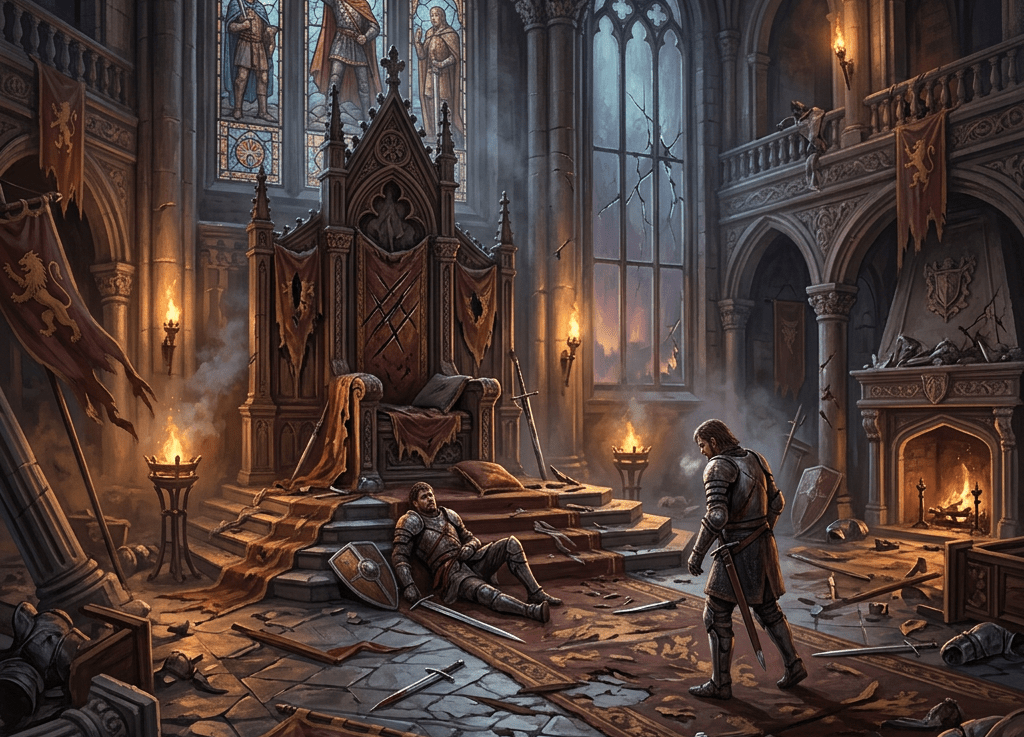
Lady Blackbird drew her sword and advanced to attack her advesary.
“En garde, Lord Scurlock!”

Lord Scurlock sighed.
It was the kind of sigh a man makes when the evening has gone badly and somebody has just spilled gin on the carpet.
He rose from the throne.
He was tall, thin, and dressed in a black coat that looked as though it had been tailored by a funeral director with a grudge.
A silver chain hung from his waist.
At the end of it was a watch.
The watch was ticking backward.

“Must we?” Scurlock asked.

Lady Blackbird lunged.
Scurlock stepped aside.

She struck the throne.
The throne screamed.

Lady Blackbird spun and attacked again.
Scurlock parried with one finger.
The blade stopped an inch from his chest.
“Good sword,” he said.

“Good finger,” she replied.

He smiled.
Then he flicked her sword across the hall.

It landed beside Captain Avery.

Avery picked it up.
“I dislike him,” he said.

“You’re not alone,” said the Guardian.
The Guardian was hiding behind engineer Leonardo.

Scurlock looked at him.
The room became colder.
“You,” he said.

The Guardian swallowed.

“Me?”

“You pulled the lever.”

“That was her.”

Scurlock walked toward them.
Behind him, the golden throne folded itself into the shape of a chair.

“Lord Scurlock,” said Avery, raising the sword, “what exactly are you planning?”

Scurlock stopped.
Through the enormous windows came the sound of something moving across the sky.
Not flying.
Dragging itself.

Scurlock glanced upward.
“For once,” he said, “I’m not planning anything.”

The marble floor trembled.

“Then what is that?”

Scurlock looked at them.
“That,” he said, “is the reason I built the door.”

Avery frowned.
“The door exploded.”

“Yes.”

“Was that part of the plan?”

Scurlock considered this.
“No.”

The ceiling cracked.
Something enormous looked down through it.

Scurlock smiled without humor.
“Now,” he said, “we may all attack together.”

ping:

Behind the Atlantis portal

Behind the Atlantis portal


The thing behind the door cleared its throat.

Captain Avery drew his sword.

Engineer Leonardo drew a ruler.

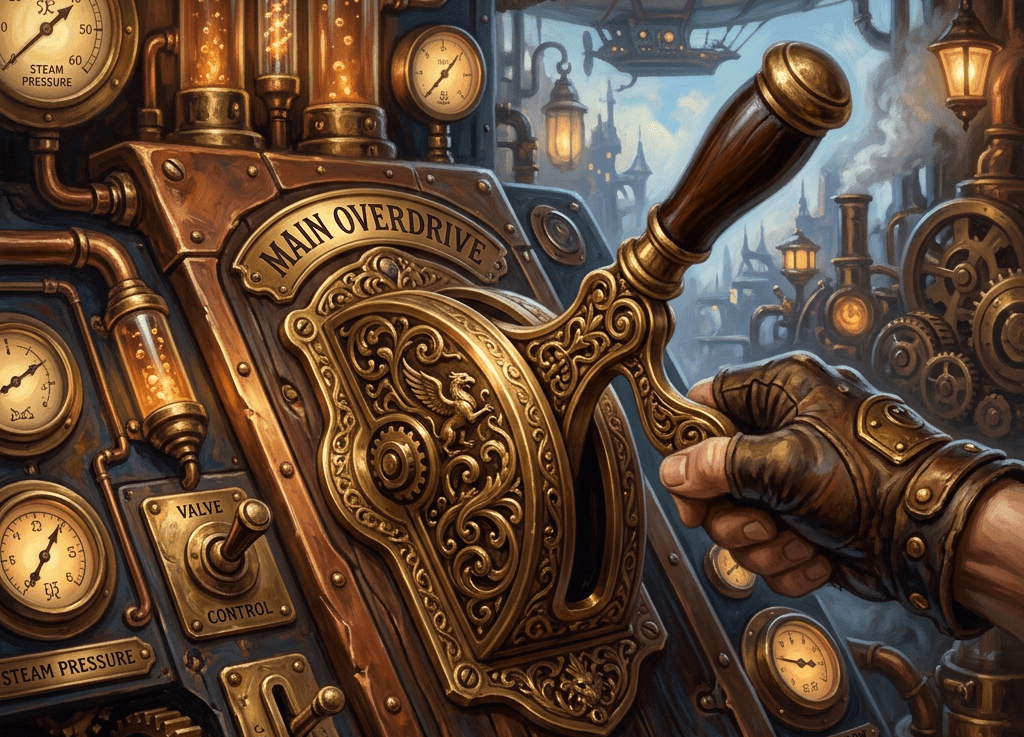
Lady Blackbird drew the brass lever.

“Who,” asked Avery, “is behind the door?”

The door exploded.

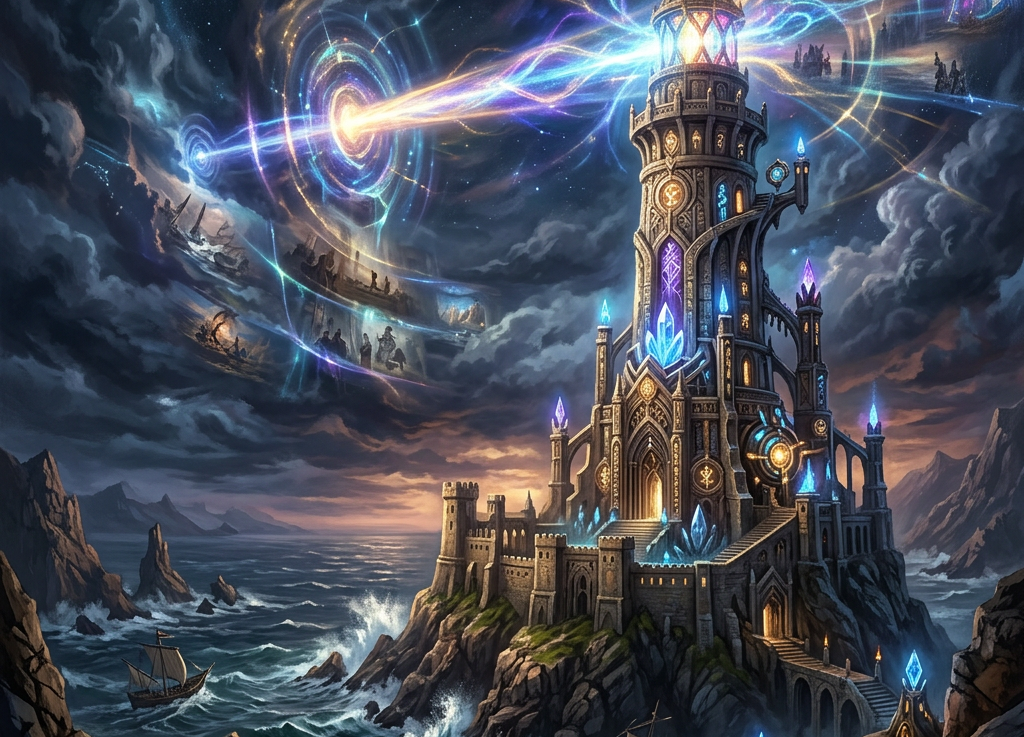
The bronze beacon screamed.

“Oh,” said the Guardian.

Everyone looked at him.

“That’s not supposed to happen.”

“What isn’t?” asked Lady Blackbird.

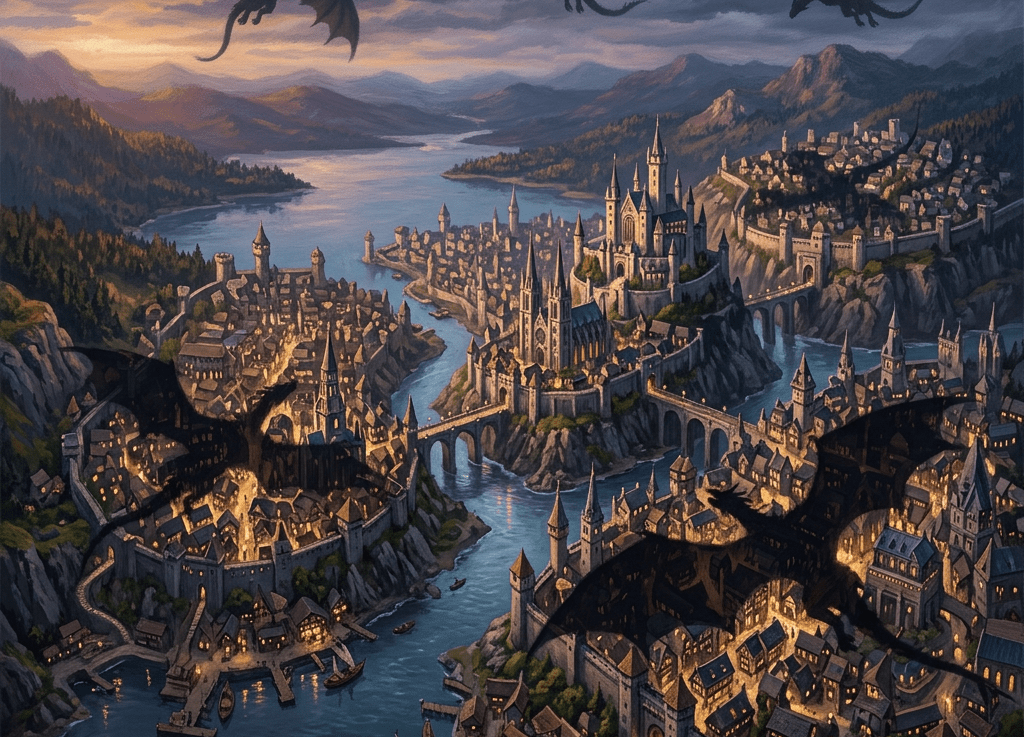
A shadow passed over the city.

Then another.

Then a third.

Engineer Leonardo looked upward.

Lady Blackbird looked at the brass lever.
“Now that,” she said, “looks useful.”

The Guardian lunged.“No!”
Too late.

She pulled it.

When sight returned, they were standing in a vast marble hall.

A golden throne stood before them.

Upon it sat a very strange man.

Avery stared.

Leonardo dropped his ruler.

The man on the throne raised an eyebrow.
“I suppose,” he said, “you’ve come to stop me.”
He smiled.

ping:

Atlantis Encounter

Atlantis Encounter


A door opened.
Beyond it stood a man in a grey suit.He was carrying a clipboard.

Everyone stared.

The man looked at the clipboard.
Then at them.
Then back at the clipboard.
“Excellent,” he said. “You’re all here.”

“Who are you?” asked Avery.

“Future Maintenance.”

Leonardo blinked.
“That’s not a person.”

“Neither is Atlantis, technically. We all have to compromise.”
The man stepped inside and closed the door behind him.

Outside, the mountain stopped moving.
The river flowed downhill.
The sea remembered what gravity was.

For a moment, everything was normal.
This was immediately suspicious.

Lady Blackbird pointed at the brass lever.
“You said maintenance wasn’t complete.”

“It isn’t.”

“Then why is everything fixed?”

The man sighed.
“It isn’t fixed. It has been postponed.”

Captain Avery looked horrified.
“To when?”

The bronze beacon began to hum.

The Guardian went pale.
“Captain,” he whispered. “Put the lever back.”

Avery slowly released it.

The man in the grey suit shook his head.
“Too late.”

The chest clicked.

Behind them, something enormous knocked on the door.
Three times.
Then, after a pause, it knocked again.
This time from inside the room.

ping:

Exploring Atlantis

Exploring Atlantis


Lady Blackbird peered through the window.
“Atlantis is very different in this spacetime-frame!”

Captain Avery followed her gaze.
Below them, the sea had acquired several additional directions.
A mountain was currently sliding sideways across the horizon with the embarrassed determination of a cupboard being moved through a narrow doorway.

Leonardo frowned.
“Atlantis?”

“Yes,” said the guardsman at the gate.

“But Atlantis sank.”

“In your spacetime.”

Avery looked at him.
“And in this one?”

“It was promoted.”

Nobody asked what that meant.
This was partly because the question seemed dangerous, and partly because a second bronze beacon had just begun emitting a noise rather like a giant clearing its throat.

The masked guardian turned.
“Lighthouse Forty-Nine is unstable.”

“What does it prevent?” asked Lady Blackbird.

“Time.”

“From doing what?”

“Arriving in the wrong order.”

There was a pause.
Leonardo looked deeply unhappy.
“That sounds important.”

“It is.”

“What happens if it fails?”

The custodian considered this.
“Yesterday may occur tomorrow.”

Avery sighed.
“That already happens.”

“Not with consequences.”

The beacon flashed.

Leonardo stared at Avery.
“You look pale.”

“I’ve just remembered something.”

“What?”

“I don’t know yet.”

Lady Blackbird, meanwhile, had opened the chest.
“Ah,” she said.

Everyone turned.
Inside, beside the lightning rod, was a small brass lever labelled:
GEOGRAPHY — RESET

Underneath, in smaller letters:
DO NOT USE UNLESS MAP IS ON FIRE

Leonardo swallowed.
“Is the map on fire?”

Lady Blackbird glanced toward the horizon.
A river had begun flowing uphill.

Avery reached for the lever.

The custodian caught his wrist.
“Captain.”

“Yes?”

“Maintenance is not complete yet.”

Behind them, something enormous knocked politely on the door.
Three times.
Then it waited.


Ping:

Atlantis Artifacts

Atlantis Artifacts


Captain Avery had always believed that the universe, if approached with sufficient skepticism, would eventually admit it was making a mistake.
The universe, regrettably, had developed a contrary disposition.

“Maintenance,” he repeated. “For the record, whenever an ancient civilization says maintenance, ordinary people usually end up fleeing something with entirely unreasonable numbers of legs.”

A masked figure inclined its head.
“Statement statistically supported.”

Engineer Leonardo brightened with the unmistakable enthusiasm of a man discovering his worst fears had been peer-reviewed.
“Oh dear.”

Lady Blackbird stepped toward the chest, where the lightning rod lay with the innocent composure peculiar to artifacts that had previously ended empires.
It looked almost respectable now, which was deeply suspicious.
espectability, she had long observed, was often merely catastrophe wearing polished boots.

“What,” she asked, “requires maintenance after a thousand years?”

All the masked custodians answered together.
“Reality.”

Nobody spoke for several seconds.
Even silence appeared uncertain whether it wished to continue.

Leonardo eventually cleared his throat with the care of a gentleman attempting not to offend the laws of existence.
“I should like,” he said, “to hear the longer explanation.”

“There is no longer explanation.”

“I was afraid of that.”

The bronze beacon turned once, almost thoughtfully.
Far below, another blue column flickered.
Then another vanished.

The nearest custodian regarded the distant light without visible concern, which somehow made matters considerably worse.
“Lighthouse Forty-Eight has failed.”

“What does it illuminate?” Avery asked.

The masked face turned toward him.
“It prevents geography.”

There are professions that prepare one for alarming statements.
Accounting occasionally brushes against them.
Diplomacy rents them by the afternoon.
Sailors become acquainted through prolonged exposure.
None, however, adequately equip a person for learning that mountains, oceans and respectable peninsulas apparently required supervision lest they wander off like absent-minded sheep.

Somewhere beneath the clouds came a noise resembling continents reconsidering their arrangements.

Leonardo removed his spectacles, polished them carefully, replaced them, and sighed.


Ping:

The Silent Bells of Atlantis

The Silent Bells of Atlantis


A bell sounds without echo.

It simply continues existing, each note suspended in the air as though sound itself has forgotten how to fade.
The clouds beneath the Chain Spires ripple in slow circles, not from wind but from pressure, as if the heavens have become the surface of a pond disturbed by an invisible stone.

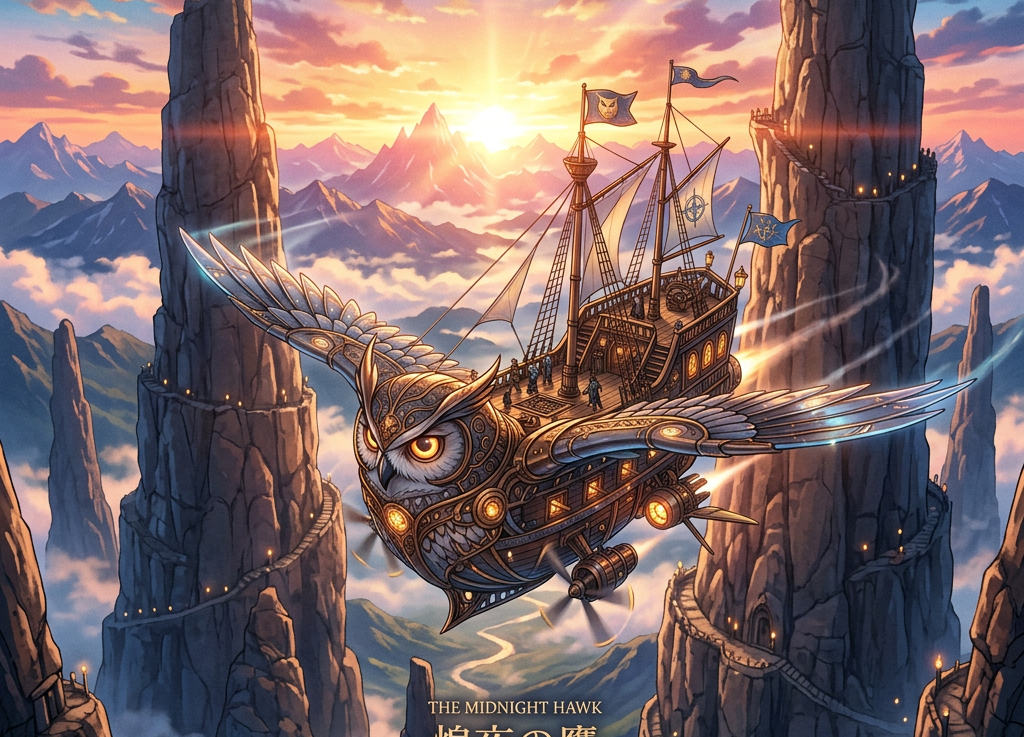
Captain Avery instinctively reaches for the helm.
“Tell me someone else hears that.”

Everyone aboard the Swift Skyship Owl nods.
Even the ship seems to respond.
The brass compass mounted beside the wheel rotates lazily through every direction before settling somewhere impossible—straight upward.

Engineer Leonardo studies it with narrowed eyes.
“I distinctly designed that to disagree only with magnets.”

A second bell joins the first. Then a third.

None of them originate from the bronze lantern suspended between the towers.
Instead they seem to emerge from different distances at once, as though enormous invisible churches have been hidden throughout the sky.

The beacon brightens.
Its crystal heart rotates within its bronze cage.
Blue light pours through engraved symbols circling the lantern’s frame.
The runes are unlike any alphabet recorded in royal libraries.
They resemble diagrams pretending to be letters, geometric thoughts carved into metal by minds that considered mathematics a native language.

The lightning rod, recovered by Lady Blackbird from the forgotten ruins, answers.
It begins humming inside its storage chest.
The lid rattles.

“Perhaps,” says Leonardo carefully, “we should not open that.”

The chest unlatches itself.
The rod rises into the air with serene confidence, floating upright like a compass needle that has suddenly remembered true north.
Thin threads of azure electricity stretch from its tip toward the distant beacon.
No one aboard touches it.

No one wishes to volunteer for whatever conversation two ancient machines have decided to resume.

The Swift Skyship Owl lurches gently.
Not from turbulence.
From being pulled.
The invisible force is subtle but undeniable, like the tide persuading a drifting boat that resistance is an unnecessary hobby.

Avery eases the helm against it.
The ship answers for exactly three seconds before politely ignoring him.
“I don’t appreciate vessels developing opinions,” he mutters.

Leonardo folds his arms.
“I have built many remarkable devices.”

He watches the wheel turn of its own accord.
“I do not recall constructing one with ambition.”

Ahead, the Chain Spires grow larger.
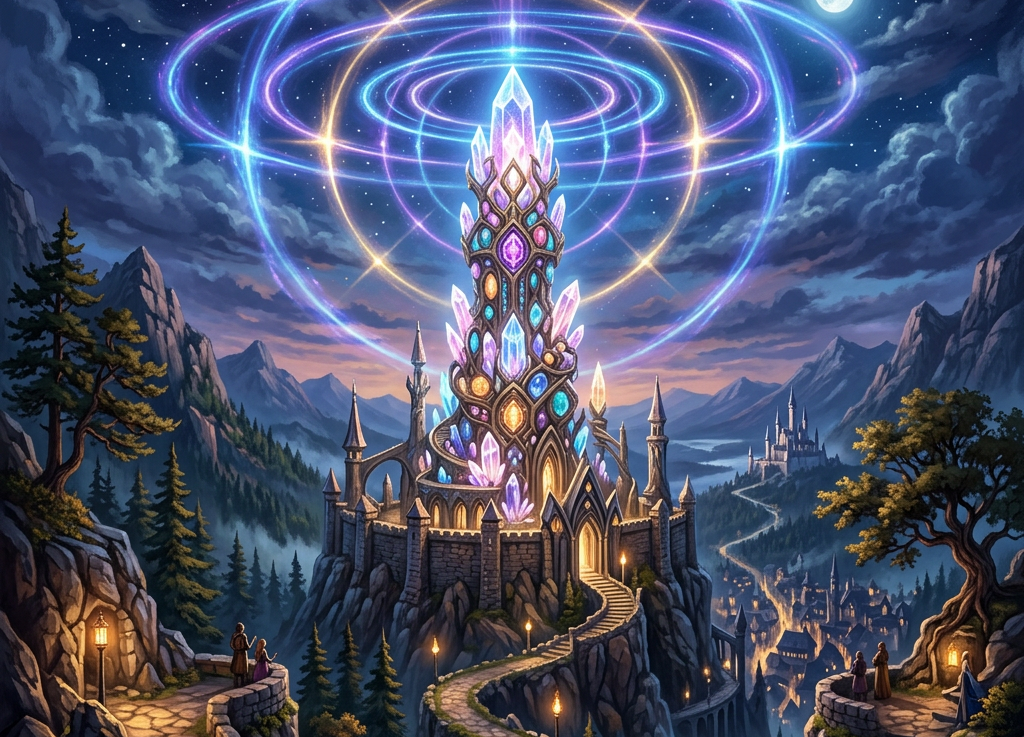
Each tower is carved from a single pillar of dark stone streaked with veins of silver that shimmer beneath the bronze beacon’s glow.
Iron chains disappear into the clouds below, so vast that entire villages could have stood upon a single link.
The copper vanes atop every tower spin faster.

Still there is no wind.
As the Owl drifts closer, figures appear upon the nearest platform.
Not statues.
People.
Or something close enough to invite dangerous assumptions.

They wear long coats woven with threads of tarnished copper, their faces hidden behind polished masks shaped like expressionless owls.
None carry weapons.
Instead each holds a staff crowned with a crystal that burns with the same pale blue fire as the beacon.
They watch the approaching skyship without waving.
Without moving.

One raises a gloved hand.
The bronze lantern answers.

A circle of light blossoms beneath the Swift Skyship Owl, spreading wider until it surrounds the entire vessel.
The humming rod descends gently back into its chest, as though satisfied it has introduced two old acquaintances.

The bells cease.

Silence returns with such completeness that the creak of a single rope sounds startlingly loud.
Then the nearest masked figure speaks.
Its voice arrives from every direction equally.
“Identification acknowledged.”

The pause that follows feels less like hesitation than the turning of a page in a very old book.
“Courier Vessel Designation: Owl.”

Another pause.
“Custodian Key recognized.”

Every masked head turns toward the chest containing the lightning rod.
“Protocol Seven has resumed.”

Leonardo blinks.
“I was unaware there were six previous protocols.”

The masked figure continues as though no interruption has occurred.
“The Lighthouse Network requests maintenance.”

The words hang in the still air.
Not a plea.
Not an order.
Simply the recitation of a duty left unfinished for centuries.

Far below, hidden beneath the endless blanket of cloud, something immense answers.
One by one, faint columns of blue light begin rising through the overcast in distant parts of the world.
There are dozens.
Then hundreds.
Ancient beacons—silent since kingdoms were young—are awakening.

And somewhere beyond every known chart, where forgotten seas concealed cities that memory itself struggled to locate, one final light burns brighter than all the others before disappearing beneath the horizon once more.

Atlantis, it seems, had never stopped listening.
It had merely been waiting for someone to ring the bell.


Ping:

Lady Blackbird memories

Lady Blackbird memories


The memory settles like dust in an old observatory, refusing to stay buried.

The Swift Skyship Owl glides between ribbons of pale cloud, her new sun sail drinking light with almost suspicious enthusiasm. Leonardo’s workmanship remains unmistakable: every polished brass fitting looks as though it expects applause.
The reinforced ballista rests along the foredeck with the patient confidence of something designed to make pirates reconsider their career choices.

Atlantis remains absent from every horizon.
Some kingdoms vanish beneath waves.
Others disappear because everyone who remembers the way grows old at inconvenient moments.

The tale of the kraken corpse already acquires the untidy shape of legend.
Sailors repeat that a beast older than empires dies beside forgotten ruins.
Scholars insist the account is impossible. Scholars frequently mistake “impossible” for “inconvenient.”

Far ahead, a procession of narrow stone towers rises from the clouds.
They are linked by iron chains thicker than ancient oaks, each tower carrying copper vanes that turn despite the still air.
Blue sparks crawl between them in silent arcs.

An elderly navigator aboard a passing merchant skyship removes his hat.

“The Chain Spires,” he says. “Nobody anchors there willingly.”

His first mate snorts. “That’s because everyone who does comes back arguing with maps.”

The navigator nods solemnly.

“Maps are proud creatures. They dislike being proven wrong.”

Between the towers hangs a single object—a bronze beacon shaped like an enormous lantern. Its crystal heart pulses with the same peculiar azure glow as the lightning rod once recovered from the forgotten ruins.

The beacon awakens.

A clear bell rings across the empty sky.

Somewhere within the Chain Spires, ancient machinery begins turning for the first time in generations.

ping:

Gotham diaspora tales: Ghost Manor

Gotham diaspora tales: Ghost Manor


In the bath-house, one of the other guests started to tell a tall tale:

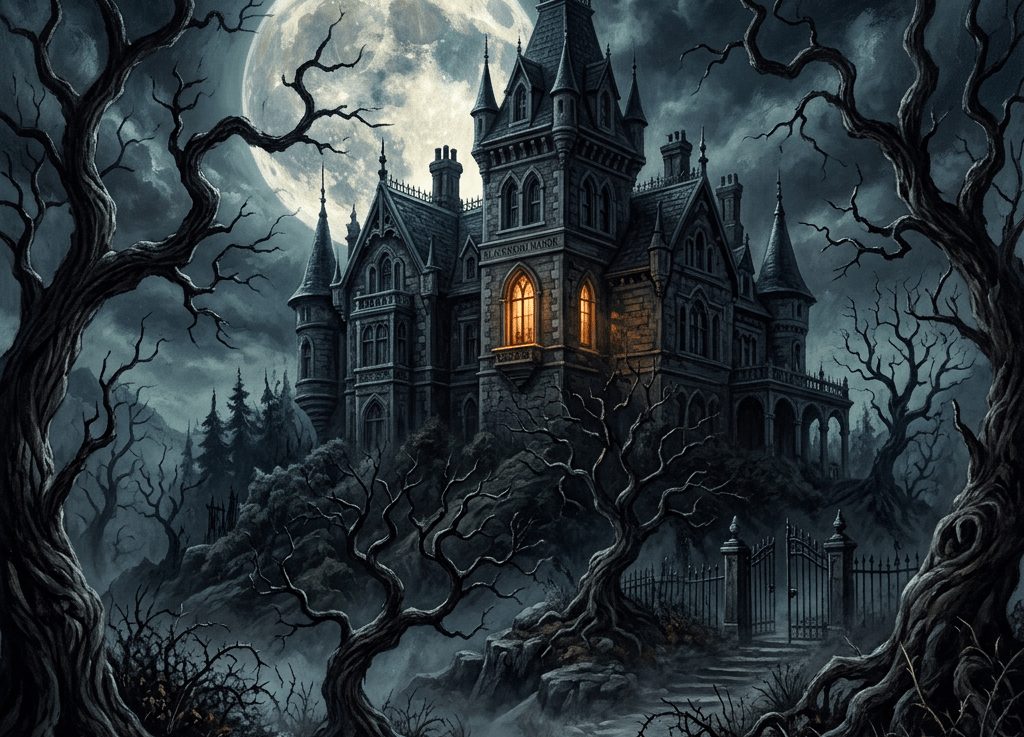
“The full moon had almost succeeded in being impressive before the storm clouds remembered they had a job to do.
They rolled across the sky like disgruntled bureaucrats, stamping out moonlight wherever they found it.
Lightning objected to this arrangement by repeatedly striking the enormous oak that crowned the hill.
The tree, having survived centuries of wars, winters and woodpeckers, finally conceded defeat and burned with all the dignity available to a very old tree on fire.

Beside the blazing oak stood Ghost Manor.
It had the unmistakable appearance of a house that regarded gravity as a personal insult and architecture as merely a suggestion. Leaning chimneys balanced on impossible angles, windows stared like suspicious eyes, and every stone looked as though it had spent decades listening to unfortunate conversations.

Our hero circled the manor cautiously.
The front door was much too obvious. In stories, front doors existed solely to discourage sensible people. He preferred to inspect the perimeter, where common sense occasionally had a chance of surviving.

Then he saw it.
A faint yellow light flickered behind a tiny basement window.
“Well,” he muttered, “either someone is awake… or something is pretending to be.”
He crept closer.
The light drifted toward him.
At first it resembled a firefly. A particularly confident firefly, admittedly, one that flew with the assurance of an aristocrat arriving fashionably late.
Then it grew.
The tiny glow unfolded into the shape of a beautiful young woman woven from amber fire, her hair dancing like candle flames in a draft.
She smiled.
“Hello, stranger. Tell me your name.”

Now, every child with the slightest education in folklore knew there were two questions one never answered honestly.
The first was, “May I have your true name?”
The second was, “Would you care to sign this perfectly harmless magical contract?”

Our hero bowed politely.
“My name,” he said after careful consideration, “is… Anome.”

The fiery woman laughed so loudly that sparks flew from her lips.
“Oh,” she chuckled, “that isn’t a name. That’s a decision.”
She exploded into a whirlwind of flame, becoming a magnificent burning bird.
With a triumphant cry it soared upward and vanished through a cracked window on the manor’s highest floor.

“Well,” sighed Anome, “that seems like an invitation.”
He climbed after it.


Inside, the hallway swallowed nearly every trace of light.
Only the faded black-and-white checkered floor reflected enough moonlight to suggest the house had once believed in geometry.
The corridor opened into a vast circular hall.`
Engraved upon the stone floor was a great compass rose marking the four directions.
North.
South.
East.
West.

Anome frowned.
“I’ve never trusted rooms that tell people where to go.”
Choosing North, he followed a corridor that twisted so often it seemed determined to arrive behind itself.
Eventually it ended……at a perfectly ordinary wall.

“There must be a secret door.”
The wall politely refused to disagree.
After considerable tapping, pushing and muttering, a hidden panel slid open.

Beyond lay an ancient laboratory.
Dust-covered bottles lined warped shelves.
Strange flasks bubbled despite containing nothing obvious.
Copper coils connected machines that looked capable of either producing gold or accidentally inventing thunderstorms.
After an exhaustive search, Anome found absolutely nothing useful.
Which, in abandoned laboratories, was often more alarming than finding something useful.

Leaving the room, he stepped through another doorway—
—and froze.
The compass hall.
Again.
He looked down.
Same engraved floor.
Same four exits.
“I refuse to believe I’ve become this lost already.”

He chose South.
Naturally.
The corridor should have led toward the entrance.
Instead, the walls seemed longer.
The air colder.
Somewhere ahead came a deep growl.

“Oh dear.”
The creature emerged from darkness like a nightmare assembled from spare parts.
Massive claws scraped the floor.
Eyes glowed crimson.
It charged.
The impact hurled Anome against the wall hard enough to rearrange several unpleasant memories.
After a frantic struggle involving elbows, panic and a surprising amount of shouting, he escaped by running with the determination normally reserved for tax collectors spotting unpaid debts.

The corridor twisted—
—and deposited him once more in the compass hall.

“Oh, you’ve got to be joking.”
This time he chose East.

Growling echoed ahead.
Then squeaking.
A gigantic wolf burst from the darkness.
It attacked with magnificent enthusiasm and very little planning.
After a desperate fight, Anome managed to defeat it.
The enormous wolf collapsed.
Its fur melted away.
Moments later, a dead man lay where the beast had fallen.

“A werewolf,” Anome murmured.
“Or perhaps merely someone having an exceptionally unfortunate evening.”
On the corpse gleamed a silver ring.
He pocketed it.
Silver rarely appeared accidentally in haunted houses.

The next corridor ended…
Of course.
The compass hall.

“Has this place considered adding diagonal directions?”

West.
The room beyond was vast, drowned in shadow and filled with furniture scattered without any visible purpose.
Tables leaned against wardrobes.
Chairs balanced upon cabinets.
A piano appeared to be hiding behind a sofa.

“What sort of decorator—”
The floor vanished.
He plunged into darkness.
The pit was deeper than optimism.
Eventually he landed, bruised but alive.

“There must be a way out.”

There was.
Unfortunately, it led directly…
…to the compass hall.

“There should definitely be more than four directions.”

Searching more carefully this time, he discovered a concealed door hidden beneath the northern staircase.
The passage descended into the basement.
There he found an immense library.
Dusty shelves formed a labyrinth of crumbling books. Forgotten knowledge slept beneath cobwebs thick enough to qualify as curtains.

“Treasure,” Anome whispered.
Books were treasure.
Then he found actual treasure.
Hidden inside a secret compartment rested a dagger that shone with its own clear silver light.
The instant he touched it, footsteps echoed nearby.

A pale figure emerged between the shelves.
Human.
Mostly.
Its smile displayed far too many teeth.
It lunged.
The shining dagger met the creature once.
Light burst through the library.
The bloodsucker dissolved into drifting ash.

“Well,” said Anome, examining the blade, “that certainly simplifies negotiations.”
Another door.
Another corridor.
Another—
Compass hall.

“I believe this house is beginning to repeat itself.”

He tried West again.
The same shadowy room.`
The same impossible furniture.
Except…
A mirror.
It hadn’t been there before.

His reflection smiled.
Anome did not.
The reflection stepped out of the glass.
“You look tired,” it said.
“I’ve had a difficult evening.”
The double attacked.
Steel flashed.
The shining dagger struck once.
The false Anome shattered into glittering fragments that vanished like broken moonlight.

Leaving the room, he opened another door.
Compass hall.
Again.
North.

This chamber was unlike the others.
Strange wooden wings filled the room.
Cables.
Levers.
Canvas stretched across elegant frames.
Some forgotten genius had attempted to teach humanity the ancient art of falling more artistically.
Strapped to the largest glider sat a mummified corpse.
Its eyes opened.
The ancient bindings snapped.

The mummy rose with alarming enthusiasm.
One swift stroke from the radiant dagger ended several centuries of unfinished business.
Light flooded the chamber.
Not candlelight.
Not moonlight.
The house itself seemed to sigh with relief.
Golden radiance spread through every corridor, revealing a path leading unmistakably toward the entrance.

At last.
Anome stepped outside.
Behind him Ghost Manor shuddered.
Its walls cracked.
Its towers folded inward.
The stones dissolved into drifting dust that scattered upon the wind.
Only the burning oak remained upon the hill.

Far above, the storm clouds parted.
The moon emerged once more.
Somewhere in the distance, a fiery bird circled once around the moon before disappearing into the night.
Anome adjusted the silver ring on his finger, slipped the shining dagger into his belt, and continued down the lonely road.
He had acquired exactly two treasures, defeated several varieties of monster, and learned an important truth.

Some houses are haunted.
Others are simply very, very bad at giving directions.


PING:

A.I. reviews “Journey between Heaven and Earth”

A.I. reviews “Journey between Heaven and Earth”


A.I., review this!

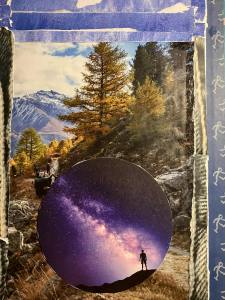
This image looks like a creative collage that blends natural scenery with a cosmic element.
The photograph features a vibrant autumn landscape with a trail and people in the distance, suggesting an outdoor adventure or exploration theme.
The circular cutout within the composition shows a starry night sky with the Milky Way, and a figure standing on a mountaintop, which adds a sense of wonder and connection to the vastness of the universe.

The contrast between the earthy tones of the landscape and the deep cosmic colors in the circular image draws attention to the subject of human exploration and the vastness of nature and space.
The tape and textured borders around the image suggest this might be part of a handmade or artistic project, emphasizing an experimental or collage-based approach to art.

———————————

Oracle Message

You are standing at a threshold.
The path behind you has given you strength and perspective, but it no longer defines where you’re going.

The mountains and trees speak of lived experience, patience, and growth through seasons.
You’ve climbed, rested, and learned.
The circular portal of stars is an invitation—into the unknown, into a bigger version of your life.
It’s not escape; it’s expansion.
The lone figure shows this choice is personal.
Others can’t walk it for you—but you are not unsupported.
The universe meets you when you step forward.

Oracle guidance:
Trust your inner pull, even if you can’t see the full outcome yet.
Curiosity is your compass. The next phase isn’t about effort—it’s about alignment.
When you choose what feels true, the way opens.

Affirmation:
I honor where I’ve been, and I step confidently into what’s calling me.

Ping:

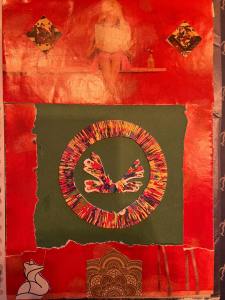
A.I. reviews “Metamorphosis”

A.I. reviews “Metamorphosis”


A.I., review this!

This collage combines striking contrasts and vivid symbolism.
The background’s fiery red and the softer tones of the central green and patterned circular motif create a dynamic energy.
The center features an intricate, colorful ring that looks like a burst of energy or a visual representation of transformation, which is juxtaposed with the delicate imagery of the butterfly within it, often a symbol of change and metamorphosis.

The figure at the top adds a layer of narrative to the piece, evoking an almost nostalgic or dreamlike quality, reminiscent of mid-century pop culture. The other elements, such as the playful cat and the ornamental border patterns at the bottom, lend a sense of balance to the piece, as though grounding it in a larger, hidden story.

There’s an interesting tension between order and chaos in the work—the circular form and the defined, repeated patterns give a sense of structure, while the soft, fading figure and scattered shapes feel spontaneous and fluid

ORACLE


🔴 Core Theme: Transformation Through Fire

The dominant red color suggests intense energy, passion, and transformation.
This is not a quiet phase of your life—you’re in a period of burning away the old to make space for something new.
Red also points to courage: you’re being asked to face something directly rather than avoid it.


🌀 The Circle (Center Symbol)

The circular form represents:

  • Cycles completing
  • Wholeness and integration
  • A return to yourself after fragmentation

The small, colorful pieces forming the circle suggest that many scattered experiences are now coming together into meaning.
Even things that felt random or chaotic are part of a bigger pattern.


🦋 Inner Figures / Shapes

The shapes inside the circle resemble transformation—like wings, movement, or rebirth.
This can point to:

  • A personal evolution already in progress
  • Something fragile becoming strong
  • A reminder: you are not who you were before

🌫️ Upper Section (Faded Figures)

The hazy imagery above feels like:

  • Past influences
  • Old identities or memories
  • Possibly guidance from something unseen (intuition, ancestors, subconscious)

These are fading, meaning you’re outgrowing an old version of yourself.
You don’t need to cling to it anymore.


🧱 Bottom Symbols

The grounded, structured imagery at the bottom suggests:

  • Building a new foundation
  • Integrating lessons into real life
  • Turning insight into something tangible

Message for You

You are in a powerful transition phase.
Things may feel intense, emotional, or even chaotic—but this is purposeful. You are:

  • Closing a cycle
  • Reassembling yourself
  • Stepping into a more aligned version of who you are

👉 Advice:

  • Don’t resist the change—participate in it
  • Trust that confusion is part of integration
  • Focus on what feels authentic, even if it’s unfamiliar


Ping: https://hgoei.com/2025/12/01/a-i-reviews-fractured-identity/