
Huub Oosterhuis |
humanism, magick, oracles, shamanism, storytelling
Tag: poetry
Huub Oosterhuis |


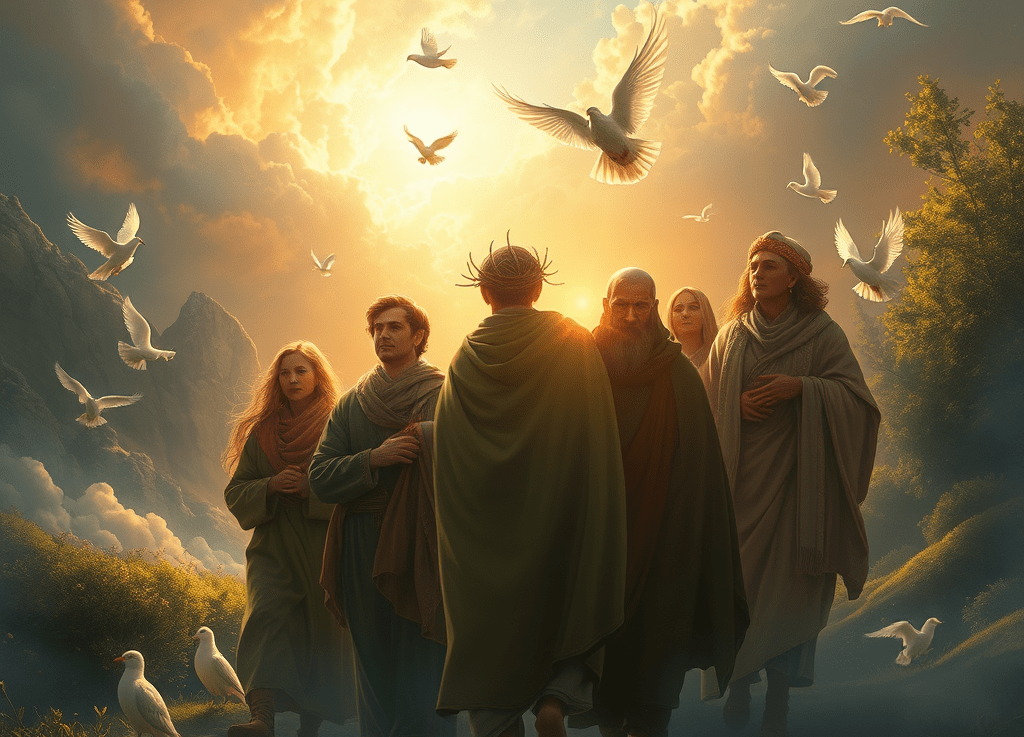
De ballingen keren.
Zij keren met blinkende schoven.
Die gingen in rouw
tot aan de einde der aarde,
één voor één, en voorgoed,
die keren in stoeten.
Als beken vol water,
als beken vol toesnellend water,
schietend omlaag van de bergen,
als lachen en juichen.
Die zaaiden in tranen,
die keren met lachen en juichen.
De dode zal leven.
De dode zal horen: nu leven.
Ten einde gegaan
en onder stenen bedolven:
dode, dode, sta op,
het licht van de morgen.
Een hand zal ons wenken,
een stem zal ons roepen: Ik open
hemel en aarde en afgrond
en wij zullen horen
en wij zullen opstaan
en lachen en juichen en leven.
Huub Oosterhuis


Als vader weer bladert in zijn fotoboek
dan sta je versteld als hij je vertelt
van de Weesperstraat en de jodenhoek
Als vader verhaalt hoe het leven begon
Bij het ontwaken, handel en zaken
Humor en gein, dat was de levensbron
En had je een dag ‘ns geen mazzel gehad
dan ‘s avonds naar de Tip Top waar je ‘t sores vergat
Soms riep d’r nog een in het nachtelijk uur:
‘k Heb mooie olijven en uitjes in het zuur
Amsterdam huilt waar het eens heeft gelachen
Amsterdam huilt, nog voelt het de pijn
Amsterdam huilt waar het eens heeft gelachen
Amsterdam huilt, want weg is de gein
Als vader verhaalt hoe de sabbath begon
dan sta je versteld als hij je vertelt
hoe de voorzanger ‘Ad-des-jem eilje nowa’ zong
Op het Channeke-feest gingen de kaarsjes weer aan
dan werd er gewenst, door God je gebenscht
en dat het ons allemaal goed weer mocht gaan
Voor er werd geplunderd en uitgeroeid
hebben daar jiddische Jé-ledjes gestoeid
Men noemde hen ras, oh God oh God,
waarom mocht het niet zijn zoals het er was?
Amsterdam huilt waar het eens heeft gelachen
Amsterdam huilt, nog voelt het de pijn
Amsterdam huilt waar het eens heeft gelachen
Amsterdam huilt, want weg is de gein
Op vrijdagavond koegel en peren
Wie dat niet nascht, die kan het ook niet waarderen
Het boek gaat dicht en met een traan in zijn ogen
fluistert hij zachtjes: mazzel en brooche voor de hele misjpoge
Mazzel en brooche voor de hele misjpoge
Mazzel en brooche voor de hele misjpoge
Zwarte Riek

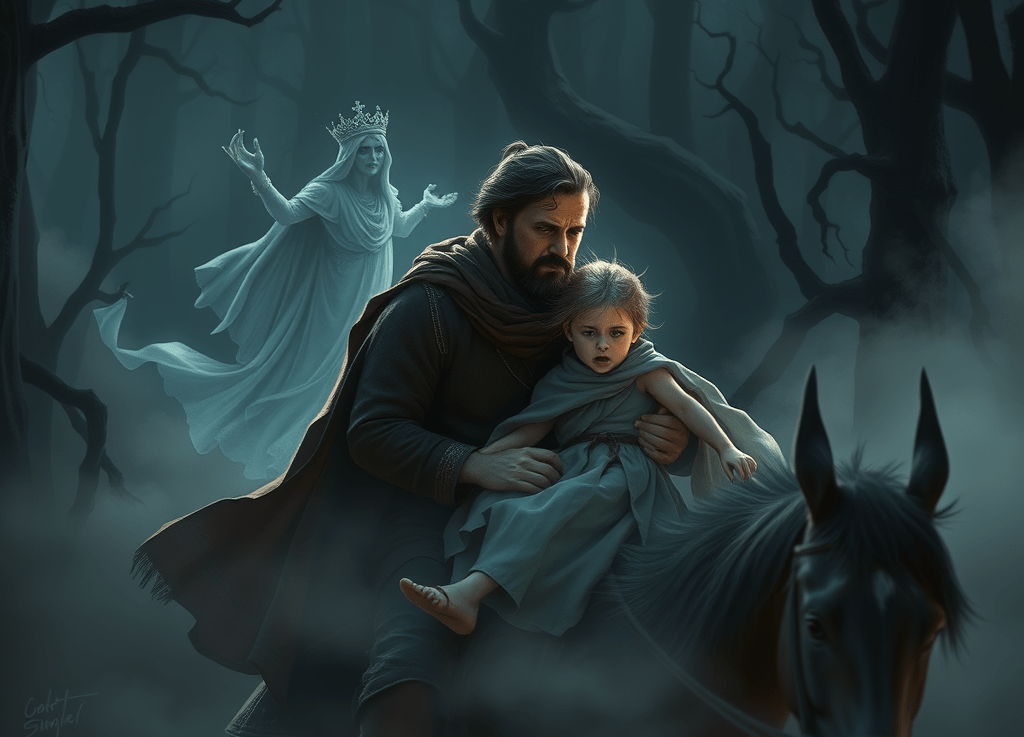
Wer reitet so spät durch Nacht und Wind?
Es ist der Vater mit seinem Kind;
Er hat den Knaben wohl in dem Arm,
Er faßt ihn sicher, er hält ihn warm.
“Mein Sohn, was birgst du so bang dein Gesicht?”
“Siehst, Vater, du den Erlkönig nicht?
Den Erlenkönig mit Kron und Schweif?”
“Mein Sohn, es ist ein Nebelstreif.”‘
“Du liebes Kind, komm, geh mit mir!
Gar schöne Spiele spiel’ ich mit dir;
Manch’ bunte Blumen sind an dem Strand,
Meine Mutter hat manch gülden Gewand.”
“Mein Vater, mein Vater, und hörest du nicht,
Was Erlenkönig mir leise verspricht?”
“Sei ruhig, bleibe ruhig, mein Kind;
In dürren Blättern säuselt der Wind.”
“Willst, feiner Knabe, du mit mir gehn?
Meine Töchter sollen dich warten schön;
Meine Töchter führen den nächtlichen Reihn,
Und wiegen und tanzen und singen dich ein.”
“Mein Vater, mein Vater, und siehst du nicht dort
Erlkönigs Töchter am düstern Ort?”
“Mein Sohn, mein Sohn, ich seh es genau:
Es scheinen die alten Weiden so grau.”
“Ich liebe dich, mich reizt deine schöne Gestalt;
Und bist du nicht willig, so brauch ich Gewalt.”
“Mein Vater, mein Vater, jetzt faßt er mich an!
Erlkönig hat mir ein Leids getan!”
Dem Vater grauset’s, er reitet geschwind,
Er hält in Armen das ächzende Kind,
Erreicht den Hof mit Müh’ und Not;
In seinen Armen das Kind war tot.
Goethe


Daar waar ik aan wal kom
zal mijn vlucht landen
zal ik me aan de kademuur
ketenen met deze handen
die geroeid hebben om ver
te komen zonder paspoort
weggeworpen tussen
de kaken van een haai
om een route te vinden naar
welk oord dan ook behalve
dat wat me stoorde in een
demonische droom waarin ik
bezeten werd door de greep
van doelloze hoop waaraan ik
ontglipte toen ik de sloep
die nu aan m’n voeten water maakt
om onontkoombaar onder te gaan
ontdekte, waarna ik me vastklampend
zwoegend ben doorgegaan tot
deze haven die ik thans nader
waar ik spoedig zwaaiend
op mijn plaats zal staan als
een vuurtoren voor de vloot die
komen zal en ik kondig aan
Na mij nog velen die oversteken
en op hen zal ik wachten

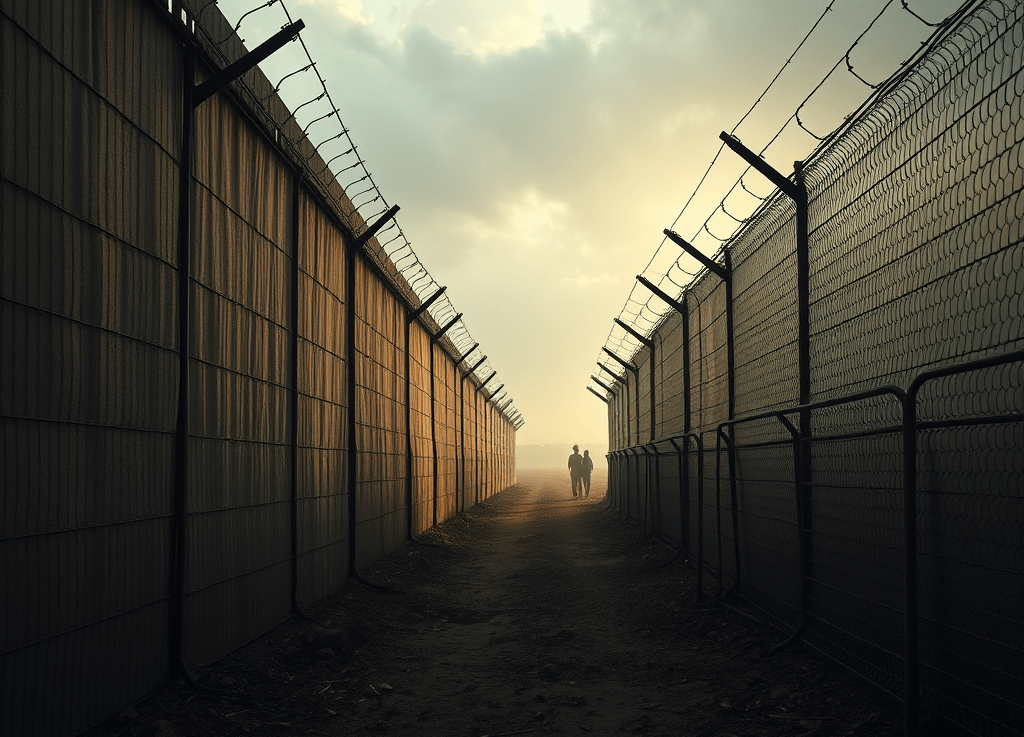
Deze muur is voor de buren
Dat hek hier is voor de straat
Deze wal is voor de boeren
dat niemand nog de stad ingaat
Deze haag is voor onze cultuur
Deze grens is voor de staat
Dit prikkeldraad is voor de vreemden
dat niemand meer het land in gaat
Deze muur is voor onze munt
waar iedereen over praat
De welvaart voor ons volk alleen
dat verder niemand leven laat
Deze grens is voor ons continent
Deze hier, waar stroom op staat
met horden hongerige monden eromheen
maar voor hen is het toch te laat
Het is om ons te beschermen
Ons vredig rechtvaardig wetsapparaat
Gevoed door armoe, geolied door oorlog
zodat het met onze gemeenschap goed gaat

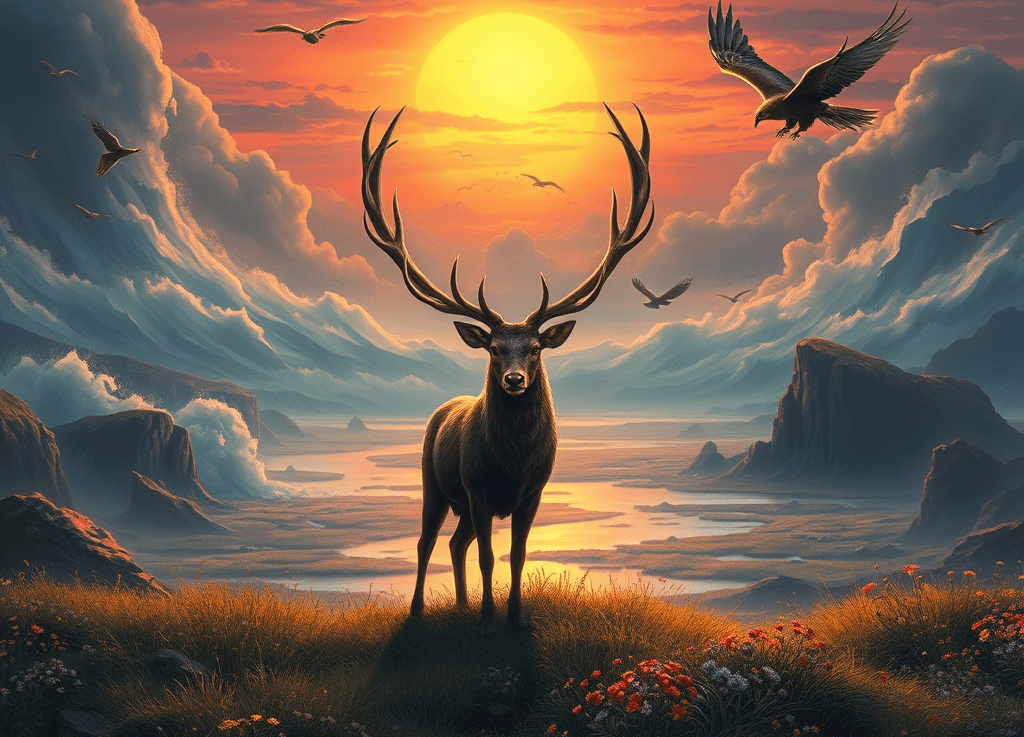
I am a Stag: of seven tines
I am a Flood: across a plain
I am a Wind: upon the waves
I am a Tear: the sun lets fall
I am a Hawk: above the cliff
I am a Thorn: beneath the nail
I am a Wonder: among flowers
I am a Wizard: who but I
sets the cool head aflame?I am a Spear: that roars for blood
I am a Salmon: in a pool
I am a Lure: from Paradise
I am a Hill: where poets walk
I am a Boar: ruthless and red
I am a Breaker: threatening doom
I am a Tide: that drags to death
I am an Infant: who but I
peeps from the unhewn dolman arch?I am the Womb: of every holt
I am the Blaze: on every hill
I am the Queen: of every hive
I am the Shield: for every head
I am the tomb: of every hope


|


We all come from the Goddess
And to her we shall return
Like a drop of rain
Flowing to the ocean….We all come from the Sun God
And to him we return
Like a spark of flame
Rising to the heavens.
Deena Metzger, Magnus McBride, Z. Budapest, Leonard D. Rosenburg

I have been in many shapes,
Before I attained a congenial form.
I have been a narrow blade of a sword.
(I will believe it when it appears.)
I have been a drop in the air.
I have been a shining Star.
I have been a word in a book.
I have been a book originally.
I have been a light in a lantern.
A year and a half.
I have been a bridge for passing over
Three-score rivers.
I have journeyed as an eagle.
I have been a boat on the sea.
I have been a director in battle.
I have been the string of a child’s swaddling clout.
I have been a sword in the hand.
I have been a shield in the fight.
I have been the string of a harp,
Enchanted for a year
In the foam of water.
I have been a poker in the fire.
I have been a tree in a covert.
There is nothing in which I have not been.
I have fought, though small,
In the Battle of Goddeu Brig,
Before the Ruler of Britain,
Abounding in fleets.
Indifferent bards pretend,
They pretend a monstrous beast,
With a hundred heads,
And a grievous combat
At the root of the tongue.
And another fight there is
At the back of the head.
A toad having on his thighs
A hundred claws,
A spotted crested snake,
For punishing in their flesh
A hundred souls on account of their sins.
I was in Caer efynedd,
Thither were hastening grasses and trees.
Wayfarers perceive them,
Warriors are astonished
At a renewal of the conflicts
Such as Gwydion made.
There is calling on Heaven,
And on Christ that he would effect
Their deliverance,
The all-powerful Lord.
If the Lord had answered,
Through charms and magic skill,
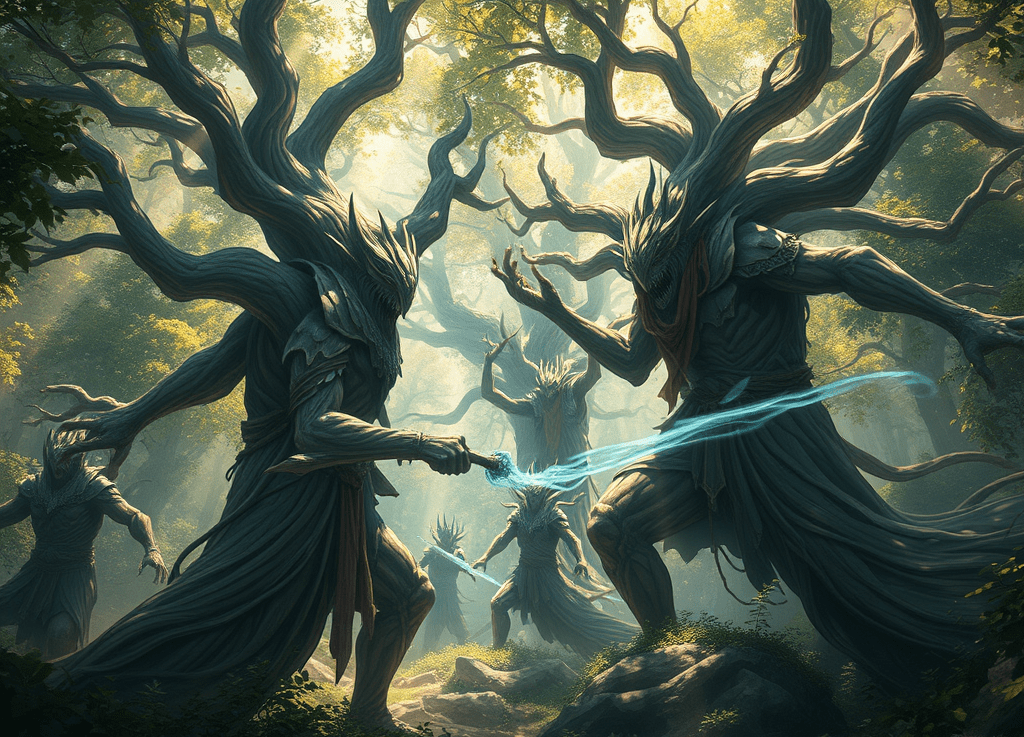
Assume the forms of the principal trees,
With you in array
Restrain the people
Inexperienced in battle.
When the trees were enchanted
There was hope for the trees,
That they should frustrate the intention
Of the surrounding fires….
Better are three in unison,
And enjoying themselves in, a circle,
And one of them relating
The story of the deluge,
And of the cross of Christ,
And of the Day of judgement near at hand.
The alder-trees in the first line,
They made the commencement.
Willow and quicken tree,
They were slow in their array.
The plum is a tree
Not beloved of men;
The medlar of a like nature,
Over coming severe toil.
The bean bearing in its shade
And army of phantoms.
The raspberry makes
Not the best of food.
In shelter live,
The privet and the woodbine,
And the ivy in its season.
Great is the gorse in battle.
The cherry-tree had been reproached.
The birch, though very magnanimous,
Was late in arraying himself;
It was not through cowardice,
But on account of his great size.
The appearance of the …
Is that of a foreigner and a savage.
The pine-tree in the court,
Strong in battle,
By me greatly exalted
In the presence of kings,
The elm-trees are his subjects.
He turns not aside the measure of a foot,
But strikes right in the middle,
And at the farthest end.
The hazel is the judge,
His berries are thy dowry.
The privet is blessed.
Strong chiefs in war
And the … and the mulberry.
Prosperous the beech-tree.
The holly dark green,
He was very courageous:
Defended with spikes on every side,
Wounding the hands.
The long-enduring poplars
Very much broken in fight.
The plundered fern;
The brooms with their offspring:
The furze was not well behaved
Until he was tamed
The heath was giving consolation,
Comforting the people –
The black cherry-tree was pursuing.
The oak-tree swiftly moving,
Before him tremble heaven and earth,
Stout doorkeeper against the foe
Is his name in all lands.
The corn-cockle bound together,
Was given to be burnt.
Others were rejected
On account of the holes made
By great violence
In the field of battle.
Very wrathful the …
Cruel the gloomy ash.
Bashful the chestnut-tree,
Retreating from happiness.
There shall be a black darkness,
There shall be a shaking of the mountain,
There shall be a purifying furnace,
There shall first be a great wave,
And when the shout shall be heard,
Putting forth new leaves are the tops of the beech,
Changing form and being renewed from a withered state;
Entangled are the tops of the oak.
From the Gorchan of Maelderw.
Smiling at the side of the rock
(Was) the pear-tree not of an ardent nature.
Neither of mother or father,
When I was made,
Was my blood or body;
Of nine kinds of faculties,
Of fruit of fruits,
Of fruit God made me,
Of the blossom of the mountain primrose,
Of the buds of trees and shrubs,
Of earth of earthly kind.
When I was made
Of the blossoms of the nettle,
Of the water of the ninth wave,
I was spell-bound by Math
Before I became immortal.
I was spell-bound by Gwydion,
Great enchanter of the Britons,
Of Eurys, of Eurwn,
Of Euron, of Medron,
In myriads of secrets,
I am as learned as Math….
I know about the Emperor
When he was half burnt.
I know the star-knowledge
Of stars before the earth (was made),
Whence I was born,
How many worlds there are.
It is the custom of accomplished bards
To recite the praise of their country.
I have played in Lloughor,
I have slept in purple.
Was I not in the enclosure
With Dylan Ail Mor,
On a couch in the centre
Between the two knees of the prince
Upon two blunt spears?
When from heaven came
The torrents into the deep,
Rushing with violent impulse.
(I know) four-score songs,
For administering to their pleasure.
There is neither old nor young,
Except me as to their poems,
Any other singer who knows the whole of the nine hundred
Which are known to me,
Concerning the blood-spotted sword.
Honour is my guide.
Profitable learning is from the Lord.
(I know) of the slaying of the boar,
Its appearing, its disappearing,
Its knowledge of languages.
(I know) the light whose name is Splendour,
And the number of the ruling lights
That scatter rays of fire
High above the deep.
I have been a spotted snake upon a hill;
I have been a viper in a lake;
I have been an evil star formerly.
I have been a weight in a mill.
My cassock is red all over.
I prophesy no evil.
Four score puffs of smoke
To every one l who will carry them away:
And a million of angels,
On the point of my knife.
Handsome is the yellow horse,
But a hundred times better
Is my cream-coloured one,
Swift as the sea-mew,
Which cannot pass me
Between the sea and the shore.
Am I not pre-eminent in the field of blood?
I have a hundred shares of the spoil.
My wreath is of red jewels,
Of gold is the border of my shield.
There has not been born one so good as I,
Or ever known,
Except Goronwy,
From the dales of Edrywy.
Long and white are my fingers,
It is long since I was a herdsman.
I travelled over the earth
Before I became a learned person.
I have travelled, I have made a circuit,
I have slept in a hundred islands;
I have dwelt in a hundred cities.
Learned Druids,
Prophesy ye of Arthur?
Or is it me they celebrate,
And the Crucfixion of Christ,
And the Day of Judgement near at hand,
And one relating
The history of the Deluge ?
With a golden jewel set in gold
I am enriched;
And I am indulging in pleasure
Out of the oppressive toil of the goldsmith.

Welzijnswerk in Amsterdam Westerpark
author + reader
 Dreamquest
You must be logged in to post a comment.