Tag: story

Chief Seattle’s Reply (january 1857)

Chief Seattle’s Reply (january 1857)


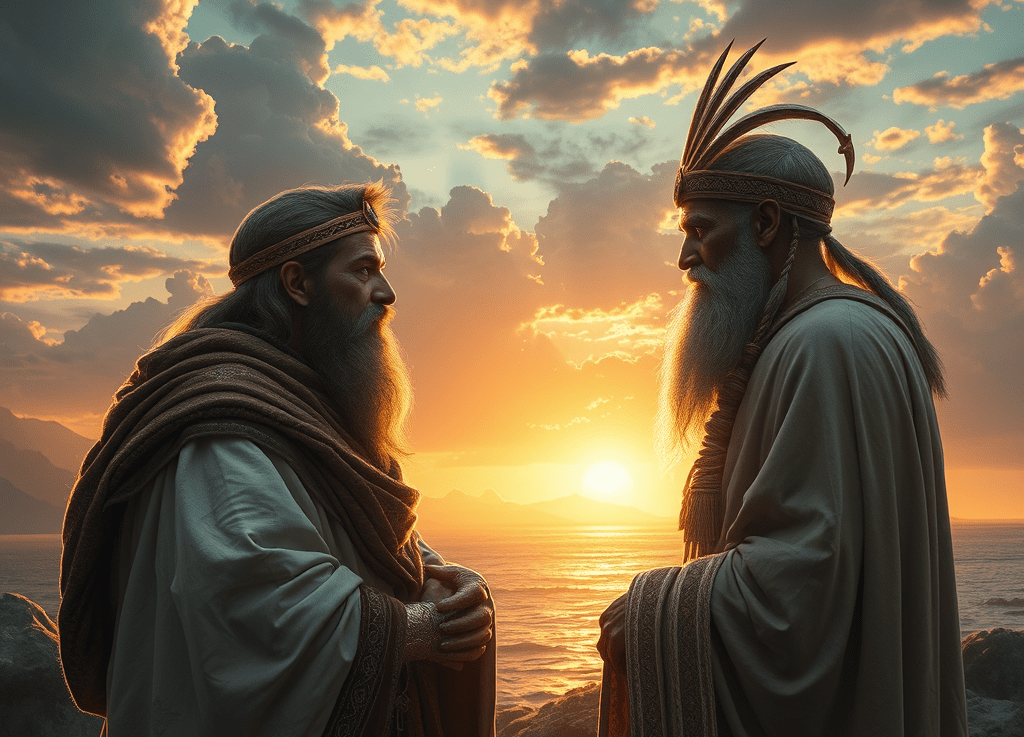
Yonder sky that has wept tears of compassion upon my people for centuries untold, and which to us appears changeless and eternal, may change.
Today is fair.
Tomorrow it may be overcast with clouds.
My words are like the stars that never change.

Whatever Seattle says, the great chief at Washington can rely upon with as much certainty as he can upon the return of the sun or the seasons.
The white chief says that Big Chief at Washington sends us greetings of friendship and goodwill.
This is kind of him for we know he has little need of our friendship in return.
His people are many.
They are like the grass that covers vast prairies.
My people are few.
They resemble the scattering trees of a storm-swept plain.

The great, and I presume — good, White Chief sends us word that he wishes to buy our land but is willing to allow us enough to live comfortably.
This indeed appears just, even generous, for the Red Man no longer has rights that he need respect, and the offer may be wise, also, as we are no longer in need of an extensive country.

There was a time when our people covered the land as the waves of a wind-ruffled sea cover its shell-paved floor, but that time long since passed away with the greatness of tribes that are now but a mournful memory.
I will not dwell on, nor mourn over, our untimely decay, nor reproach my paleface brothers with hastening it, as we too may have been somewhat to blame.

Youth is impulsive.
When our young men grow angry at some real or imaginary wrong, and disfigure their faces with black paint, it denotes that their hearts are black, and that they are often cruel and relentless, and our old men and old women are unable to restrain them.
Thus it has ever been.
Thus it was when the white man began to push our forefathers ever westward.
But let us hope that the hostilities between us may never return.
We would have everything to lose and nothing to gain.
Revenge by young men is considered gain, even at the cost of their own lives, but old men who stay at home in times of war, and mothers who have sons to lose, know better.

Our good father in Washington–for I presume he is now our father as well as yours, since King George has moved his boundaries further north–our great and good father, I say, sends us word that if we do as he desires he will protect us.
His brave warriors will be to us a bristling wall of strength, and his wonderful ships of war will fill our harbors, so that our ancient enemies far to the northward — the Haidas and Tsimshians — will cease to frighten our women, children, and old men.
Then in reality he will be our father and we his children.
But can that ever be?

Your God is not our God!
Your God loves your people and hates mine!
He folds his strong protecting arms lovingly about the paleface and leads him by the hand as a father leads an infant son.
But, He has forsaken His Red children, if they really are His.
Our God, the Great Spirit, seems also to have forsaken us. Y
our God makes your people wax stronger every day.
Soon they will fill all the land.
Our people are ebbing away like a rapidly receding tide that will never return.
The white man’s God cannot love our people or He would protect them.
They seem to be orphans who can look nowhere for help.
How then can we be brothers?
How can your God become our God and renew our prosperity and awaken in us dreams of returning greatness?
If we have a common Heavenly Father He must be partial, for He came to His paleface children.
We never saw Him.
He gave you laws but had no word for His red children whose teeming multitudes once filled this vast continent as stars fill the firmament.
No; we are two distinct races with separate origins and separate destinies.
There is little in common between us.

To us the ashes of our ancestors are sacred and their resting place is hallowed ground.
You wander far from the graves of your ancestors and seemingly without regret.
Your religion was written upon tablets of stone by the iron finger of your God so that you could not forget.
The Red Man could never comprehend or remember it. Our religion is the traditions of our ancestors — the dreams of our old men, given them in solemn hours of the night by the Great Spirit; and the visions of our sachems, and is written in the hearts of our people.

Your dead cease to love you and the land of their nativity as soon as they pass the portals of the tomb and wander away beyond the stars.
They are soon forgotten and never return. Our dead never forget this beautiful world that gave them being.
They still love its verdant valleys, its murmuring rivers, its magnificent mountains, sequestered vales and verdant lined lakes and bays, and ever yearn in tender fond affection over the lonely hearted living, and often return from the happy hunting ground to visit, guide, console, and comfort them.

Day and night cannot dwell together.
The Red Man has ever fled the approach of the White Man, as the morning mist flees before the morning sun.
However, your proposition seems fair and I think that my people will accept it and will retire to the reservation you offer them.
Then we will dwell apart in peace, for the words of the Great White Chief seem to be the words of nature speaking to my people out of dense darkness.

It matters little where we pass the remnant of our days.
They will not be many.
The Indian’s night promises to be dark.
Not a single star of hope hovers above his horizon.
Sad-voiced winds moan in the distance.
Grim fate seems to be on the Red Man’s trail, and wherever he will hear the approaching footsteps of his fell destroyer and prepare stolidly to meet his doom, as does the wounded doe that hears the approaching footsteps of the hunter.

A few more moons, a few more winters, and not one of the descendants of the mighty hosts that once moved over this broad land or lived in happy homes, protected by the Great Spirit, will remain to mourn over the graves of a people once more powerful and hopeful than yours.
But why should I mourn at the untimely fate of my people?
Tribe follows tribe, and nation follows nation, like the waves of the sea.
It is the order of nature, and regret is useless.
Your time of decay may be distant, but it will surely come, for even the White Man whose God walked and talked with him as friend to friend, cannot be exempt from the common destiny.
We may be brothers after all.
We will see.

We will ponder your proposition and when we decide we will let you know.
But should we accept it, I here and now make this condition that we will not be denied the privilege without molestation of visiting at any time the tombs of our ancestors, friends, and children.
Every part of this soil is sacred in the estimation of my people.
Every hillside, every valley, every plain and grove, has been hallowed by some sad or happy event in days long vanished.
Even the rocks, which seem to be dumb and dead as the swelter in the sun along the silent shore, thrill with memories of stirring events connected with the lives of my people, and the very dust upon which you now stand responds more lovingly to their footsteps than yours, because it is rich with the blood of our ancestors, and our bare feet are conscious of the sympathetic touch.
Our departed braves, fond mothers, glad, happy hearted maidens, and even the little children who lived here and rejoiced here for a brief season, will love these somber solitudes and at eventide they greet shadowy returning spirits.

And when the last Red Man shall have perished, and the memory of my tribe shall have become a myth among the White Men, these shores will swarm with the invisible dead of my tribe, and when your children’s children think themselves alone in the field, the store, the shop, upon the highway, or in the silence of the pathless woods, they will not be alone. In all the earth there is no place dedicated to solitude.
At night when the streets of your cities and villages are silent and you think them deserted, they will throng with the returning hosts that once filled them and still love this beautiful land.
The White Man will never be alone.

Let him be just and deal kindly with my people, for the dead are not powerless.
Dead, did I say? There is no death, only a change of worlds.

Ping: https://en.wikipedia.org/wiki/Chief_Seattle’s_speech

What if God was one of us (Joan Osborne)

What if God was one of us (Joan Osborne)


If God had a name what would it be?
And would you call it to his face?
If you were faced with him
In all his glory
What would you ask if you had just one question?

*And yeah, yeah, God is great
Yeah, yeah, God is good
Yeah, yeah, yeah-yeah-yeah

What if God was one of us?
Just a slob like one of us
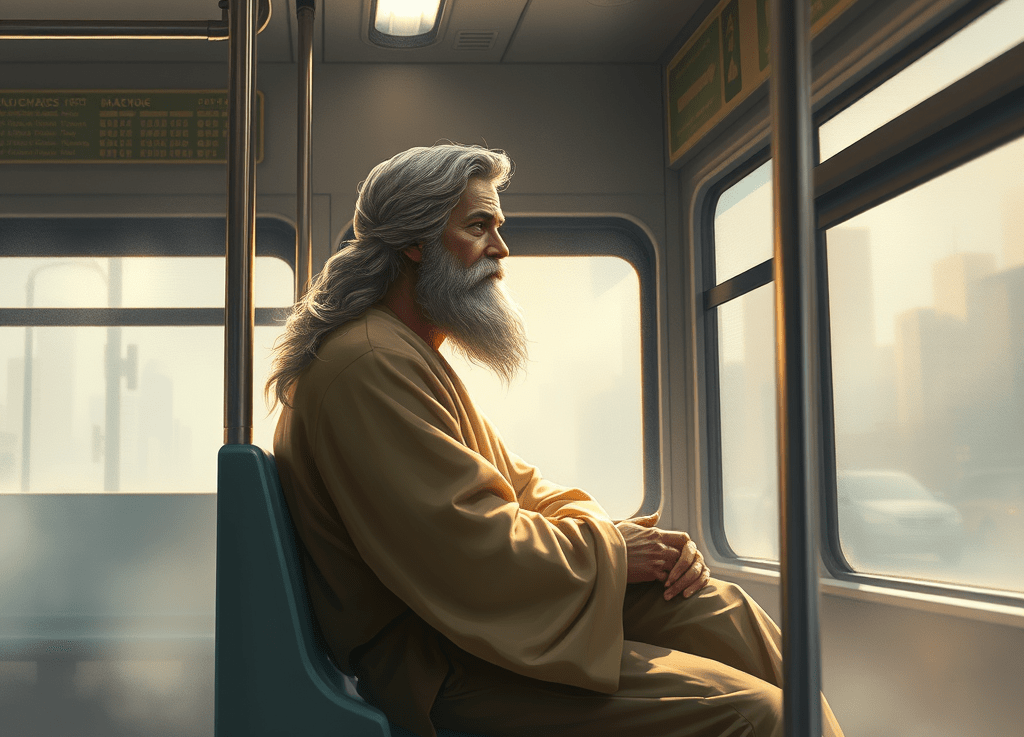
Just a stranger on the bus
Trying to make his way home

If God had a face what would it look like?
And would you want to see
If seeing meant that
you would have to believe
in things like heaven and in Jesus and the saints
and all the prophets (*)

Trying to make his way home
Back up to heaven all alone
Nobody calling on the phone
‘cept for the Pope maybe in Rome(*)

Just trying to make his way home
Like a holy rolling stone
Back up to heaven all alone
Just trying to make his way home
Nobody calling on the phone
‘cept for the Pope maybe in Rome

If I Were A Rich Man

If I Were A Rich Man


“Dear God, you made many, many poor people.
I realize, of course, that it’s no shame to be poor.
But it’s no great honor either!
So, what would have been so terrible if I had a small fortune?”

If I were a rich man,
Yubby dibby dibby dibby dibby dibby dibby dum.
All day long I’d biddy biddy bum.
If I were a wealthy man.
I wouldn’t have to work hard.
Ya ha deedle deedle, bubba bubba deedle deedle dum.
If I were a biddy biddy rich,
Idle-diddle-daidle-daidle man.

I’d build a big tall house with rooms by the dozen,
Right in the middle of the town.
A fine tin roof with real wooden floors below.
There would be one long staircase just going up,
And one even longer coming down,
And one more leading nowhere, just for show.

I’d fill my yard with chicks and turkeys and geese and ducks
For the town to see and hear.
(Insert)Squawking just as noisily as they can. (End Insert)
With each loud “cheep” “swaqwk” “honk” “quack”
Would land like a trumpet on the ear,
As if to say “Here lives a wealthy man.”

If I were a rich man,
Yubby dibby dibby dibby dibby dibby dibby dum.
All day long I’d biddy biddy bum.
If I were a wealthy man.
I wouldn’t have to work hard.
Yubby dibby dibby dibby dibby dibby dibby dum.
If I were a biddy biddy rich,
Idle-diddle-daidle-daidle man.

I’d see my wife, my Golde, looking like a rich man’s wife
With a proper double-chin.
Supervising meals to her heart’s delight.
I see her putting on airs and strutting like a peacock.
Oy, what a happy mood she’s in.
Screaming at the servants, day and night.

The most important men in town would come to fawn on me!
They would ask me to advise them,
Like a Solomon the Wise.
“If you please, Reb Tevye…”
“Pardon me, Reb Tevye…”
Posing problems that would cross a rabbi’s eyes!

And it won’t make one bit of difference if i answer right or wrong.
When you’re rich, they think you really know!

If I were rich, I’d have the time that I lack
To sit in the synagogue and pray.
And maybe have a seat by the Eastern wall.
And I’d discuss the holy books with the learned men, several hours every day.
That would be the sweetest thing of all.

If I were a rich man,
Yubby dibby dibby dibby dibby dibby dibby dum.
All day long I’d biddy biddy bum.
If I were a wealthy man.
I wouldn’t have to work hard.
Idle-diddle-daidle-daidle man.

Lord who made the lion and the lamb,
You decreed I should be what I am.
Would it spoil some vast eternal plan?
If I were a wealthy man.


Ping:https://en.wikipedia.org/wiki/If_I_Were_a_Rich_Man_(song)

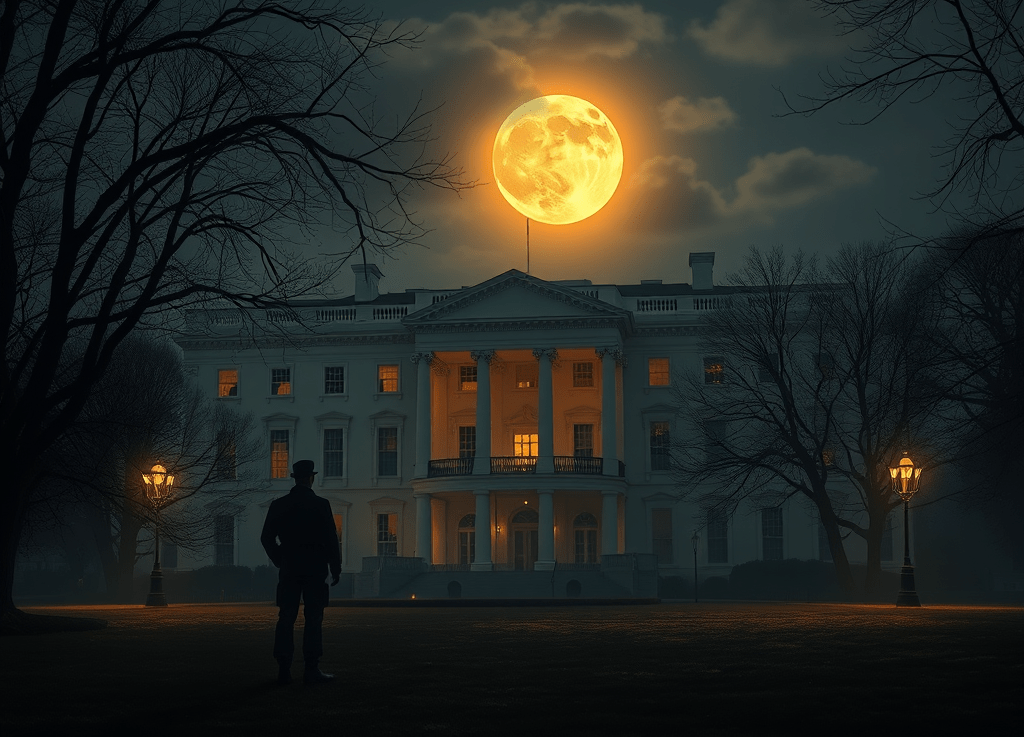
Welterusten, meneer de president

Welterusten, meneer de president


Meneer de president, welterusten.
Slaap maar lekker in je mooie witte huis.
Denk maar niet te veel aan al die verre kusten
waar uw jongens zitten, eenzaam, ver van thuis.
Denk vooral niet aan die zesenveertig doden,
die vergissing laatst met dat bombardement.
En vergeet het vierde van die tien geboden
die u als goed christen zeker kent.

Denk maar niet aan al die jonge frontsoldaten
eenzaam stervend in de verre tropennacht.
Laat die weke pacifistenkliek maar praten,
meneer de president, slaap zacht.

Droom maar van de overwinning en de zege,
droom maar van uw mooie vredesideaal
dat nog nooit door bloedig moorden is verkregen,
droom maar dat het u wel lukken zal dit maal.
Denk maar niet aan al die mensen die verrekken,
hoeveel vrouwen, hoeveel kinderen zijn vermoord.
Droom maar dat u aan het langste eind zult trekken
en geloof van al die tegenstand geen woord.

Bajonetten met bloedige gevesten
houden ver van hier op uw bevel de wacht
voor de glorie en de eer van het vrije westen.
Meneer de president, slaap zacht.

Schrik maar niet te erg wanneer u in uw dromen
al die schuldeloze slachtoffers ziet staan
die daarginds bij het gevecht zijn omgekomen
en u vragen hoe lang dit nog zo moet gaan.
En u zult toch ook zo langzaamaan wel weten
dat er mensen zijn die ziek zijn van geweld,
die het bloed en de ellende niet vergeten
en voor wie nog steeds een mensenleven telt.

Droom maar niet te veel van al die dode mensen,
droom maar fijn van overwinning en van macht.
Denk maar niet aan al die vredeswensen.
Meneer de president, slaap zacht.

Boudewijn de Groot

A Noiseless Patient Spider (Walt Whitman)

A Noiseless Patient Spider (Walt Whitman)


A noiseless patient spider,
I marked
where on a promontory
it stood isolated,
Marked how to explore
the vacant vast surrounding,
It launched forth
filament, filament, filament,
out of itself,
Ever unreeling them,
ever tirelessly
speeding them.
And you
O my soul
where you stand,
Surrounded, detached,
in measureless oceans of space,
Ceaselessly musing,
venturing,
throwing,
seeking the spheres
to connect them,
Till the bridge you will need
be formed,
till the ductile anchor hold,
Till the gossamer thread you fling catch somwhere,
O my soul.

Give Peace A Chance

Give Peace A Chance


Ev’rybody’s talkin’ ’bout
Bagism, Shagism, Dragism, Madism, Ragism, Tagism
This-ism, that-ism, ism ism ism
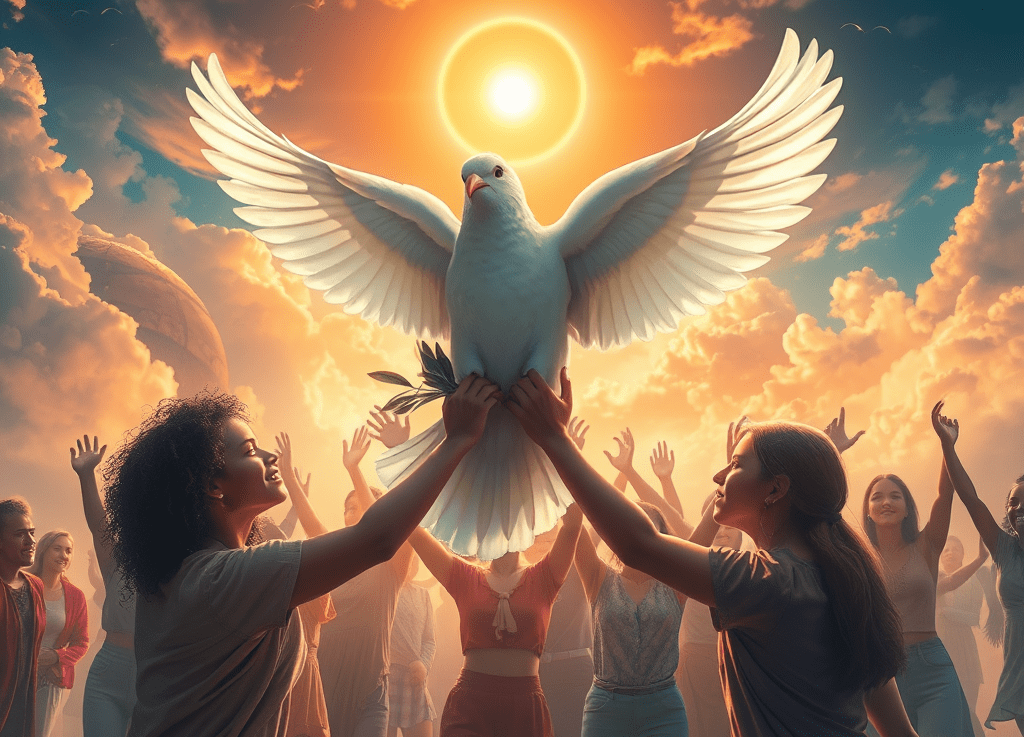
All we are saying is give peace a chance

(C’mon)
Ev’rybody’s talkin’ ’bout
Minister, Sinister, Banisters and Canisters,
Bishops, Fishops, Rabbis, and Pop Eyes, Bye bye, Bye byes
All we are saying is give peace a chance

(Let me tell you now)
Ev’rybody’s talkin’ ’bout
Revolution, Evolution, Masturbation, Flagellation, Regulation,
Integrations, mediations, United Nations, congratulations
All we are saying is give peace a chance

Ev’rybody’s talkin’ ’bout
John and Yoko, Timmy Leary, Rosemary,
Tommy Smothers, Bobby Dylan, Tommy Cooper,
Derek Taylor, Norman Mailer, Alan Ginsberg, Hare Krishna
Hare Hare Krishna
All we are saying is give peace a chance

John Lennon

Imagine

Imagine


Imagine there’s no heaven
It’s easy if you try
No hell below us
Above us only sky
Imagine all the people living for today

Imagine there’s no countries
It isn’t hard to do
Nothing to kill or die for
And no religion too
Imagine all the people living life in peace

You, you may say
I’m a dreamer, but I’m not the only one
I hope some day you’ll join us
And the world will be as one

Imagine no possessions
I wonder if you can
No need for greed or hunger
A brotherhood of man
Imagine all the people sharing all the world

You, you may say
I’m a dreamer, but I’m not the only one
I hope some day you’ll join us
And the world will live as one

John Lennon

Charge of the Goddess (Doreen Valiente)

Charge of the Goddess (Doreen Valiente)


Listen to the words of the Great Mother, who of old was called Artemis, Astarte, Dione, Melusine, Aphrodite, Cerridwen, Diana, Arienrhod, Brigid, and by many other names:

Whenever you have need of anything, once in the month, and better it be when the moon is full, you shall assemble in some secret place and adore the spirit of Me who is Queen of all Witches.

There shall you assemble, who have not yet won my deepest secrets and are fain to learn all sorceries.
To these shall I teach that which is yet unknown.

You shall be free from slavery, and as a sign that you be free you shall be naked in your rites.

Sing, feast, dance, make music and love, all in My presence, for Mine is the ecstasy of the spirit and Mine also is joy on earth.

For My law is love unto all beings.

Mine is the secret that opens upon the door of youth, and Mine is the cup of wine of life that is the Cauldron of Cerridwen that is the holy grail of immortality.

I am the Gracious Goddess who gives the gift of youth unto the heart of mankind.

I give the knowledge of the spirit eternal and beyond death I give peace and freedom and reunion with those that have gone before.

Nor do I demand aught of sacrifice, for behold, I am the mother of all things and My love is poured upon the earth.

Hear the words of the Star Goddess, the dust of whose feet are the hosts of heaven, whose body encircles the universe:

I who am the beauty of the green earth and the white moon among the stars and the mysteries of the waters,

I call upon your soul to arise and come unto Me.
For I am the soul of nature that gives life to the universe. From Me all things proceed and unto Me they must return.

Let My worship be in the heart that rejoices, for behold — all acts of love and pleasure are My rituals. Let there be beauty and strength, power and compassion, honor and humility, mirth and reverence within you.

And you who seek to know Me, know that your seeking and yearning will avail you not, unless you know the Mystery: for if that which you seek, you find not within yourself, you will never find it without.

For behold, I have been with you from the beginning, and I am that which is attained at the end of desire.

Gilgamesh & the Flood

Gilgamesh & the Flood


Gilgamesh spoke to Utanapishtim, the Faraway:
“I have been looking at you,
but your appearance is not strange–you are like me!
You yourself are not different–you are like me!
My mind was resolved to fight with you,
(but instead?) my arm lies useless over you.
Tell me, how is it that you stand in the Assembly of the Gods,
and have found life!”
Utanapishtim spoke to Gilgamesh, saying:
“I will reveal to you, Gilgamesh, a thing that is hidden,
a secret of the gods I will tell you!
Shuruppak, a city that you surely know,
situated on the banks of the Euphrates,
that city was very old, and there were gods inside it.
The hearts of the Great Gods moved them to inflict the Flood.
Their Father Anu uttered the oath (of secrecy),
Valiant Enlil was their Adviser,
Ninurta was their Chamberlain,
Ennugi was their Minister of Canals.
Ea, the Clever Prince(?), was under oath with them
so he repeated their talk to the reed house:
‘Reed house, reed house! Wall, wall!
O man of Shuruppak, son of Ubartutu:
Tear down the house and build a boat!
Abandon wealth and seek living beings!
Spurn possessions and keep alive living beings!
Make all living beings go up into the boat.
The boat which you are to build,
its dimensions must measure equal to each other:
its length must correspond to its width.
Roof it over like the Apsu.
I understood and spoke to my lord, Ea:
‘My lord, thus is the command which you have uttered
I will heed and will do it.
But what shall I answer the city, the populace, and the
Elders!’
Ea spoke, commanding me, his servant:
‘You, well then, this is what you must say to them:
“It appears that Enlil is rejecting me
so I cannot reside in your city (?),
nor set foot on Enlil’s earth.
I will go down to the Apsu to live with my lord, Ea,
and upon you he will rain down abundance,
a profusion of fowl, myriad(!) fishes.
He will bring to you a harvest of wealth,
in the morning he will let loaves of bread shower down,
and in the evening a rain of wheat!”‘
Just as dawn began to glow
the land assembled around me-
the carpenter carried his hatchet,
the reed worker carried his (flattening) stone,
… the men …
The child carried the pitch,
the weak brought whatever else was needed.
On the fifth day I laid out her exterior.
It was a field in area,
its walls were each 10 times 12 cubits in height,
the sides of its top were of equal length, 10 times It cubits each.
I laid out its (interior) structure and drew a picture of it (?).
I provided it with six decks,
thus dividing it into seven (levels).
The inside of it I divided into nine (compartments).
I drove plugs (to keep out) water in its middle part.
I saw to the punting poles and laid in what was necessary.
Three times 3,600 (units) of raw bitumen I poured into the
bitumen kiln,
three times 3,600 (units of) pitch …into it,
there were three times 3,600 porters of casks who carried (vege-
table) oil,
apart from the 3,600 (units of) oil which they consumed (!)
and two times 3,600 (units of) oil which the boatman stored
away.
I butchered oxen for the meat(!),
and day upon day I slaughtered sheep.
I gave the workmen(?) ale, beer, oil, and wine, as if it were
river water,
so they could make a party like the New Year’s Festival.
… and I set my hand to the oiling(!).
The boat was finished by sunset.
The launching was very difficult.
They had to keep carrying a runway of poles front to back,
until two-thirds of it had gone into the water(?).
Whatever I had I loaded on it:
whatever silver I had I loaded on it,
whatever gold I had I loaded on it.
All the living beings that I had I loaded on it,
I had all my kith and kin go up into the boat,
all the beasts and animals of the field and the craftsmen I
had go up.
Shamash had set a stated time:
‘In the morning I will let loaves of bread shower down,
and in the evening a rain of wheat!
Go inside the boat, seal the entry!’
That stated time had arrived.
In the morning he let loaves of bread shower down,
and in the evening a rain of wheat.
I watched the appearance of the weather–
the weather was frightful to behold!
I went into the boat and sealed the entry.
For the caulking of the boat, to Puzuramurri, the boatman,
I gave the palace together with its contents.
Just as dawn began to glow
there arose from the horizon a black cloud.
Adad rumbled inside of it,
before him went Shullat and Hanish,
heralds going over mountain and land.
Erragal pulled out the mooring poles,
forth went Ninurta and made the dikes overflow.
The Anunnaki lifted up the torches,
setting the land ablaze with their flare.
Stunned shock over Adad’s deeds overtook the heavens,
and turned to blackness all that had been light.
The… land shattered like a… pot.
All day long the South Wind blew …,
blowing fast, submerging the mountain in water,
overwhelming the people like an attack.
No one could see his fellow,
they could not recognize each other in the torrent.
The gods were frightened by the Flood,
and retreated, ascending to the heaven of Anu.
The gods were cowering like dogs, crouching by the outer wall.
Ishtar shrieked like a woman in childbirth,
the sweet-voiced Mistress of the Gods wailed:
‘The olden days have alas turned to clay,
because I said evil things in the Assembly of the Gods!
How could I say evil things in the Assembly of the Gods,
ordering a catastrophe to destroy my people!!
No sooner have I given birth to my dear people
than they fill the sea like so many fish!’
The gods–those of the Anunnaki–were weeping with her,
the gods humbly sat weeping, sobbing with grief(?),
their lips burning, parched with thirst.
Six days and seven nights
came the wind and flood, the storm flattening the land.
When the seventh day arrived, the storm was pounding,
the flood was a war–struggling with itself like a woman
writhing (in labor).
The sea calmed, fell still, the whirlwind (and) flood stopped up.
I looked around all day long–quiet had set in
and all the human beings had turned to clay!
The terrain was as flat as a roof.
I opened a vent and fresh air (daylight!) fell upon the side of
my nose.
I fell to my knees and sat weeping,
tears streaming down the side of my nose.
I looked around for coastlines in the expanse of the sea,
and at twelve leagues there emerged a region (of land).
On Mt. Nimush the boat lodged firm,
Mt. Nimush held the boat, allowing no sway.
One day and a second Mt. Nimush held the boat, allowing
no sway.
A third day, a fourth, Mt. Nimush held the boat, allowing
no sway.
A fifth day, a sixth, Mt. Nimush held the boat, allowing
no sway.
When a seventh day arrived
I sent forth a dove and released it.
The dove went off, but came back to me;
no perch was visible so it circled back to me.
I sent forth a swallow and released it.
The swallow went off, but came back to me;
no perch was visible so it circled back to me.
I sent forth a raven and released it.
The raven went off, and saw the waters slither back.
It eats, it scratches, it bobs, but does not circle back to me.
Then I sent out everything in all directions and sacrificed
(a sheep).
I offered incense in front of the mountain-ziggurat.
Seven and seven cult vessels I put in place,
and (into the fire) underneath (or: into their bowls) I poured
reeds, cedar, and myrtle.
The gods smelled the savor,
the gods smelled the sweet savor,
and collected like flies over a (sheep) sacrifice.
Just then Beletili arrived.
She lifted up the large flies (beads) which Anu had made for
his enjoyment(!):
‘You gods, as surely as I shall not forget this lapis lazuli
around my neck,
may I be mindful of these days, and never forget them!
The gods may come to the incense offering,
but Enlil may not come to the incense offering,
because without considering he brought about the Flood
and consigned my people to annihilation.’
Just then Enlil arrived.
He saw the boat and became furious,
he was filled with rage at the Igigi gods:
‘Where did a living being escape?
No man was to survive the annihilation!’
Ninurta spoke to Valiant Enlil, saying:
‘Who else but Ea could devise such a thing?
It is Ea who knows every machination!’
La spoke to Valiant Enlil, saying:
‘It is yours, O Valiant One, who is the Sage of the Gods.
How, how could you bring about a Flood without consideration
Charge the violation to the violator,
charge the offense to the offender,
but be compassionate lest (mankind) be cut off,
be patient lest they be killed.
Instead of your bringing on the Flood,
would that a lion had appeared to diminish the people!
Instead of your bringing on the Flood,
would that a wolf had appeared to diminish the people!
Instead of your bringing on the Flood,
would that famine had occurred to slay the land!
Instead of your bringing on the Flood,
would that (Pestilent) Erra had appeared to ravage the land!
It was not I who revealed the secret of the Great Gods,
I (only) made a dream appear to Atrahasis, and (thus) he
heard the secret of the gods.
Now then! The deliberation should be about him!’
Enlil went up inside the boat
and, grasping my hand, made me go up.
He had my wife go up and kneel by my side.
He touched our forehead and, standing between us, he
blessed us:
‘Previously Utanapishtim was a human being.
But now let Utanapishtim and his wife become like us,
the gods!
Let Utanapishtim reside far away, at the Mouth of the Rivers.’
They took us far away and settled us at the Mouth of the Rivers.”
“Now then, who will convene the gods on your behalf,
that you may find the life that you are seeking!
Wait! You must not lie down for six days and seven nights.”
soon as he sat down (with his head) between his legs
sleep, like a fog, blew upon him.
Utanapishtim said to his wife:
“Look there! The man, the youth who wanted (eternal) life!
Sleep, like a fog, blew over him.”
his wife said to Utanapishtim the Faraway:
“Touch him, let the man awaken.
Let him return safely by the way he came.
Let him return to his land by the gate through which he left.”
Utanapishtim said to his wife:
“Mankind is deceptive, and will deceive you.
Come, bake loaves for him and keep setting them by his head
and draw on the wall each day that he lay down.”
She baked his loaves and placed them by his head
and marked on the wall the day that he lay down.
The first loaf was dessicated,
the second stale, the third moist(?), the fourth turned white,
its …,
the fifth sprouted gray (mold), the sixth is still fresh.
the seventh–suddenly he touched him and the man awoke.
Gilgamesh said to Utanapishtim:
“The very moment sleep was pouring over me
you touched me and alerted me!”
Utanapishtim spoke to Gilgamesh, saying:
“Look over here, Gilgamesh, count your loaves!
You should be aware of what is marked on the wall!
Your first loaf is dessicated,
the second stale, the third moist, your fourth turned white,
its …
the fifth sprouted gray (mold), the sixth is still fresh.
The seventh–suddenly he touched him and the man awoke.
Gilgamesh said to Utanapishtim:
“The very moment sleep was pouring over me
you touched me and alerted me!”
Utanapishtim spoke to Gilgamesh, saying:
“Look over here, Gilgamesh, count your loaves!
You should be aware of what is marked on the wall!
Your first loaf is dessicated,
the second stale, the third moist, your fourth turned white,
its …
the fifth sprouted gray (mold), the sixth is still fresh.
The seventh–at that instant you awoke!”
Gilgamesh said to Utanapishtim the Faraway:
“O woe! What shall I do, Utanapishtim, where shall I go!
The Snatcher has taken hold of my flesh,
in my bedroom Death dwells,
and wherever I set foot there too is Death!”
Home Empty-Handed
Utanapishtim said to Urshanabi, the ferryman:
“May the harbor reject you, may the ferry landing reject you!
May you who used to walk its shores be denied its shores!
The man in front of whom you walk, matted hair chains
his body,
animal skins have ruined his beautiful skin.
Take him away, Urshanabi, bring him to the washing place.
Let him wash his matted hair in water like ellu.
Let him cast away his animal skin and have the sea carry it off,
let his body be moistened with fine oil,
let the wrap around his head be made new,
let him wear royal robes worthy of him!
Until he goes off to his city,
until he sets off on his way,
let his royal robe not become spotted, let it be perfectly new!”
Urshanabi took him away and brought him to the washing place.
He washed his matted hair with water like ellu.
He cast off his animal skin and the sea carried it oh.
He moistened his body with fine oil,
and made a new wrap for his head.
He put on a royal robe worthy of him.
Until he went away to his city,
until he set off on his way,
his royal robe remained unspotted, it was perfectly clean.
Gilgamesh and Urshanabi bearded the boat,
they cast off the magillu-boat, and sailed away.
The wife of Utanapishtim the Faraway said to him:
“Gilgamesh came here exhausted and worn out.
What can you give him so that he can return to his land (with
honor) !”
Then Gilgamesh raised a punting pole
and drew the boat to shore.
Utanapishtim spoke to Gilgamesh, saying:
“Gilgamesh, you came here exhausted and worn out.
What can I give you so you can return to your land?
I will disclose to you a thing that is hidden, Gilgamesh,
a… I will tell you.
There is a plant… like a boxthorn,
whose thorns will prick your hand like a rose.
If your hands reach that plant you will become a young
man again.”
Hearing this, Gilgamesh opened a conduit(!) (to the Apsu)
and attached heavy stones to his feet.
They dragged him down, to the Apsu they pulled him.
He took the plant, though it pricked his hand,
and cut the heavy stones from his feet,
letting the waves(?) throw him onto its shores.
Gilgamesh spoke to Urshanabi, the ferryman, saying:
“Urshanabi, this plant is a plant against decay(!)
by which a man can attain his survival(!).
I will bring it to Uruk-Haven,
and have an old man eat the plant to test it.
The plant’s name is ‘The Old Man Becomes a Young Man.'”
Then I will eat it and return to the condition of my youth.”
At twenty leagues they broke for some food,
at thirty leagues they stopped for the night.
Seeing a spring and how cool its waters were,
Gilgamesh went down and was bathing in the water.
A snake smelled the fragrance of the plant,
silently came up and carried off the plant.
While going back it sloughed off its casing.’
At that point Gilgamesh sat down, weeping,
his tears streaming over the side of his nose.
“Counsel me, O ferryman Urshanabi!
For whom have my arms labored, Urshanabi!
For whom has my heart’s blood roiled!
I have not secured any good deed for myself,
but done a good deed for the ‘lion of the ground’!”
Now the high waters are coursing twenty leagues distant,’
as I was opening the conduit(?) I turned my equipment over
into it (!).
What can I find (to serve) as a marker(?) for me!
I will turn back (from the journey by sea) and leave the boat by
the shore!”
At twenty leagues they broke for some food,
at thirty leagues they stopped for the night.
They arrived in Uruk-Haven.
Gilgamesh said to Urshanabi, the ferryman:
“Go up, Urshanabi, onto the wall of Uruk and walk around.
Examine its foundation, inspect its brickwork thoroughly–
is not (even the core of) the brick structure of kiln-fired brick,
and did not the Seven Sages themselves lay out its plan!
One league city, one league palm gardens, one league lowlands, the open area(?) of the Ishtar Temple,
three leagues and the open area(?) of Uruk it encloses.

Ping: https://www.ancienttexts.org/library/mesopotamian/gilgamesh/tab11.htm