
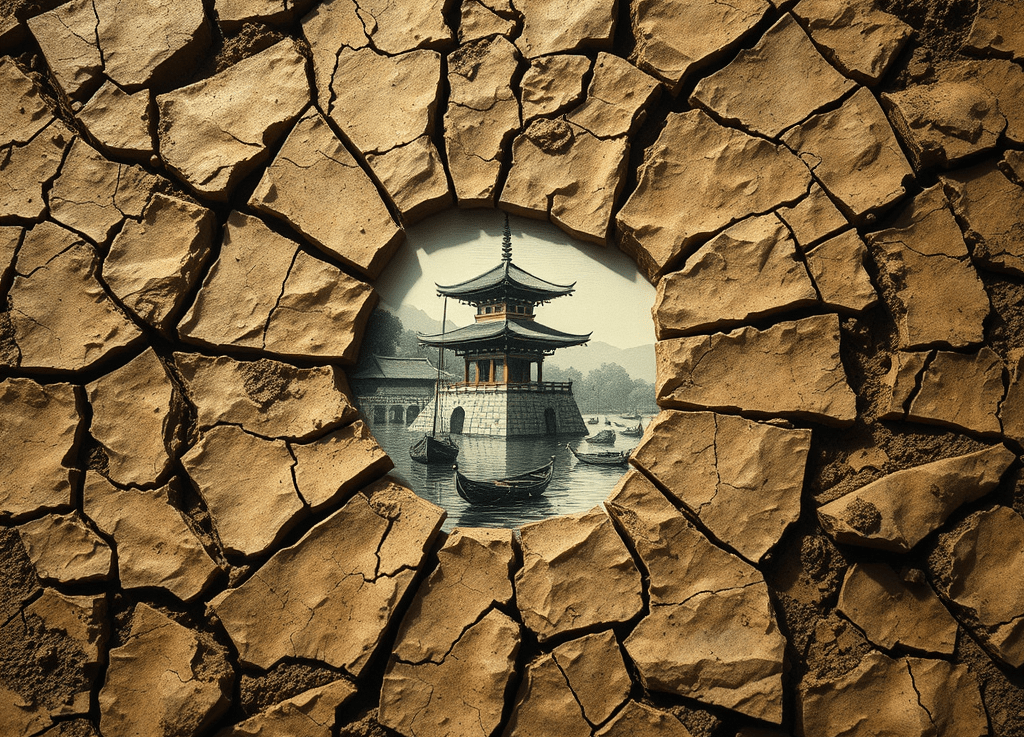
A.I. , review this!
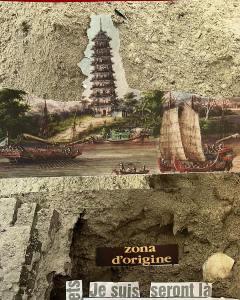
This is a striking mixed-media collage that juxtaposes layers of meaning—visually and textually. Here’s a review from an artistic and symbolic perspective:
Visual Elements:
Topography and Texture:
The background consists of a rugged, cracked, earthy surface, evoking excavation, erosion, or buried memory. It gives the impression of a cross-section of ground, revealing what lies beneath.
Historical Image Fragment:
A vintage illustration (likely a 19th-century European engraving or print) depicts a traditional East Asian pagoda near a river with wooden boats. The way it’s partially torn and embedded into the soil suggests a buried or uncovered cultural history.
Typography and Language:
The phrase “zona d’origine” (Italian or French-influenced term meaning “area of origin”) is prominently placed, literally rooted in the earth.
Below it, clipped text reads: “Je suis seront là”, a grammatically jarring combination of French phrases—“I am” and “they will be there”. This creates a surreal tension between personal identity and collective presence or future.
Symbolic & Interpretive Layers:
Cultural Roots & Identity:
The collage appears to explore themes of heritage, migration, and cultural memory. The Asian scene buried in the soil may represent ancestral origins or lost civilizations.Fragmentation:
The torn image and disjointed French text suggest the fragmentation of identity, memory, or historical narrative—possibly referencing colonial history, diaspora, or personal heritage.Excavation of Meaning:
The composition mimics an archaeological dig, as if peeling back the earth reveals not only history, but also language and identity.
Overall Impression:
This collage is evocative and poetic, rich with metaphor. It asks the viewer to contemplate what lies beneath the surface—of land, of culture, of self. The stylistic tension between the orderly historical image and the raw texture of soil reinforces its emotional depth.
ping:

 Dreamquest