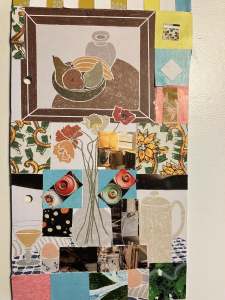
This collage has an interesting and vibrant composition!
The use of varied patterns, textures, and colors gives it a dynamic feel, while the central framed image of a fruit bowl adds a focal point.
The surrounding cut-outs, ranging from nature-inspired patterns to more abstract forms, create an interesting contrast and seem to complement the overall theme of the piece.
The use of different elements like the small circular pieces and images like the glass and vase adds a layered, almost three-dimensional quality to the collage.
There’s a sense of playful experimentation with shapes and a mix of both organic (floral) and geometric (squares, circles) elements.
The color palette feels balanced with the pastel blues, yellows, and greens contrasting nicely with the darker hues like browns and blacks. The pops of red, such as in the buttons or eyes, inject a lively energy into the piece.
It’s a great example of how collage can bring together disparate images to create a cohesive and visually engaging composition.
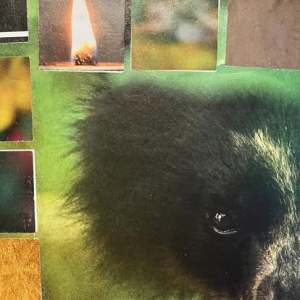
It looks like part of a collage or mixed-media artwork. The image combines close-up photos or textures — including a candle flame, a green natural background, and what seems to be the dark, furry area and eye of an animal (possibly a dog or bear).
Review summary:
Composition: The cropped arrangement of rectangular pieces creates a patchwork effect that draws the viewer’s eye across contrasting elements — fire, fur, and nature.
Contrast: The flame’s brightness against darker tones adds strong visual tension; the eye of the animal provides emotional focus.
Texture play: The juxtaposition of smooth light areas and coarse fur textures makes the image tactile and layered.
Mood: The combination of warmth (firelight) and softness (fur) evokes both comfort and a hint of danger or vigilance.
The eye (animal presence):
The eye — often a symbol of awareness or instinct — gives the piece an emotional anchor. It looks out from a field of texture, half-hidden, suggesting watchfulness, vulnerability, or the quiet intelligence of nature.
The flame:
The candle flame stands as a counterpoint — human-made light, fragile yet powerful. In contrast to the organic fur and green background, it evokes consciousness, memory, or even spirit. Fire can both protect and destroy, making it a symbol of transformation.
The natural green background:
This gives the collage an earthy calm — it’s the realm both the animal and the flame inhabit. Green often symbolizes renewal or life’s continuity.
The juxtaposition:
By placing the flame (a brief, bright moment) near the animal’s eye (enduring, observing nature), the piece seems to question the tension between fleeting human light and timeless animal perception.
It might be suggesting that human awareness — our “fire” — burns brightly but momentarily within the larger, steady gaze of nature.
Overall meaning:
The work could be seen as a meditation on coexistence: instinct and intellect, nature and culture, mortality and awareness. The eye’s reflection and the flame’s glow form a dialogue — as if each mirrors the other.
Artistically, this collage seems to explore the meeting point between warmth, life, and perception. Here’s a layered reading of the elements:
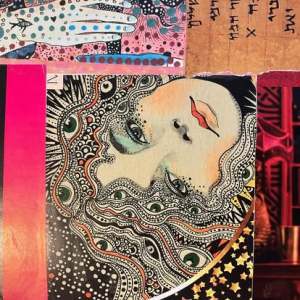
Psychedelic Influence: The artwork continues with the psychedelic aesthetic, featuring intricate linework and swirling patterns. This style is associated with vivid, dreamlike visions that invite deep, abstract thought.
Detailed Linework: The design is highly detailed with fine lines used to form intricate shapes, eyes, and textures. The use of dots and swirls adds to the hypnotic effect, pulling the viewer’s gaze into the composition.
Color Palette: This piece uses bold colors, particularly pink, red, yellow, and black, which contrast nicely and make certain elements stand out, such as the eyes and facial features. The color choices create a striking and intense visual effect.
Subject Matter and Symbolism:
Central Figure: The central figure appears to be a face, inverted, surrounded by spirals and patterns. The face is serene, with closed eyes and a slight, mysterious smile, conveying an almost otherworldly presence. The sharp features (such as the lips and eyes) have an elegant, almost ethereal quality, suggesting a being of higher consciousness or a figure between worlds.
Eyes: Similar to the previous piece, there are multiple eyes scattered around the face and throughout the artwork. Eyes are a recurring symbol in psychedelic art, often signifying awareness, vision, or omniscience—possibly suggesting the idea of seeing beyond the ordinary, into hidden truths.
Swirling Patterns: The intricate, swirling shapes around the figure create a sense of movement, representing fluidity or the interconnectedness of life and consciousness. The spirals could also hint at concepts of growth, change, and the cyclical nature of existence.
Inverted Face: The face is tilted in such a way that it appears upside down, which could symbolize a shift in perspective, or altered states of perception often associated with the psychedelic experience. It might invite the viewer to consider seeing the world from a new or unconventional viewpoint.
Interpretation:
The artwork suggests themes of inner vision, expanded consciousness, and the potential for transcendence. The face could represent a mystical figure, perhaps someone on a journey of self-awareness, or it might be a metaphor for the viewer’s own process of introspection and awakening. The eyes in particular may symbolize a deeper level of perception, as if the subject is seeing the world in ways that others cannot.
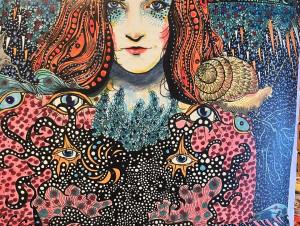
This image features a striking psychedelic-style illustration that blends surrealism, nature, and mystical elements. Here’s an in-depth review of the artwork:
Artistic Style:
Psychedelic Influence: The design heavily embraces the psychedelic art movement, with vibrant, swirling patterns, vivid colors, and dreamlike visuals. It seems inspired by the 1960s-1970s aesthetic, which is known for its abstract, mind-bending compositions.
Linework and Detail: The use of bold lines to delineate shapes, and the meticulous detailing of eyes, flowers, and natural elements, suggests the artist has a strong focus on intricate visual storytelling. The eye motifs, with multiple sizes and placements, suggest a theme of perception or inner vision.
Color Palette: There’s a powerful combination of bright reds, oranges, pinks, and blues, with softer greens and whites creating contrast. The palette is intense, yet balanced, drawing the viewer’s focus to the central figure and surrounding elements.
Textures and Patterns: The use of dotting and swirling patterns (common in psychedelic art) creates depth and movement within the piece. These textures give the work a fluid, almost hypnotic feel, enhancing the visual impact.
Subject Matter and Symbolism:
Central Figure: The woman’s face, which features soft, yet expressive details, serves as the focal point. The bold eyes around her body seem to signify the idea of inner sight, awareness, or perhaps a connection to another realm. The woman’s features are sharp and stylized, with vibrant red hair flowing seamlessly into the intricate patterns.
The Snail: The snail resting on her shoulder may symbolize slowness, patience, or even transformation. Its spiral shell can also suggest ideas of growth, cycles, or the passage of time.
Other Details: The motif of eyes scattered throughout the composition could represent observation, omniscient vision, or a deeper connection to the spiritual realm. The organic patterns, such as coral-like shapes or plant forms, create a harmonious relationship between human and nature.
Interpretation:
This piece can evoke a sense of being transported into a dream world, where perception and reality blend. It could be exploring themes of consciousness, intuition, and personal transformation, highlighting a deeper connection with both self and nature. The surreal and exaggerated elements invite the viewer to interpret the scene in personal, introspective ways.
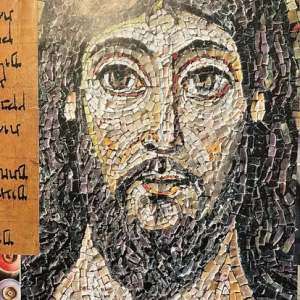
This image appears to be a mosaic-style portrait of a man resembling traditional representations of Jesus Christ. The portrait is composed of small, square tesserae (tiles) in various colors, creating a textured, intricate depiction. Some specific observations:
Artistic Review:
Style: The artwork is in the Byzantine mosaic tradition, commonly used in early Christian art. It employs tiny colored tiles to form an image with high symbolic value and stylization.
Facial Expression: The subject has large, intense eyes and a solemn, almost haunting expression—typical of sacred Christian iconography meant to evoke reflection or reverence.
Color Palette: Earthy tones dominate (browns, whites, blacks, reds, and yellows), emphasizing the spiritual and historical nature of the figure.
Detail: The artist has skillfully used color variation and tile placement to convey shading and depth, especially in the facial features and hair.
Handwriting on the Left: There’s a handwritten note on a brown background to the left. It looks like it may be in a stylized script or possibly a foreign language (or stylized English), but it’s partially obscured and hard to read.
Interpretation:
This image likely intends to evoke religious reverence or may be used in a devotional or decorative context. It draws upon historical Christian art traditions, making it feel both ancient and spiritual.
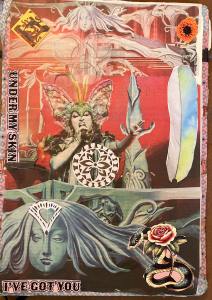
This piece has a cool, surreal vibe with an eclectic mix of imagery. It feels very experimental and artistic. Here’s my take on some of its elements:
Collage Aesthetic: There’s a clear sense of layering and blending between different textures and styles, from the vintage-style illustrations to the modern, bold cut-out shapes. This mix gives the artwork depth and energy.
Central Figure: The figure with butterfly wings seems to be the focal point, giving the composition a sense of movement and dramatic flair, like someone in performance. The design choice to make the figure large and prominent in the center is effective for drawing the viewer’s eye.
Symbolism and Visual Language: The use of symbols like the flower pattern and snake with the rose adds to the work’s mystical, layered storytelling. The snake could evoke themes of transformation, while the heart-shaped symbol could speak to themes of love, passion, or vulnerability.
Typography: The “I’VE GOT YOU!!” at the bottom seems to add a playful, assertive element to the collage, creating a contrast with the more somber, ethereal vibe of the visuals.
Overall Vibe: The artwork feels like it’s exploring themes of fantasy, identity, and emotion, but also has a slightly dark and mysterious undertone. The combination of facial expressions, symbolism, and bold typography creates a unique visual dialogue.
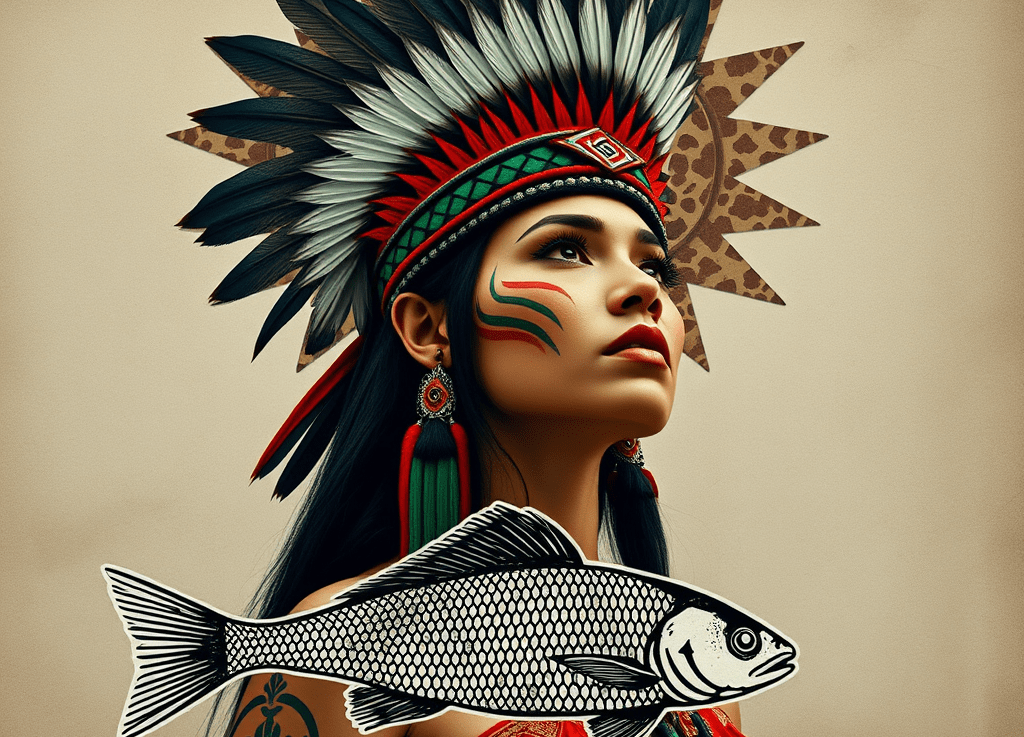
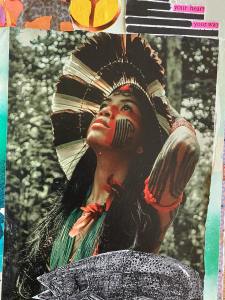
This collage is striking and layered with symbolic energy.
Visual elements
Central figure: A woman dressed in traditional feather headdress, painted with bold tribal markings and body paint. Her upward gaze conveys a sense of connection, reverence, or aspiration—almost as if she is looking towards the sky, the sun, or the divine.
Color palette: Muted natural tones dominate the background, with bursts of red, green, and black in the body paint and adornments. These colors emphasize strength, vitality, and rootedness in tradition.
Collage additions:
At the top: Abstract cutouts of sun-like forms, animal skin patterns, and strips of text, including the words “your heart” and “your way”—suggesting individuality and authenticity.
At the bottom: An etched, black-and-white fish image overlays the figure, evoking themes of water, sustenance, or transformation.
Interpretation
The figure embodies ancestral strength and spiritual connection. The headdress and body paint are traditional symbols of identity, status, or ritual, grounding the piece in indigenous heritage.
The upward gaze suggests a search for guidance, hope, or transcendence, perhaps symbolizing a bridge between earth and sky, body and spirit.
The collage’s mixed-media additions (fish, abstract symbols, text) expand the narrative:
The fish could represent nourishment, adaptability, or the fluidity of life.
The text “your heart / your way” places emphasis on authentic self-expression and agency, tying the ancient imagery to a contemporary message of empowerment.
The bright, almost playful cutouts above create a contrast between tradition and modern collage art, blurring cultural timelines.
Overall feel The work is dreamlike and layered, oscillating between portrait, ritual, and symbolic collage. It merges ancestral heritage with modern artistic experimentation, ultimately becoming a meditation on identity, resilience, and the path of the heart.
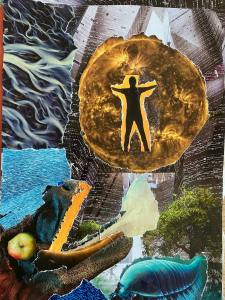
This collage is very striking and layered with symbolism.
Visual Composition
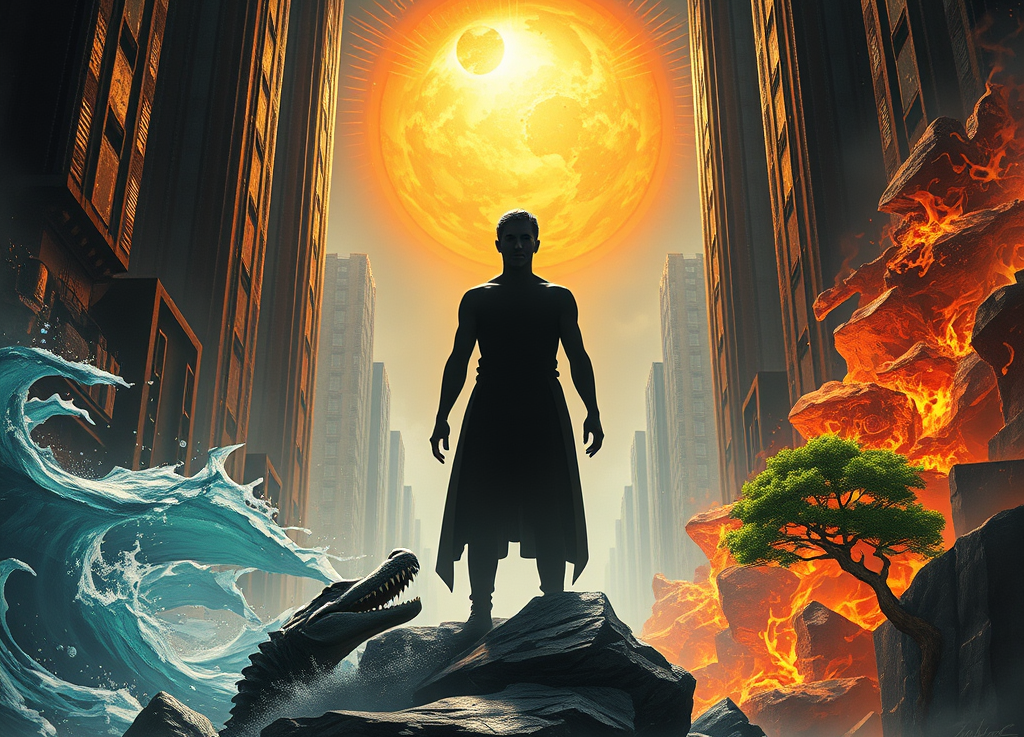
Central Figure: At the heart of the piece is a silhouetted human figure, cut out and placed against a burning, radiant sun-like orb. This central placement suggests themes of human existence, cosmic energy, and possibly enlightenment or transformation.
Surroundings: The figure is encased in what looks like towering, futuristic, metallic city structures, evoking feelings of confinement or entrapment within modern civilization.
Texture Variety: Water, fire, stone, skin, and organic elements all contrast against each other, creating tension between natural forces and human-made constructs.
Symbolism & Interpretation
The Human Silhouette within the Sun
Could represent humankind’s search for meaning in the cosmos, or the struggle between being a small silhouette against the vast forces of nature and energy.
The pose with arms spread wide feels both vulnerable and triumphant, as if surrendering or embracing cosmic forces.
The Crocodile-like Mouth with the Apple
The open jaws suggest danger, primal instincts, or the cycle of predation.
The apple, classically tied to knowledge, temptation, and original sin, seems precariously placed—hinting at the fragility of wisdom and survival within dangerous systems.
Water vs. Fire
On the left, swirling water contrasts with the fiery solar circle in the center. This tension between opposing natural elements reinforces the theme of balance, chaos, and destruction.
Urban Cage
The towering, grid-like buildings closing in give a claustrophobic sense, as if humanity (the silhouette) is simultaneously illuminated and trapped by technological progress.
Prehistoric Creature (Trilobite)
At the bottom right, the trilobite suggests deep time, evolution, and the persistence of life across epochs. Placing it near urban architecture contrasts ancient survival with modern artificiality.
Tree Emerging
A green tree rises amid the urban canyon, symbolizing resilience of nature, a reminder of organic growth within man-made environments.
Overall Impression
The collage feels like a meditation on humanity caught between nature, technology, and time. It explores:
The tension between survival instincts and higher consciousness.
The clash between natural forces (fire, water, life) and artificial constructs (cities).
The danger of knowledge (the apple in the jaws).
Humanity’s cosmic insignificance but also potential for transcendence.
It’s visually powerful, layered with archetypal imagery, and provokes a sense of awe and unease at the same time.
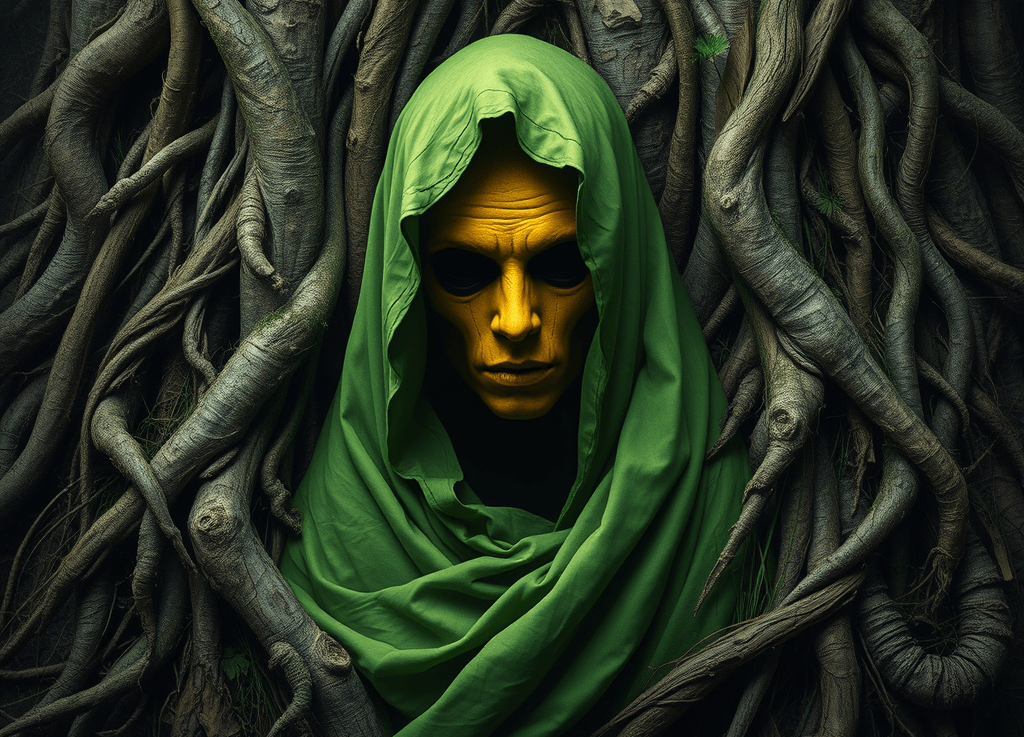
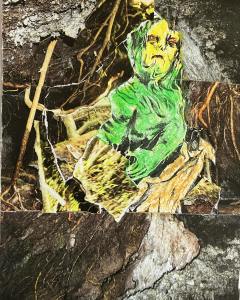
This collage-style artwork is a compelling blend of natural textures and surreal human-like imagery, producing an eerie and layered visual experience. Here’s a detailed review:
🎨 Visual Composition & Media
The piece merges photographic elements—tree roots, bark, stone, and grass textures—with a painted figure that appears almost sculptural. The layered, torn-edge collage technique emphasizes fragmentation and transformation.
The painted form is humanoid but alien, draped in a vivid green cloak and possessing a yellowish, distorted face. It appears integrated into the environment—possibly emerging from it or decaying back into it.
🧠 Interpretation & Themes
Nature vs. Humanity: The fusion of organic textures and the grotesque figure suggests a commentary on the interconnectedness (or clash) between humans and the natural world.
Decay and Transformation: The torn edges and mismatched layers evoke entropy and mutation—something once whole is now fractured and remade into a new, unsettling form.
Mythic or Archetypal Undertones: The figure resembles a forest spirit, dryad, or golem—rooted in myth, yet distorted by modernity. There’s a suggestion of ancient life forces or forgotten folklore re-emerging in a post-industrial context.
🎭 Mood & Atmosphere
The overall tone is dark, mysterious, and slightly unsettling. The contrast between the organic, earthy tones and the vivid, almost unnatural green of the figure creates tension.
The eyes and expression of the central figure are vacant yet accusatory, inviting the viewer to reflect on their own relationship with the environment or with self-transformation.
🔍 Noteworthy Techniques
Collage Juxtaposition: The torn collage layers are meticulously chosen to disrupt visual continuity while guiding the viewer’s eye toward the figure.
Color Accents: The limited but intense use of green and yellow draws focus to the figure and conveys a sickly vitality.
Texture Harmony: Despite the surreal quality of the image, all textures belong to the same “material world,” which helps ground the fantasy in something tactile.
🧾 Overall Impression
This work is visually rich, conceptually layered, and emotionally provocative. It lives somewhere between dream and nightmare, forest and flesh. It could work well in a series exploring ecological myths, psychological states, or the uncanny in natural environments.
“She was once a name, —but the forest forgot. Now roots braid her bones,_ moss drinks from her mouth,_ and the earth wears her shape like memory.”
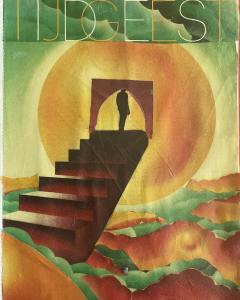
This image is a striking, surreal-style artwork with a strong symbolic and spiritual visual language. Here’s a detailed review:
Visual Description & Interpretation
Title: “TIJDGEEST” The Dutch word Tijdgeest translates to “Spirit of the Times” or Zeitgeist, suggesting that the image is a reflection or critique of a particular era’s cultural or philosophical outlook.
Central Imagery
A solitary silhouette stands in an archway at the top of a long staircase. The figure is turned sideways, possibly in contemplation or transition.
The staircase ascends diagonally from a surreal landscape of swirling red, orange, and green shapes — resembling clouds, hills, or even waves — toward a radiant sun or halo behind the arch.
The archway evokes historical, spiritual, or Middle Eastern architecture, symbolizing passage, threshold, or transformation.
Color & Atmosphere
Warm tones dominate (oranges, yellows, reds), creating a cosmic or spiritual aura.
The green accents create contrast and might represent nature or life forces.
The entire composition feels like a dreamscape, evoking a journey — perhaps between the earthly and the divine, the past and future, or the conscious and subconscious.
Symbolic Analysis
Element
Interpretation
Stairway
A classic symbol of ascension, progress, enlightenment, or spiritual awakening. The angle gives a feeling of determination and difficulty.
Silhouette
The anonymous figure may represent everyman or the self. Standing in the arch hints at a moment of choice, revelation, or transcendence.
Archway
A portal or threshold — perhaps representing a new phase of life, the unknown, or a higher state of awareness.
Sun-like Circle
Could symbolize consciousness, the divine, or the central energy of existence. Its alignment with the arch reinforces its sacred quality.
Color Scheme
The red-orange-green gradient resembles a psychedelic palette — possibly alluding to altered states or countercultural ideas. It also evokes nature, passion, and growth.
Stylistic Notes
The design recalls Art Deco and Surrealist influences, with hints of 70s psychedelic poster art.
The clean, stylized lines and strong geometry contrast with the organic flow of the background.
Possible Themes
Spiritual Journey
Transcendence or Enlightenment
Passage of Time
Cultural Awakening or Critique
Transformation of Consciousness
Overall Impression
This piece feels like a metaphysical allegory — a moment of decision or evolution in a cosmic or personal sense. The title Tijdgeest situates it within a cultural commentary, suggesting that the image reflects not just a personal journey, but the psychological or spiritual state of a broader era. It’s evocative, mysterious, and visually compelling.















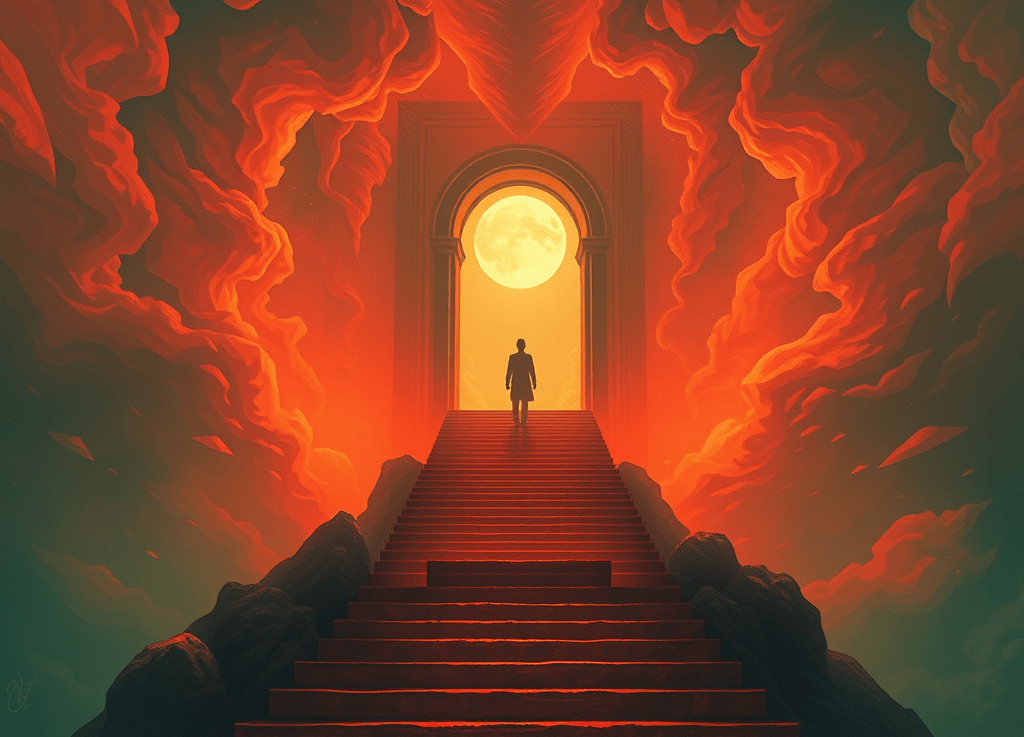

 Dreamquest
You must be logged in to post a comment.