Tag: goddess

Tempeltje / Zeeuwse godin weer thuis

Tempeltje / Zeeuwse godin weer thuis


(bron: Koert van der Velde, Trouw 2005-08-13)

Meer dan tweeduizend jaar geleden was de Zeeuwse godin Nehalennia of Neeltje Jans een begrip langs de grote rivieren en de Noordzeekust.
Na vele eeuwen te zijn vergeten, krijgt Neeltje Jans op Colijnsplaat weer een onderkomen.
Morgen opent de Zeeuwse commissaris van de koningin een nieuwe tempel met een traditioneel religieus ritueel.
Is Nehalennia écht helemaal dood?

De namaaktempel aan de jachthaven moet vooral toeristen lokken die naast
watersporten ook graag iets cultureels doen.
Maar de inwoners van Colijnsplaat, gemeente Noord-Beveland, hebben er gul geld voor op tafel
gelegd.

“Het mysterie erachter trekt”, zegt Arianne Jansen van de stichting, die de tempel heeft gebouwd, met een flinke zak geld uit Brussel en de handen van
vele vrijwilligers.
Vlak voor de kust van Colijnsplaat lag immers de verzonken stad Ganuenta, een belangrijk handelscentrum aan het begin van de jaartelling. En vlak buiten Ganuenta heeft de tempel van de godin Nehalennia gestaan.”

Een echt altaar in een vitrine, en de echte oude Romeinse plavuizen die in de vloer zijn verwerkt, moeten de verbeelding in dit ‘educatief centrum’ prikkelen.
De musealisering van de religie is compleet met een authentiek ritueel, dat commissaris van de koningin Van Gelder ter gelegenheid van de opening vandaag zal voltrekken, samen met een acteur die Nehalenniapriester speelt.

Zoals ooit een Romeinse consul of keizer onder toeziend oog van een priester de rechterhand op de deurpost hield en een gebed uitsprak, of een plengoffer van wijn op de drempel sprenkelde toen hij de inmiddels in het water verdwenen tempel van Nehalennia vlak buiten Colijnsplaat opende.

Monty Hansen, die de priesterrol speelt, vertelt dat de commissaris wel met het spel wil meedoen, maar tot op zekere hoogte.
“Met het uitspreken van een gebed aan Nehalennia moeten we anno 2005 uitkijken. Sommige christenen hebben daar moeite mee in dit gebied.”
In het kantoor van de commissaris wordt nog overleg.
De woordvoerder van de stichting wil de uitkomst geheim houden, en spreekt van ‘een verrassing voor het publiek ‘.

Het rituele gedrag van de commissaris ligt niet alleen gevoelig vanwege lange christen-tenen.
In het vaarwater van de musealisering van de Nehalenniacultus vindt ook een bescheiden ‘religiosering’ plaats en daar kan de commissaris zich evenmin mee identificeren.

Hansen bijvoorbeeld, die sinds zes jaar als vrijwilliger in attractiepark Archeon Nehalennia-priester speelt, noemt het brengen van offers, ‘voor tien procent religieus’. In de zomervakanties is offers brengen daar zijn dagelijkse werk.
Af en toe doet hij er een offer op een bruiloft bij.
Hij noemt een offer ,,een educatief-historisch toneelstukje, zonder er verder iets dieps bij te voelen. Gewoon gezellig mijn hobby uitoefenen.”
Maar dat is de ene kant van het verhaal.
,,Als je me vraagt: ‘geloof jij in die godin?’ dan zeg ik nee.
Maar als je me vraagt: ‘Kun je het ook doen in een biertent?’ dan zeg ik ook nee.
Het moet met respect gebeuren.”
En al voelt hij niets ‘dieps’, “voor tien procent heb ik er wel een religieus gevoel bij, en dat houd ik in ere”, zegt hij.
“Ik neem alle oude voorschriften van de Romeinse tempeldienst in acht, doe alles op de juiste
manier.
Ik ben religieus bezig, zoals ik op 5 december met Sinterklaas bezig ben: ik speel hem, en toch is het geen spelletje.”
Sommige bezoekers hebben ook religieuze gevoelens bij de toneelstukjes die hij opvoert, zegt Hansen.
Hij doet dan ook meer dan offers brengen aan Nehalennia.
,,Ik trok eens een orakel voor een vrouw die een naam zocht voor haar bedrijfje.
Ik trok alleen maar kaarten over dood en zo.
Dus ik zeg: ‘Mevrouw, ik weet het niet hoor, hoe het verder moet met die winkel van u’.
Bleek ze een winkel in begrafenisartikelen te hebben.”

Nog meer procenten religieuzer is de fluitist Jules Bitter.
Bitter heeft enkele CD’s gemaakt waarin Nehalennia centraal staat, en hij zal vandaag fluit spelen bij de opening van de tempel.
,,Een vrouwelijke zeegodin past mij als Zeeuw meer dan de vadergod van een woestijnvolk.”
Bitter noemt de hond die Nehalennia vaak vergezeld op altaarafbeeldingen ‘een Keltische totem’, en wijst op de appels, zeesterren, de maan en het brood als Nehalennia’s bekende symbolen.
,,We hebben religieuze symbolen nodig in het leven.
Nehalennia kan ons het gevoel van veiligheid en bescherming geven.”
Volgens Bitter heeft Nehalennia een belangrijke rol te spelen in onze tegenwoordige cultuur.
Hij zegt veel over de godin gelezen te hebben en zo tot een persoonlijke interpretatie te zijn gekomen.
“De dragende, voedende kracht waar zij voor staat, kan een tegenwicht zijn voor de mannelijke op efficiëncy gerichte rechtlijnigheid.”
De tempel in Colijnsplaat kan daarbij helpen, hoopt hij.
“Het zou mooi zijn als mensen via die tempel in contact komen met de vrouw in zichzelf en rust vinden, al zal die in de zomer, wanneer Colijnsplaats wordt overspoeld door toeristen
uit binnen- en buitenland ver te zoeken zijn.”

Danseres Anneke Wittermans gaat nog verder in de religiosering van de gemusealiseerde zeegodin. Ze zal bij de opening van de tempel vandaag haar ‘Nehalennia dans’ opvoeren en zo deze godin eren.
Nehalennia is voor haar ‘zowel mysterie als realiteit’, waarmee zij al dansend in contact probeert te
treden, zegt ze.
De stenen tempel is voor haar geen potentiële cultusplek om met de godin in contact te treden. Liever danst zij op het strand ‘aan de voeten’ van de zeegodin, al doet de plek er uiteindelijk niet toe.
“Het lichaam is als een tempel voor mij. De godin zit in jezelf. Je kunt haar eren met zang en dans. Dat werkt helend.”
Nehalennia verdient bekendheid en erkenning, vindt Wittermans.
,,Door ons erfgoed in ere te herstellen en Nehalennia te gedenken kunnen we van haar
leren.”
Aan stof voor verder fantaseren geen gebrek. Zo put zij uit een
pseudowetenschappelijke traditie die Zeeland als plek aanwijst waar Homerus’
Ilias en Odyssee zich in werkelijkheid zouden hebben afgespeeld. De
vrouwelijke priesters, die er volgens haar wellicht ooit de tempeldienst
deden, zijn met het christendom vervangen door celibataire mannen. En
daarmee is volgens haar een religieuze, met de kern van het bestaan
samenhangende vrouwenwijsheid verloren gegaan. “De Keltische Nehalennia
belichaamt een cultuur, die we vergeten zijn, maar die een wijsheid tot
uitdrukking brengt waar ook wij eenentwintigste eeuwers ons voordeel mee
zouden kunnen doen.”

,,Westerse vrouwen hebben misschien wel een grote mond, maar in feite hebben
ze weinig zelfvertrouwen. Het preutse van vroeger is omgeslagen in het ‘zet
de boel maar open’. Westerse vrouwen hebben zodoende weinig eigenwaarde,
stralen weinig waardigheid uit. De van oorsprong Keltische Nehalennia staat
voor de oervrouw met een krachtige persoonlijkheid, een type dat door het
masculine christendom om zeep is gebracht.”

Het christendom heeft godinnen als Neeltje Jans met Maria laten
samensmelten, maar daarmee heeft Wittermans nooit uit de voeten gekunt, zegt
ze. ,,Maria als maagd die een kind krijgt, daarmee kan ik als vrouw me toch
niet identificeren? Nehalennia heeft niet zulke contradicties, ontleent geen
status aan haar maagdzijn of het moederschap.”

De opening van de replica van de Nehalenniatempel noemt Wittermans ‘een geweldige stap’ in een mogelijke revival van de godin.
Volgens haar is het een kwestie van tijd dat de eerste wicca en andere ‘ heidenen’ de tempel van
Neeltje Jans zullen ontdekken als cultusplaats.

Voorlichter Arianne Jansen van de tempel kan daar echter kort over zijn: ,,Dat staan wij niet toe.” De tempel zal ook bijna altijd gesloten zijn, nieuwsgierigen wordt alleen door een grote glazen deur een blik op Nehalennia gegund.

De Vlissingense handelaar in wereldmuziek en esoterische parafernalia Henk Postma heeft zijn bedenkingen bij het tempelproject.
Hij is al jaren fan van Nehalennia en heeft ook een altaar voor haar opgericht in zijn winkel.
Hij noemt de tempelreplica een ‘gemiste kans’.
“Er is behoefte aan een plek van rust en bezinning rond de godin, en die tempel had dat kunnen bieden.
Van heinde en ver waren er dan belangstellenden naar Colijnsplaat afgereisd.
Een nieuw pelgrimsoord voor de oude zeegodin had Colijnsplaat wereldwijd op de kaart kunnen zetten.
Maar er zit geen visie achter, alleen een zak geld.
Het liefst zouden ze er een eftelingachtige plek van maken.
Zo wordt Nehalennia al aan ‘Zoutbaard’ gekoppeld, een fantasiefiguur uit een
nabijgelegen pretpark, in de hoop op commercieel succes.
Maar Nehalennia zal zo’n succes niet toestaan.
Zij zal er voor zorgen dat het project niet in de golven maar op een eigentijdse manier tenondergaat: in een financiële ramp.”

gott steht in der gottesgemeinde

gott steht in der gottesgemeinde


gott steht in der gottesgemeinde
im ring des gottwesens haelt er gericht:
biss wann wollt ihr richten falsch
das anlitz des frevler erheben?
fuer die schwachen und weisen, richtet,
bewahrheitet den gebeugten,
die armen, schwachen, dürftigen, lasset entrinnen.
rettet aus der hand der frevler
sie erkennen’s nicht,
haben’s nicht acht,
in verfinsterung gehen sie umher.
alle gruenden des Erdreich wanken
welbe ich hatte gesprochen
goetter seit ihr,
soehne des hoechsten ihr alle,
aber wie menschen musset ihr sterben
wie irgendeiner der fuersten fallen.
erhebe dich gott
richtet das erdreich
der du bisst
der zu eigen hatt
die weltstaemme alle


Martin Buber & Franz Rosenzweig, PS 82

Openbaringen van God

Openbaringen van God


Sporen van God zijn wellicht te vinden in de Joods-Christelijke bijbel, de Islamitische Koran, de Hindu-Veda, kortom alle ‘Heilige Boeken’.

De ‘Heilige Boeken’ ontstonden uit ‘waarnemingen’ van feilbare mensen die ‘iets’ hebben opgevangen via vizioenen, stemmen, etc.; vervolgens zijn de waarnemingen oraal doorgegeven en later opgetekend, om tenslotte na eeuwenlang redactiewerk van mensen gestandariseerd te worden, waarna er een neiging ontstond om het standaardwerk als enige waarheid te benoemen.

Als God iets te communiceren heeft naar de mens, dan lijkt het mij onwaarschijnlijk dat Hij/Zij buiten de officieel goedgekeurde ‘Heilige Boeken’ niet meer zou communiceren/manifesteren.

Verder lijkt het mij onwaarschijnlijk dat er slechts 1 enkel boek de enige waarheid zou bevatten.
Hoe kan je iets alomvattends bevatten in een beperkt boek, geschreven door beperkte mensen?

Stromingen in Buddhisme

Stromingen in Buddhisme


In het oorspronkelijke Hinayana-Buddhisme moest je vele levens je best doen om je lost te maken van het Wiel van Wedergeboorte en Lijden.
In het latere Mahayana-Buddhisme kon je ook hulp verwachten van Boddhisatva’s (Verlichten die de uiteindelijke verlossing uitstellen om de wereldbewoners nog te kunnen verlossen).

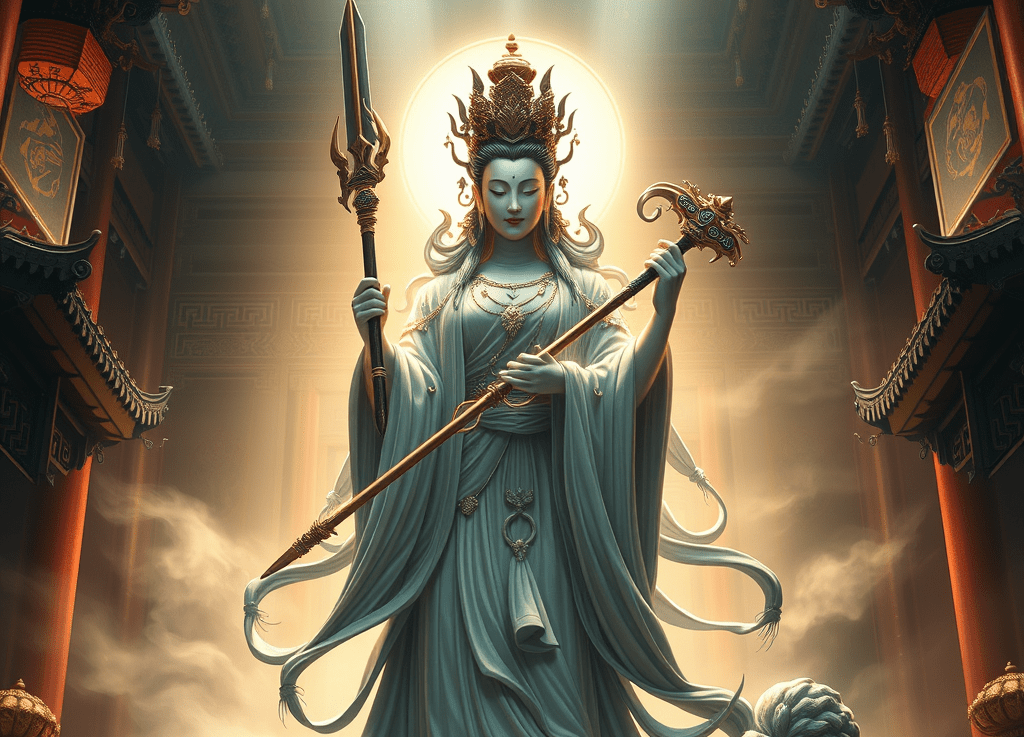
De meeste inspiratie vind ik bij Boddhisatva Guanyin, de chinese variant van Avalokitesvara (degene die de kreten van de wereld aanhoort), die in deze verschijningsvorm veel lijkt op Moeder Maria.

Er zijn (volgens Martin Palmer) aanwijzingen, dat de Guanyin-verering omstreeks 900 zich ontwikkelde in het uiterste Westen van China, nabij het invloedsgebied van Perzie, waar het Nestoriaans Christendom aanwezig was.

Aan de Oostkust van China versmolt Guanyin met diverse bestaande beschermende Zeegodinnen, iets wat ze gemeenschappelijk heeft met Maria Stella Maris.

In Amsterdam is er een mooie Chinese Tempel, waar Guanyin zeer krijgshaftig staat afgebeeld met wapens (tegen illusie).

Charge of the Goddess (Doreen Valiente)

Charge of the Goddess (Doreen Valiente)


Listen to the words of the Great Mother, who of old was called Artemis, Astarte, Dione, Melusine, Aphrodite, Cerridwen, Diana, Arienrhod, Brigid, and by many other names:

Whenever you have need of anything, once in the month, and better it be when the moon is full, you shall assemble in some secret place and adore the spirit of Me who is Queen of all Witches.

There shall you assemble, who have not yet won my deepest secrets and are fain to learn all sorceries.
To these shall I teach that which is yet unknown.

You shall be free from slavery, and as a sign that you be free you shall be naked in your rites.

Sing, feast, dance, make music and love, all in My presence, for Mine is the ecstasy of the spirit and Mine also is joy on earth.

For My law is love unto all beings.

Mine is the secret that opens upon the door of youth, and Mine is the cup of wine of life that is the Cauldron of Cerridwen that is the holy grail of immortality.

I am the Gracious Goddess who gives the gift of youth unto the heart of mankind.

I give the knowledge of the spirit eternal and beyond death I give peace and freedom and reunion with those that have gone before.

Nor do I demand aught of sacrifice, for behold, I am the mother of all things and My love is poured upon the earth.

Hear the words of the Star Goddess, the dust of whose feet are the hosts of heaven, whose body encircles the universe:

I who am the beauty of the green earth and the white moon among the stars and the mysteries of the waters,

I call upon your soul to arise and come unto Me.
For I am the soul of nature that gives life to the universe. From Me all things proceed and unto Me they must return.

Let My worship be in the heart that rejoices, for behold — all acts of love and pleasure are My rituals. Let there be beauty and strength, power and compassion, honor and humility, mirth and reverence within you.

And you who seek to know Me, know that your seeking and yearning will avail you not, unless you know the Mystery: for if that which you seek, you find not within yourself, you will never find it without.

For behold, I have been with you from the beginning, and I am that which is attained at the end of desire.

Gilgamesh & the Flood

Gilgamesh & the Flood


Gilgamesh spoke to Utanapishtim, the Faraway:
“I have been looking at you,
but your appearance is not strange–you are like me!
You yourself are not different–you are like me!
My mind was resolved to fight with you,
(but instead?) my arm lies useless over you.
Tell me, how is it that you stand in the Assembly of the Gods,
and have found life!”
Utanapishtim spoke to Gilgamesh, saying:
“I will reveal to you, Gilgamesh, a thing that is hidden,
a secret of the gods I will tell you!
Shuruppak, a city that you surely know,
situated on the banks of the Euphrates,
that city was very old, and there were gods inside it.
The hearts of the Great Gods moved them to inflict the Flood.
Their Father Anu uttered the oath (of secrecy),
Valiant Enlil was their Adviser,
Ninurta was their Chamberlain,
Ennugi was their Minister of Canals.
Ea, the Clever Prince(?), was under oath with them
so he repeated their talk to the reed house:
‘Reed house, reed house! Wall, wall!
O man of Shuruppak, son of Ubartutu:
Tear down the house and build a boat!
Abandon wealth and seek living beings!
Spurn possessions and keep alive living beings!
Make all living beings go up into the boat.
The boat which you are to build,
its dimensions must measure equal to each other:
its length must correspond to its width.
Roof it over like the Apsu.
I understood and spoke to my lord, Ea:
‘My lord, thus is the command which you have uttered
I will heed and will do it.
But what shall I answer the city, the populace, and the
Elders!’
Ea spoke, commanding me, his servant:
‘You, well then, this is what you must say to them:
“It appears that Enlil is rejecting me
so I cannot reside in your city (?),
nor set foot on Enlil’s earth.
I will go down to the Apsu to live with my lord, Ea,
and upon you he will rain down abundance,
a profusion of fowl, myriad(!) fishes.
He will bring to you a harvest of wealth,
in the morning he will let loaves of bread shower down,
and in the evening a rain of wheat!”‘
Just as dawn began to glow
the land assembled around me-
the carpenter carried his hatchet,
the reed worker carried his (flattening) stone,
… the men …
The child carried the pitch,
the weak brought whatever else was needed.
On the fifth day I laid out her exterior.
It was a field in area,
its walls were each 10 times 12 cubits in height,
the sides of its top were of equal length, 10 times It cubits each.
I laid out its (interior) structure and drew a picture of it (?).
I provided it with six decks,
thus dividing it into seven (levels).
The inside of it I divided into nine (compartments).
I drove plugs (to keep out) water in its middle part.
I saw to the punting poles and laid in what was necessary.
Three times 3,600 (units) of raw bitumen I poured into the
bitumen kiln,
three times 3,600 (units of) pitch …into it,
there were three times 3,600 porters of casks who carried (vege-
table) oil,
apart from the 3,600 (units of) oil which they consumed (!)
and two times 3,600 (units of) oil which the boatman stored
away.
I butchered oxen for the meat(!),
and day upon day I slaughtered sheep.
I gave the workmen(?) ale, beer, oil, and wine, as if it were
river water,
so they could make a party like the New Year’s Festival.
… and I set my hand to the oiling(!).
The boat was finished by sunset.
The launching was very difficult.
They had to keep carrying a runway of poles front to back,
until two-thirds of it had gone into the water(?).
Whatever I had I loaded on it:
whatever silver I had I loaded on it,
whatever gold I had I loaded on it.
All the living beings that I had I loaded on it,
I had all my kith and kin go up into the boat,
all the beasts and animals of the field and the craftsmen I
had go up.
Shamash had set a stated time:
‘In the morning I will let loaves of bread shower down,
and in the evening a rain of wheat!
Go inside the boat, seal the entry!’
That stated time had arrived.
In the morning he let loaves of bread shower down,
and in the evening a rain of wheat.
I watched the appearance of the weather–
the weather was frightful to behold!
I went into the boat and sealed the entry.
For the caulking of the boat, to Puzuramurri, the boatman,
I gave the palace together with its contents.
Just as dawn began to glow
there arose from the horizon a black cloud.
Adad rumbled inside of it,
before him went Shullat and Hanish,
heralds going over mountain and land.
Erragal pulled out the mooring poles,
forth went Ninurta and made the dikes overflow.
The Anunnaki lifted up the torches,
setting the land ablaze with their flare.
Stunned shock over Adad’s deeds overtook the heavens,
and turned to blackness all that had been light.
The… land shattered like a… pot.
All day long the South Wind blew …,
blowing fast, submerging the mountain in water,
overwhelming the people like an attack.
No one could see his fellow,
they could not recognize each other in the torrent.
The gods were frightened by the Flood,
and retreated, ascending to the heaven of Anu.
The gods were cowering like dogs, crouching by the outer wall.
Ishtar shrieked like a woman in childbirth,
the sweet-voiced Mistress of the Gods wailed:
‘The olden days have alas turned to clay,
because I said evil things in the Assembly of the Gods!
How could I say evil things in the Assembly of the Gods,
ordering a catastrophe to destroy my people!!
No sooner have I given birth to my dear people
than they fill the sea like so many fish!’
The gods–those of the Anunnaki–were weeping with her,
the gods humbly sat weeping, sobbing with grief(?),
their lips burning, parched with thirst.
Six days and seven nights
came the wind and flood, the storm flattening the land.
When the seventh day arrived, the storm was pounding,
the flood was a war–struggling with itself like a woman
writhing (in labor).
The sea calmed, fell still, the whirlwind (and) flood stopped up.
I looked around all day long–quiet had set in
and all the human beings had turned to clay!
The terrain was as flat as a roof.
I opened a vent and fresh air (daylight!) fell upon the side of
my nose.
I fell to my knees and sat weeping,
tears streaming down the side of my nose.
I looked around for coastlines in the expanse of the sea,
and at twelve leagues there emerged a region (of land).
On Mt. Nimush the boat lodged firm,
Mt. Nimush held the boat, allowing no sway.
One day and a second Mt. Nimush held the boat, allowing
no sway.
A third day, a fourth, Mt. Nimush held the boat, allowing
no sway.
A fifth day, a sixth, Mt. Nimush held the boat, allowing
no sway.
When a seventh day arrived
I sent forth a dove and released it.
The dove went off, but came back to me;
no perch was visible so it circled back to me.
I sent forth a swallow and released it.
The swallow went off, but came back to me;
no perch was visible so it circled back to me.
I sent forth a raven and released it.
The raven went off, and saw the waters slither back.
It eats, it scratches, it bobs, but does not circle back to me.
Then I sent out everything in all directions and sacrificed
(a sheep).
I offered incense in front of the mountain-ziggurat.
Seven and seven cult vessels I put in place,
and (into the fire) underneath (or: into their bowls) I poured
reeds, cedar, and myrtle.
The gods smelled the savor,
the gods smelled the sweet savor,
and collected like flies over a (sheep) sacrifice.
Just then Beletili arrived.
She lifted up the large flies (beads) which Anu had made for
his enjoyment(!):
‘You gods, as surely as I shall not forget this lapis lazuli
around my neck,
may I be mindful of these days, and never forget them!
The gods may come to the incense offering,
but Enlil may not come to the incense offering,
because without considering he brought about the Flood
and consigned my people to annihilation.’
Just then Enlil arrived.
He saw the boat and became furious,
he was filled with rage at the Igigi gods:
‘Where did a living being escape?
No man was to survive the annihilation!’
Ninurta spoke to Valiant Enlil, saying:
‘Who else but Ea could devise such a thing?
It is Ea who knows every machination!’
La spoke to Valiant Enlil, saying:
‘It is yours, O Valiant One, who is the Sage of the Gods.
How, how could you bring about a Flood without consideration
Charge the violation to the violator,
charge the offense to the offender,
but be compassionate lest (mankind) be cut off,
be patient lest they be killed.
Instead of your bringing on the Flood,
would that a lion had appeared to diminish the people!
Instead of your bringing on the Flood,
would that a wolf had appeared to diminish the people!
Instead of your bringing on the Flood,
would that famine had occurred to slay the land!
Instead of your bringing on the Flood,
would that (Pestilent) Erra had appeared to ravage the land!
It was not I who revealed the secret of the Great Gods,
I (only) made a dream appear to Atrahasis, and (thus) he
heard the secret of the gods.
Now then! The deliberation should be about him!’
Enlil went up inside the boat
and, grasping my hand, made me go up.
He had my wife go up and kneel by my side.
He touched our forehead and, standing between us, he
blessed us:
‘Previously Utanapishtim was a human being.
But now let Utanapishtim and his wife become like us,
the gods!
Let Utanapishtim reside far away, at the Mouth of the Rivers.’
They took us far away and settled us at the Mouth of the Rivers.”
“Now then, who will convene the gods on your behalf,
that you may find the life that you are seeking!
Wait! You must not lie down for six days and seven nights.”
soon as he sat down (with his head) between his legs
sleep, like a fog, blew upon him.
Utanapishtim said to his wife:
“Look there! The man, the youth who wanted (eternal) life!
Sleep, like a fog, blew over him.”
his wife said to Utanapishtim the Faraway:
“Touch him, let the man awaken.
Let him return safely by the way he came.
Let him return to his land by the gate through which he left.”
Utanapishtim said to his wife:
“Mankind is deceptive, and will deceive you.
Come, bake loaves for him and keep setting them by his head
and draw on the wall each day that he lay down.”
She baked his loaves and placed them by his head
and marked on the wall the day that he lay down.
The first loaf was dessicated,
the second stale, the third moist(?), the fourth turned white,
its …,
the fifth sprouted gray (mold), the sixth is still fresh.
the seventh–suddenly he touched him and the man awoke.
Gilgamesh said to Utanapishtim:
“The very moment sleep was pouring over me
you touched me and alerted me!”
Utanapishtim spoke to Gilgamesh, saying:
“Look over here, Gilgamesh, count your loaves!
You should be aware of what is marked on the wall!
Your first loaf is dessicated,
the second stale, the third moist, your fourth turned white,
its …
the fifth sprouted gray (mold), the sixth is still fresh.
The seventh–suddenly he touched him and the man awoke.
Gilgamesh said to Utanapishtim:
“The very moment sleep was pouring over me
you touched me and alerted me!”
Utanapishtim spoke to Gilgamesh, saying:
“Look over here, Gilgamesh, count your loaves!
You should be aware of what is marked on the wall!
Your first loaf is dessicated,
the second stale, the third moist, your fourth turned white,
its …
the fifth sprouted gray (mold), the sixth is still fresh.
The seventh–at that instant you awoke!”
Gilgamesh said to Utanapishtim the Faraway:
“O woe! What shall I do, Utanapishtim, where shall I go!
The Snatcher has taken hold of my flesh,
in my bedroom Death dwells,
and wherever I set foot there too is Death!”
Home Empty-Handed
Utanapishtim said to Urshanabi, the ferryman:
“May the harbor reject you, may the ferry landing reject you!
May you who used to walk its shores be denied its shores!
The man in front of whom you walk, matted hair chains
his body,
animal skins have ruined his beautiful skin.
Take him away, Urshanabi, bring him to the washing place.
Let him wash his matted hair in water like ellu.
Let him cast away his animal skin and have the sea carry it off,
let his body be moistened with fine oil,
let the wrap around his head be made new,
let him wear royal robes worthy of him!
Until he goes off to his city,
until he sets off on his way,
let his royal robe not become spotted, let it be perfectly new!”
Urshanabi took him away and brought him to the washing place.
He washed his matted hair with water like ellu.
He cast off his animal skin and the sea carried it oh.
He moistened his body with fine oil,
and made a new wrap for his head.
He put on a royal robe worthy of him.
Until he went away to his city,
until he set off on his way,
his royal robe remained unspotted, it was perfectly clean.
Gilgamesh and Urshanabi bearded the boat,
they cast off the magillu-boat, and sailed away.
The wife of Utanapishtim the Faraway said to him:
“Gilgamesh came here exhausted and worn out.
What can you give him so that he can return to his land (with
honor) !”
Then Gilgamesh raised a punting pole
and drew the boat to shore.
Utanapishtim spoke to Gilgamesh, saying:
“Gilgamesh, you came here exhausted and worn out.
What can I give you so you can return to your land?
I will disclose to you a thing that is hidden, Gilgamesh,
a… I will tell you.
There is a plant… like a boxthorn,
whose thorns will prick your hand like a rose.
If your hands reach that plant you will become a young
man again.”
Hearing this, Gilgamesh opened a conduit(!) (to the Apsu)
and attached heavy stones to his feet.
They dragged him down, to the Apsu they pulled him.
He took the plant, though it pricked his hand,
and cut the heavy stones from his feet,
letting the waves(?) throw him onto its shores.
Gilgamesh spoke to Urshanabi, the ferryman, saying:
“Urshanabi, this plant is a plant against decay(!)
by which a man can attain his survival(!).
I will bring it to Uruk-Haven,
and have an old man eat the plant to test it.
The plant’s name is ‘The Old Man Becomes a Young Man.'”
Then I will eat it and return to the condition of my youth.”
At twenty leagues they broke for some food,
at thirty leagues they stopped for the night.
Seeing a spring and how cool its waters were,
Gilgamesh went down and was bathing in the water.
A snake smelled the fragrance of the plant,
silently came up and carried off the plant.
While going back it sloughed off its casing.’
At that point Gilgamesh sat down, weeping,
his tears streaming over the side of his nose.
“Counsel me, O ferryman Urshanabi!
For whom have my arms labored, Urshanabi!
For whom has my heart’s blood roiled!
I have not secured any good deed for myself,
but done a good deed for the ‘lion of the ground’!”
Now the high waters are coursing twenty leagues distant,’
as I was opening the conduit(?) I turned my equipment over
into it (!).
What can I find (to serve) as a marker(?) for me!
I will turn back (from the journey by sea) and leave the boat by
the shore!”
At twenty leagues they broke for some food,
at thirty leagues they stopped for the night.
They arrived in Uruk-Haven.
Gilgamesh said to Urshanabi, the ferryman:
“Go up, Urshanabi, onto the wall of Uruk and walk around.
Examine its foundation, inspect its brickwork thoroughly–
is not (even the core of) the brick structure of kiln-fired brick,
and did not the Seven Sages themselves lay out its plan!
One league city, one league palm gardens, one league lowlands, the open area(?) of the Ishtar Temple,
three leagues and the open area(?) of Uruk it encloses.

Ping: https://www.ancienttexts.org/library/mesopotamian/gilgamesh/tab11.htm

Ishtar in the underworld

Ishtar in the underworld


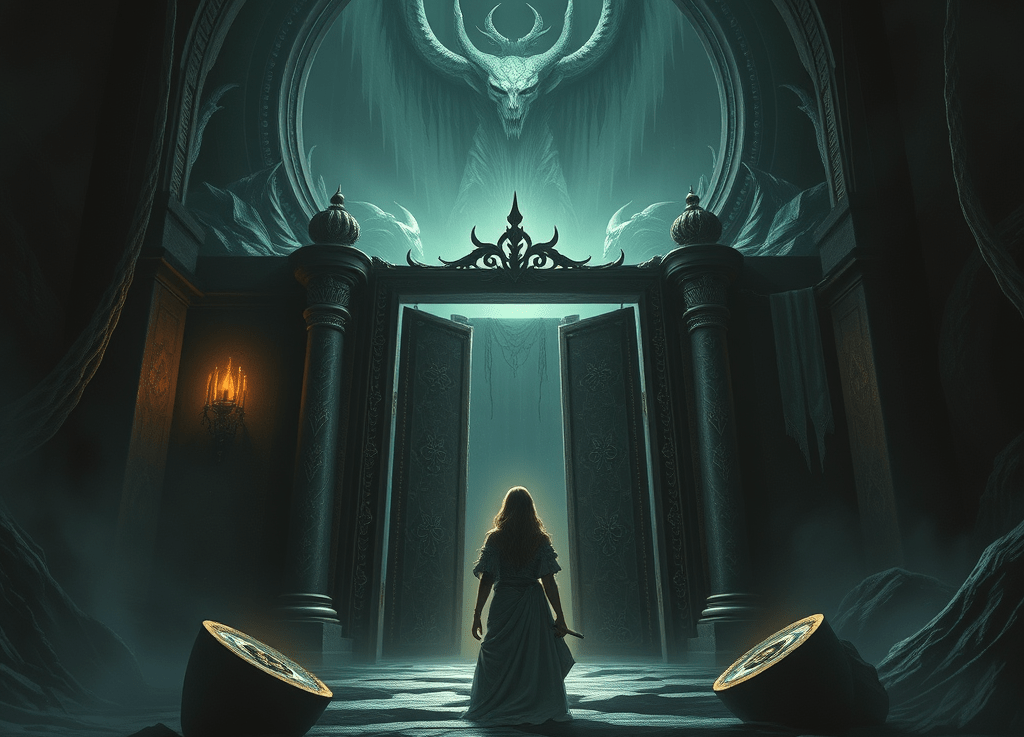
To Kurnugi, land of [no return],
Ishtar daughter of Sin was [determined] to go;
The daughter of Sin was determined to go
To the dark house, dwelling of Erkalla’s god,
To the house which those who enter cannot leave,
On the road where travelling is one-way only,
To the house where those who enter are deprived of light,
Where dust is their food, clay their bread.
They see no light, they dwell in darkness,
They are clothed like birds, with feathers.
Over the door and the bolt, dust has settled.
Ishtar, when she arrived at the gate of Kurnugi,
Addressed her words to the keeper of the gate,
“Here gatekeeper, open your gate for me,
Open your gate for me to come in!
If you do not open the gate for me to come in!
If you do not open the gate for me to come in,
I shall smash the door and shatter the bolt,
I shall smash the doorpost and overturn the doors,
I shall raise up the dead and they shall eat the living:
The dead shall outnumber the living!”
The gatekeeper made his voice heard and spoke,
He said to great Inanna,
“Stop, lady, do not break it down!
Let me go and report your words to queen Ereshkigal.”
The gatekeeper went in and spoke to [Ereshkigal],
“Here she is, your sister Inanna [. . .]
Who holds the great keppu’toy,
Stirs up the Abzu in Ea’s presence [. . .]?”

When Ereshkigal heard this,
Her face grew livid as cut tamarisk,
Her lips grew dark as the rim of a kuninu-vessel.
“What brings her to me? What has incited her against me?
Surely not because I drink water with the Anunnaki,
I eat clay for bread,I drink muddy water for beer?
I have to weep for young men forced to abandon their sweethearts.
I have to weep for girls wrenched from their lover’s laps.
For the infant child I have to weep, expelled before its time.
Go,gatekeeper, open your gate to her.
Treat her asccording to the ancient rites.”
The gatekeeper went.
He opened the gate to her.
“Enter, my lady: may Kutha give you joy,
May the palace of Kurnugi be glad to see you”

He let her in through the first door, but stripped off (and) took away the great crown on her head,
“Gatekeeper, why have you taken away the great crown on my head?”
“Go in, my lady. Such are the rites of the Mistress of Earth.”
He let her in through the second door, but stripped off (and) took away the rings in her ears.
“Gatekeeper, why have you taken away the rings in my ears?”
“Go in, my lady. Such are the rites of the Mistress of Earth.”
He let her in through the third door, but stripped off (and) away the beads around her neck.
“Gatekeeper, why have you taken away the beads around my neck?”
“Go in, my lady. Such are the rites of the Mistress of Earth.”
He let her in through the fourth door, but stripped off (and) took away the toggle pins at her breast.
“Gatekeeper, why have you taken away the toggle pins at my breast?”
“Go in, my lady. Such are the rites of the Mistress of Earth.”
He let her in through the fifth door, but stripped off (and) took away the girdle of birth-stones around her waist.
“Gatekeeper, why have you taken the girdle of birth stones around my waist?”
“Go in, my lady. Such are the rites of the Mistress of Earth.”
He let her in through the sixth door, but stripped off (and) took away the bangles on her wrists and ankles.
“Gatekeeper, why have you taken away the bangles from my wrists and ankles?”
“Go in my lady. Such are the rites of the Mistress of Earth.”
He let her in through the seventh door, but stripped off (and) took away the proud garment of her body.
“Gatekeeper, why have you taken away the proud garment of my body?”
“Go in, my lady. Such are the rites of the Mistress of Earth.”
As soon as Inanna went down to Kurnugi,
Ereshkigal loked at her and trembled before her.
Inanna did not deliberate (?), but leant over her.
Ereshkigal made her voice heard and spoke,
Addressed her words to Namtar her vizier,
“Go Namtar [ ] of my [ ]
Send out against her sixty diseases
[ ] Inanna:
Disease of the eyes to her [eyes]
Disease of the arms to her [arms]
Disease of the feet to her [feet]
Disease of the heart to her [heart]
Disease of the head [to her head]
To every part of her and to [ ].”
After Inanna the Mistress of (?) [had gone to Kernugi]
No bull mounted a cow, [no donkey impregnated a jenny]
No young man impregnated a girl [in thr street(?)]
The young man slept in his private room,
The girl slept in the company of her friends.
Then Papsukkal, vizier of the great gods, hung his head, his face [became gloomy];
He wore mourning clothes, his hair unkempt.
Dejected(?), he went and wept before Sin his father,
His tears flowed freely before king Ea.
“Inanna has gone down to The Earth and has not come up again.
As soon as Inanna went down to Kurnugi
No bull mounted a cow, no donkey impregnated a jenny,
No young man impregnated a girl on the street
The young man slept in his private room,
The girl slept in the company of her friends.”
Ea, in the wisdom of his heart, created a person.
He created Good-looks the playboy.
“Come,Good-looks,set your face towards the gate of Kurnugi.
The seven gates of Kurnugi shall be opened before you.
Ereshkigal shall look at you and be glad to see you.
When she is relaxed, her mood will lighten.
Get her to swear the oath by the great gods.
Raise your head, pay attention to the waterskin,
Saying, ‘Hey my lady,let them give me the waterskin, that I may drink water from it.'”

(and so it happened. But)
When Ereshkigal heard this,
She struck her thigh and bit her finger.
“You have made a request of me that should not have been made!
Come, Good-looks, I shall curse you with a great curse.
I shall decree for you a fate that shall never be forgotten.
Bread (gleaned(?)) from the city’s ploughs shall be your food,
The city drains shall be your only drinking place,
Threshold steps your only sitting place,
The drunkard and the thirsty shall slap your cheek.”
Ereshkigal made her voice heard and spoke:
She adressd her words to Namtar her vizier,
“Go Namtar, knock (?) at Egalina,
Decorate the threshold steps with coral,
Bring the Annunaki out and seat (them) on golden thrones,
Sprinkle Inanna with the waters of life and conduct her into my presence.”
Namtar went, knocked at Egalina,
Decorated the threshold steps with coral,
Brought out the Annunaki, seated them on golden thrones,
Sprinkled Inanna with the waters of life and brought her out to her (sister).
He let her out through the the first door, and gave her back to her the proud garment of her body.
He let her out through the second door, and gave back to her the bangles of her wrists and ankles.
He let her out through the third door, and gave back to her the girdle of birthstones around her waist.
He let her out through the fourth door, and gave back to her the toggle-pins at her breast.
He let her out through the fifth door, and gave back to her the beads around her neck.
He let her out through the sixth door, and gave back to her the rings for her ears.
He let her out through the seventh door, and gave back the great crown for her head.
“Swear that (?) she has paid you for her ransom,and give her back (in exchange) for him,
For Dmuzi,the lover of her youth,
Wash (him) with pure water,anoint him with sweet oil,
Clothe him in a red robe, let the lapis lazuli pipe play(?)
Let party-girls raise a loud lament(?)”
Then Belili tore off (?) her jewellery,
Her lap was filled with eyestones.
Belili heard the lament for her brother, she struck the jewellery [from her body],
The eyestones with which the front of the wild cow was filled.
“You shall not rob me (forever) of my only brother!
On the day when Dmuzi comes back up, (and) the lapis pipe and the carnelian ring come up with him,
(When) male and female mourners come up with him,
The dead shall come up and smell the smoke offering”

Sedna

Sedna


15 maart 2004 werd een nieuwe planeet ontdekt, die is vernoemd naar de Inuit Godin Sedna.
Ik heb een aantal astrologen gevraagd naar de impact van deze ontdekking op de astrologie, maar tot nog toe werken de ondervraagden er nog niet mee.
Ik heb zo’n gevoel dat dit heel belangrijk is!