
Light is the left hand of darkness
and darkness the right hand of light.
Two are one, life and death, lying
together like lovers in kemmer,
like hands joined together,
like the end and the way.
Ursula Leguin
humanism, magick, oracles, shamanism, storytelling
Tag: mystery
Light is the left hand of darkness
and darkness the right hand of light.
Two are one, life and death, lying
together like lovers in kemmer,
like hands joined together,
like the end and the way.
Ursula Leguin

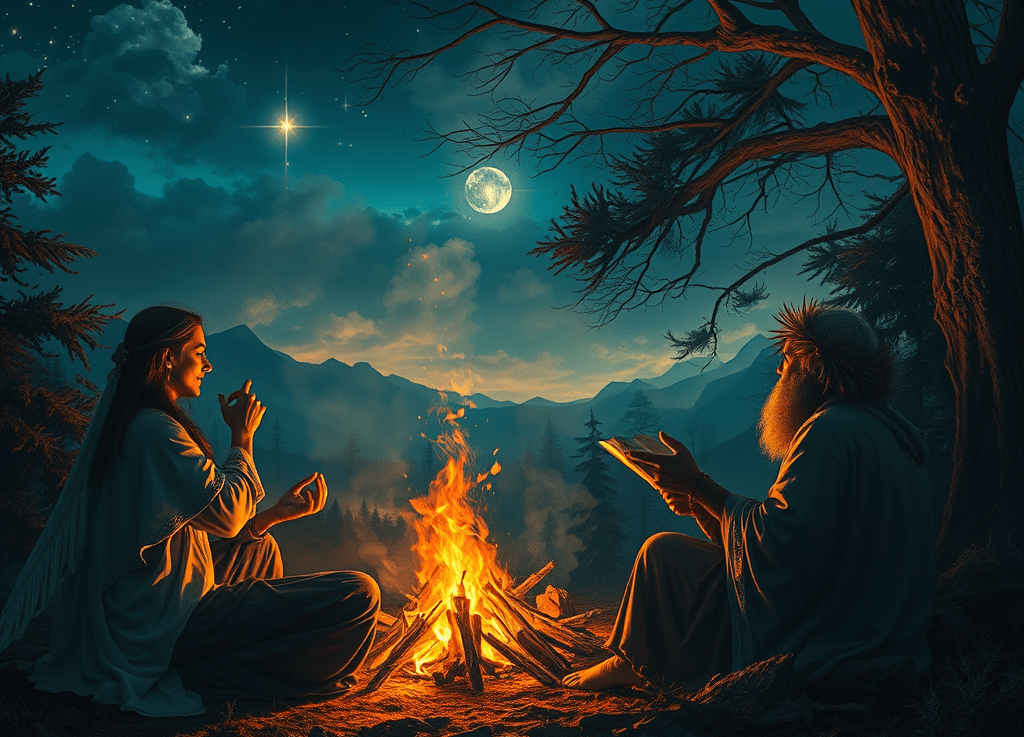
De meest eenvoudige vorm van trance-reis?
Stel je voor, een kampvuur met een verhalenverteller…
Je begint tijdens het verhaal weg te dromen, en wordt zo in het verhaal meegezogen alsof je het zelf meemaakt.
Lewis Caroll beschrijft in Alice in Wonderland, en in Through the Looking-Glass in feite ook een trance-reis.
Een trance kan varieren van licht naar diep; in de lichte vorm ben je grotendeels nog bewust van je omgeving en je rationele processen, in de diepste vormen ben je helemaal in ‘de andere werkelijkheid’ en kan het gebeuren dat iemand anders je moet helpen om weer terug te komen in ‘de normale werkelijkheid’


I am a Stag: of seven tines
I am a Flood: across a plain
I am a Wind: upon the waves
I am a Tear: the sun lets fall
I am a Hawk: above the cliff
I am a Thorn: beneath the nail
I am a Wonder: among flowers
I am a Wizard: who but I
sets the cool head aflame?I am a Spear: that roars for blood
I am a Salmon: in a pool
I am a Lure: from Paradise
I am a Hill: where poets walk
I am a Boar: ruthless and red
I am a Breaker: threatening doom
I am a Tide: that drags to death
I am an Infant: who but I
peeps from the unhewn dolman arch?I am the Womb: of every holt
I am the Blaze: on every hill
I am the Queen: of every hive
I am the Shield: for every head
I am the tomb: of every hope

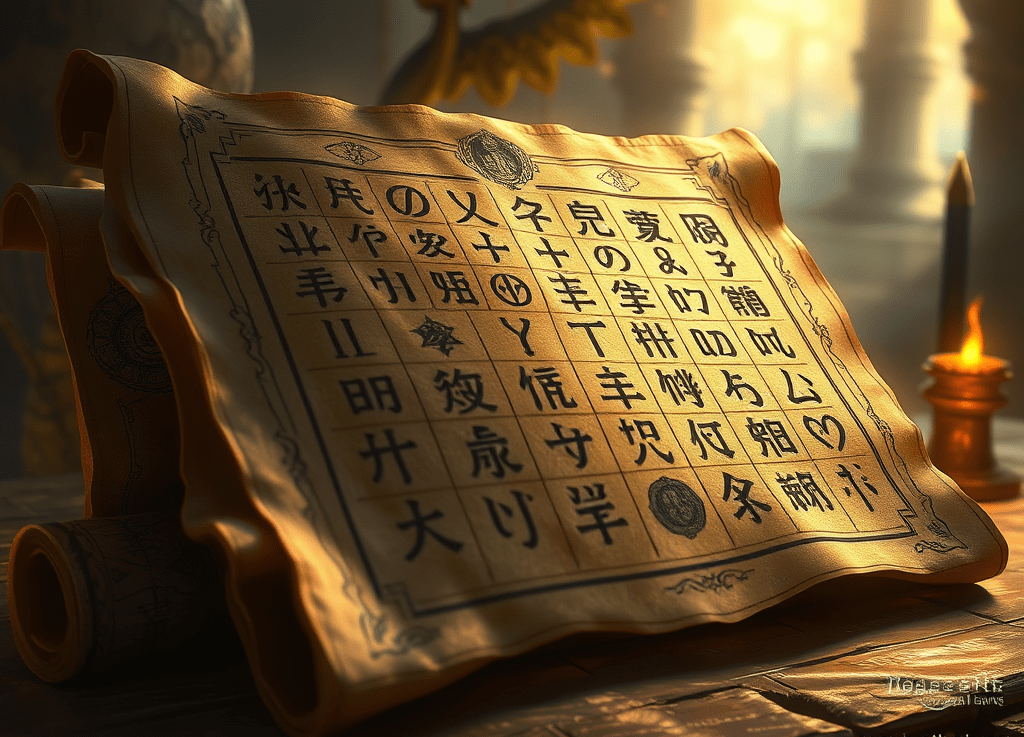
Het numerologische systeem gaat uit van de volgende vooronderstellingen:
1. Je naam wordt op eenduidige manier gespeld in het (latijnse) alfabet.
2. Elk letter van het alfabet heeft een getalswaarde, elke getalwaarde heeft betekenis.
Als je een bijbels-hebreeuwse naam hebt, kan je volgens mij beter alles omzetten naar het qabbalistische aleph-beth, want dat systeem past dan beter.
Heb je een naam dat afkomstig is uit een beeldschrift zoals Chinees dan zijn er vele varianten in dialecten en mogelijke omzettingen naar het alfabet.
In dat geval zou ik eerder kijken naar de symboliek van het plaatje.

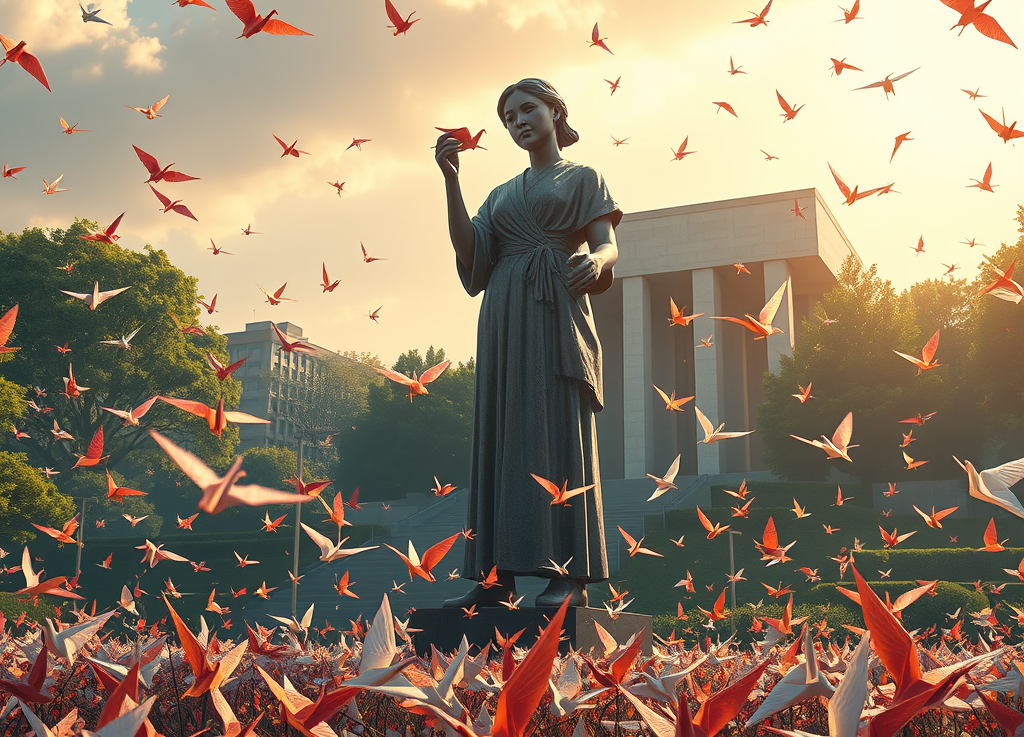
The paper crane has become an international symbol of peace in recent years as a result of it’s connection to the story of a young Japanese girl named Sadako Sasaki born in 1943.
Sadako was two years old when the atom bomb was dropped on Hiroshima, Japan on August 6, 1945.
As she grew up, Sadako was a strong, courageous and athletic girl. In 1955, at age 11, while practicing for a big race, she became dizzy and fell to the ground.
Sadako was diagnosed with Leukemia, "the atom bomb" disease.
Sadako’s best friend told her of an old Japanese legend which said that anyone who folds a thousand paper cranes would be granted a wish. Sadako hoped that the gods would grant her a wish to get well so that she could run again. She started to work on the paper cranes and completed over 1000 before dying on October 25, 1955 at the age of twelve.The point is that she never gave up.
She continued to make paper cranes until she died.
Inspired by her courage and strength,
Sadako’s friends and classmates put together a book of her letters and published it.
They began to dream of building a monument to Sadako and all of the children killed by the atom bomb.
Young people all over Japan helped collect money for the project.In 1958, a statue of Sadako holding a golden crane was unveiled in Hiroshima Peace Park. The children also made a wish which is inscribed at the bottom of the statue and reads:
"This is our cry, This is our prayer, Peace in the world".
Today, people all over the world fold paper cranes and send them to Sadako’s monument in Hiroshima.


Online Christendom
http://www.bijbelgenootschap.nl/
Online Jodendom
http://www.chabad.org/library/article.asp?AID=63255
Online Islam
http://www.muttaqun.com/quran/


Als rooms-katholiek meisje opgegroeid in Limburg, voelde Annine van der Meer (52) van kinds af aan een intuïtieve verbondenheid met Maria. Op de universiteit, waar zij kerkgeschiedenis en theologie ging studeren, vertaalde zich dat in een intellectuele en wetenschappelijke fascinatie voor de vrouwelijke kant van God.
In de colleges die ze in Utrecht volgde bij de vorige week in Egypte plotseling overleden professor Gilles Quispel, maakte ze voor het eerst kennis met Sophia, de vrouw van God in de gnosis. En met vrouwelijke priesters, predikers en bisschoppen. Dat vond ik geweldig. In de gnosis stuitte ik op het goddelijk vrouwelijke dat in het orthodoxe christendom al was zoekgeraakt. Ze besloot bij Quispel te promoveren en was in 1989, na tien jaar studie, de enige vrouw die ooit bij hem de doctorsbul heeft behaald.
Dit proefschrift was pas het begin. Van der Meer werd lerares en ging in haar vrije tijd door met onderzoek naar de vrouw en het vrouwelijke in religie en godsbeelden. Gaandeweg ontdekte ze hoe enorm groot de rol van de vrouw is geweest in de geschiedenis en prehistorie.
Het was een moeizame zoektocht, vertelt ze in haar pas betrokken huis in Honselersdijk, want hoe verder je teruggaat in de tijd, hoe schaarser de bronnen. En de bronnen díe er zijn, zijn vanuit een vrouwvijandig perspectief geschreven. Dat geldt ook voor heilige teksten. Het zijn vaak de mannen in de geschiedenis, die de geschiedenis gemaakt lijken te hebben. Dat komt doordat zijzelf de geschiedenis geschréven hebben. Dat zie ik nu, na alles wat ik heb ontdekt.
Ze noemt zichzelf geen feministe, maar de schat aan materiaal die ze in haar vuistdikke boek Van Venus tot Madonna heeft verzameld over de rol van vrouwen in de (religie)geschiedenis, zou een feministisch onderzoeker niet misstaan. Eigenlijk waren het juist de studies van feministen over godinnencultuur, de godin in de vrouw en zo die zij niet vertrouwde, en die haar er extra toe aanzetten het in haar eigen onderzoek beter te doen.
Die feministen sloegen in mijn ogen zo door. Ze gebruikten lukraak en klakkeloos allerlei termen door elkaar heen, zoals dé grote godin, dé moeder, dé moedergodin. Ik wilde juist heel zuiver zijn in mijn definiëring, want waar heb je het anders over?
De echte eyeopener, en prikkel om haar onderzoek door te zetten, kreeg ze in 2000, tijdens een vakantie op Malta. Op Malta staan prachtige tempels. Die had ik gezien, voor ik naar het nationaal museum ging. Daar waren zalen vol met vrouwenbeeldjes, waar dan bij stond idol, statuette of in het gunstigste geval lady. Er was er één die de Venus van Malta mocht heten: een staande vrouwe met de hand op haar buik, naakt en met rode oker besprenkeld. Hand op de buik betekent: ik ben zwanger en naakt zijn wil zeggen ik ben goddelijk. Venus is een verkeerde aanduiding voor deze kunst, die met seksualiteit of wulpsheid niks te maken heeft: dit is gewoon de godin die baart. Maar dat had ik op dat moment nog allemaal niet door, want ik ging af op de bordjes in het museum en op de literatuur die ik kon vinden. En daarin wordt het woord godin geen een keer genoemd.
Vanwaar dan toch al die tempels, vroeg Van der Meer zich af, en waar komen die vrouwenbeeldjes dan vandaan? Wat wil dit alles zeggen?
Ik ben heel cynisch begonnen. Het woord priesteres kwam niet in mij op, ik had er eigenlijk geen rekening mee gehouden dat ik die ooit zou vinden, hetzij op Malta hetzij elders in die oude culturen. Nu weet ik dat ze daar zijn en dat ze ver in de meerderheid zijn vergeleken met de mannelijke priesters, en dat er vele malen meer godinnen zijn dan goden. Ik heb op Malta het topje van de ijsberg voor het eerst gevoeld.
Na Malta volgden reizen naar andere landen en culturen: Kreta, Egypte, Syrië, Griekenland, Turkije, Israël. Daar openden zich prachtige steden, opgravingen en musea voor mij. Er ging een wereld voor me open, zo kleurrijk, zo prachtig van kunst, zo verfijnd en vooral zo vrouwelijk. Weer thuis dook ik dan de bibliotheek in, waar alles wat ik met moeite ver weg had verzameld, gewoon in één keer werd weggeredeneerd. Ik kwam in een wespennest van interpretaties terecht. Traditionele archeologen, zoals bijvoorbeeld meneer Bonanno, archeloog op Malta, erkennen het vrouwelijke in de kunst gewoon niet. En verklaren ook heel veel wat vrouwelijk is tot mannelijk.
Van der Meer wijst een figuurtje aan in haar enorme glazen vitrinekast vol vrouwenbeeldjes. Kijk, dit is een kopie van een vondst op Malta uit de late steentijd ongeveer vanaf 4000 voor Chr. In het boekje van Bonanno staat: de priester. Maar dit beeldje is een vrouw, een priesteres naar mijn mening. Dat het stellig om een vrouw gaat, kun je zien aan de afbeelding op haar jurk. Een driehoek met de punt naar beneden of, zoals in dit geval, een omgekeerde u is een oeroud symbool van de vulva.
De vulva staat voor de baarmoeder. De oude prehistorische mens is zich bewust geweest van het kosmische karakter van de godin van leven. De baarmoeder baart de melkweg, de aarde, de sterren. Net zo goed als het kind zich als eerste zijn moeder bewust is, bestond in die oude culturen het bewustzijn dat het leven voortkomt uit een goddelijke moeder.
Ook in Frankrijk en Spanje, vertelt Van der Meer, vind je deze vulvasymbolen, in grotten uit het paleolithicum de late oude steentijd, zon 15000 voor Chr. De prehistorische mens met zijn archaïsch bewustzijn dacht in abstracte symbolen. Er is dus eerst het symbool van de vulva, scheppingsmechanisme waaruit alles voortkomt, voordat het goddelijk vrouwelijke als mens wordt afgebeeld.
Van der Meer legde archeologische vondsten en geschreven mythen uit verschillende culturen naast elkaar. Je ziet eerst een speldenknopje, daarna een groter geheel van mensen die zich op dezelfde manier gedragen, die dezelfde symbooltaal gebruiken. Het symbool is de sleutel om een groter geheel in beeld te krijgen.
Al vergelijkend trof zij in de prehistorische periode overal vruchtbaarheidsreligies aan, waarin het draait om de moedergodin, of zij nu Asjera heet (Israël), Isis (Egypte) of Inanna (Mesopotamië). De rol van de mannelijke godheid in deze religies is die van de sterfelijke jaargod: het mannelijke maakt onderdeel uit van de vrouwelijke cultus, de vrouwelijke altaarrituelen. De godin baart, schept en onderhoudt leven, terwijl de jaargod staat voor de wisselende natuur, die elk jaar opbloeit en weer afsterft.
Na tienduizenden jaren van vreedzaam voortbestaan (verdedigingsmuren en wapens hadden ze niet) kwam er vanaf 2400 voor Chr. geleidelijk een einde aan de gynandrische culturen, zoals Van der Meer ze noemt, waarin man en vrouw elkaar aanvulden. De omslag van matriarchaat naar patriarchaat begon volgens Marija Gimbutas, de archeologe van het oude Europa, met de invasies van Indo-Europeanen in Mesopotamië, Turkije (Hettieten) en Griekenland (Doriërs en Achaeërs).
Van der Meer deelt haar visie. De samenleving wordt grimmiger en mannen gaan steeds meer in hun macht staan. De vruchtbaarheidsgod, die ooit als partner van de godin begon, wordt stormgod die met bliksem en wapens smijt, en groeit uit tot de ene oppergod.
Het archaïsche bewustzijn wijkt voor het rationele, moedercultuur wordt vadercultuur. Dat heeft grote gevolgen gekregen, waarmee vrouwen in verschillende delen van de wereld nog dagelijks worden geconfronteerd: niet naar school mogen, besnijdenis, weduwenverbranding, vrijheidsbeperking en andere misstanden.
Van der Meer denkt dat vrouwen, als ze hun roemrijk verleden herontdekken, gemakkelijker zullen opkomen voor hun zelfstandigheid sociaal, economisch en religieus. Ik breng het vergeten beeld van de moedercultuur en het goddelijk vrouwelijke in herinnering.

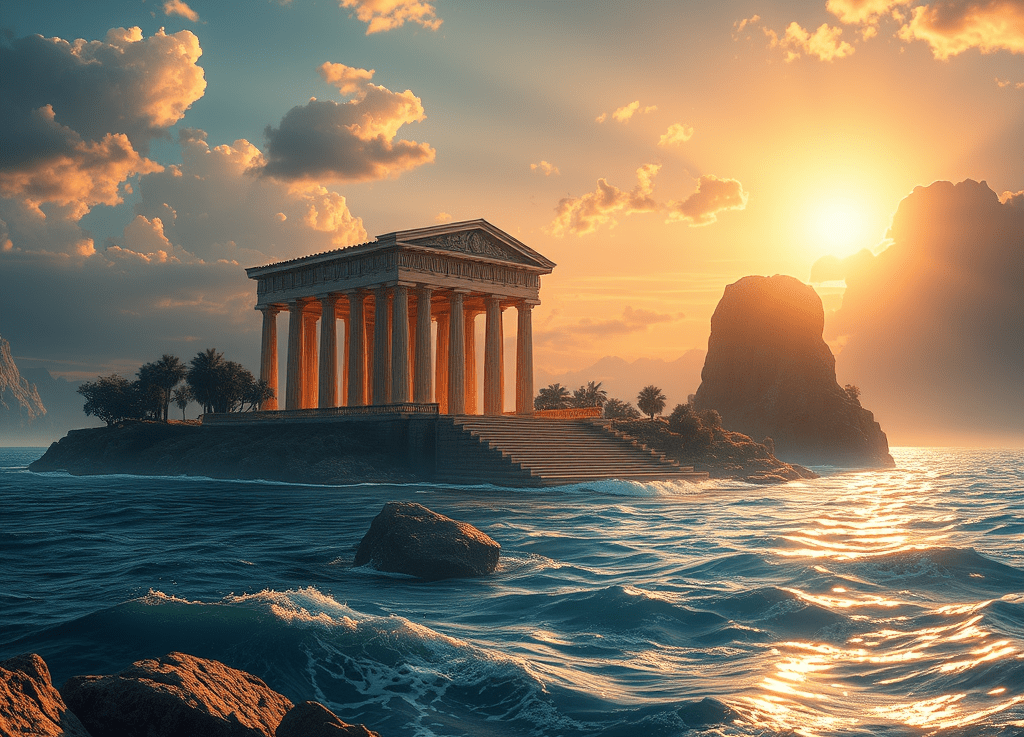
De Griekse filosoof Plato (427-347 voor Christus) was de eerste die over Atlantis schreef in zijn dialogen Timaeos en Kritias.
Hij leek ervan overtuigd dat dit land werkelijk heeft bestaan, omdat de grootvader van zijn oom Kritias hierover verhalen had gehoord van Solon, die het weer van een Egyptische priester had gehoord.
Hoe het land eruit zag, is door Plato in detail beschreven.
Onder andere was er op het eiland een tempel gewijd aan Poseidon, de god van de zee, dit is omdat het eiland door de Goden aan Poseidon werd toebedeeld.
…
Het eiland Atlantis zou buiten de Middellandse Zee moeten hebben gelegen, dus nog verder dan de Zuilen van Hercules (de straat van Gibraltar).
Volgens Plato verdween het rijk ongeveer 9500 voor Christus door een wereldwijde catastrofe, een soort zondvloed, waardoor ieder spoor van het land werd weggewist.
Atlantis zou volgens de Griekse mythologie wegens hoogmoed van de bewoners uit straf door de god Kronos (de vader van Zeus) zijn vernietigd.
Hoewel ik sceptisch ben mbt diverse Atlantis-theorietjes die na Plato zijn beschreven, heeft dit verhaal een enorme emotionele impact op mij.
Ooit had ik een trance-reis met bepaalde beelden over de laatste tempel van Poseidon, die beelden heb ik verwerkt in mijn gedicht.
Misschien heeft dit te maken met een leven in een andere tijdruimte, of is het een sterke imprint van een ervaring in de Droomtijd.

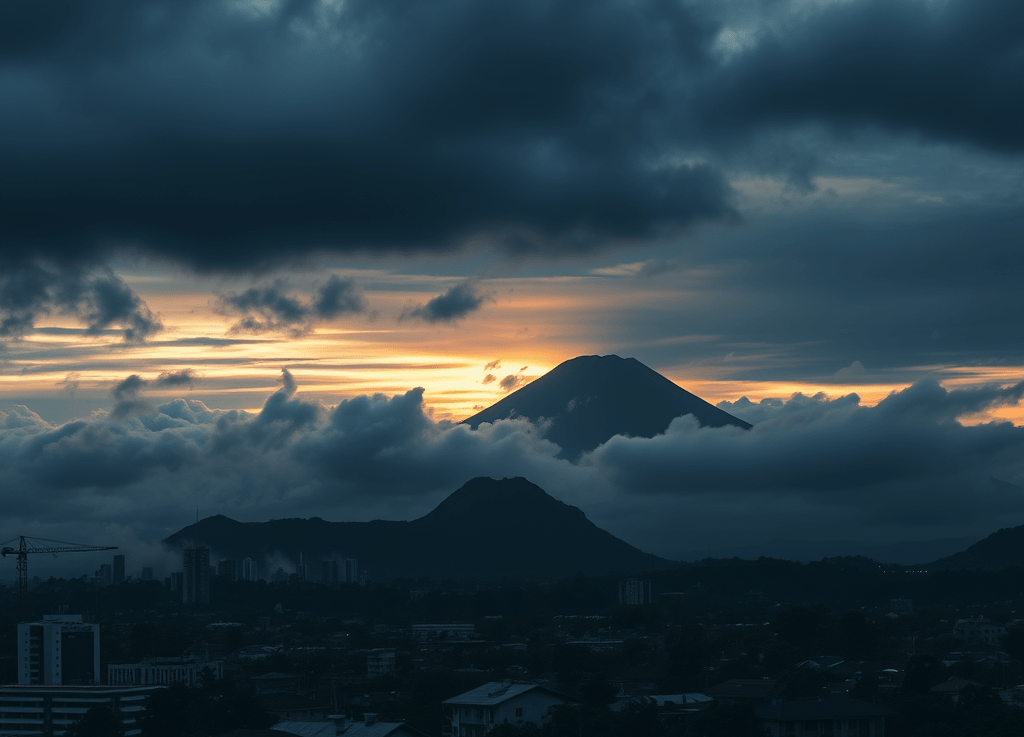
[quote]YOGYAKARTA/DEN HAAG – Een krachtige aardbeving met een kracht van 6,2 op de schaal van Richter heeft zaterdag de regio Yogyakarta op het Indonesische eiland Java getroffen. Het dodental is opgelopen tot boven de 3000. Dat heeft een functionaris van het ministerie van Sociale Zaken in Jakarta gezegd[/quote]
Te bedenken dat ik in 1960-1968 te Yogyakarta woonde…
De vulkaan Merapi was altijd onderdeel van de skyline.
Gelukkig woont daar geen familie meer!


Inanna spoke: "What I tell you Let the singer weave into song. What I tell you, Let it flow from ear to mouth, Let it pass from old to young: My vulva, the horn, The Boat of Heaven, Is full of eagerness like the young moon. My untilled land lies fallow. As for me, Inanna, Who will plow my vulva! Who will plow my high field! Who will plow my wet ground! As for me, the young woman, Who will plow my vulva! Who will station the ox there! Who will plow my vulva!" Dumuzi replied: "Great Lady, the king will plow your vulva. I, Dumuzi the King, will plow your vulva." Inanna: "Then plow my vulva, man of my heart! Plow my vulva!" At the king’s lap stood the rising cedar. Plants grew high by their side. Grains grew high by their side. Gardens flourished luxuriantly. Inanna sang: "He has sprouted; he has burgeoned; He is lettuce planted by the water. He is the one my womb loves best. My well-stocked garden of the plain, My barley growing high in its furrow, My apple tree which bears fruit up to its crown, He is lettuce planted by the water. My honey-man, my honey-man sweetens me always. My lord, the honey-man of the gods, He is the one my womb loves best. His hand is honey, his foot is honey, He sweetens me always. My eager impetuous caresser of the navel, My caresser of the soft thighs, He is the one my womb loves best, He is lettuce planted by the water." Dumuzi sang: "O Lady, your breast is your field. Inanna, your breast is your field. Your broad field pours out plants. Your broad field pours out grain. Water flows from on high for your servant. Bread flows from on high for your servant. Pour it out for me, Inanna. I will drink all you offer." Inanna sang: "Make your milk sweet and thick, my bridegroom. My shepherd, I will drink your fresh milk. Wild bull, Dumuzi, make your milk sweet and thick. I will drink your fresh milk. Let the milk of the goat flow in my sheepfold. Fill my holy churn with honey cheese. Lord Dumuzi, I will drink your fresh milk. My husband, I will guard my sheepfold for you. I will watch over your house of life, the storehouse, The shining quivering place which delights Sumer? The house which decides the fates of the land, The house which gives the breath of life to the people. I, the queen of the palace, will watch over your house." Dumuzi spoke: "My sister, I would go with you to my garden. Inanna I would go with you to my garden. I would go with you to my orchard. I would go with you to my apple tree. There I would plant the sweet, honey-covered seed." Inanna spoke: "He brought me into his garden. My brother, Dumuzi, brought me into his garden. I strolled with him among the standing trees, I stood with him among the fallen trees, By an apple tree I knelt as is proper. Before my brother coming in song, Who rose to me out of the poplar leaves, Who came to me in the midday heat, Before my lord Dumuzi, I poured out plants from my womb. I placed plants before him, I poured out plants before him. I placed grain before him, I poured out grain before him. I poured out grain from my womb." Inanna sang: "Last night as I, the queen, was shining bright, Last night as I, the Queen of Heaven, was shining bright, As I was shining bright and dancing, Singing praises at the coming of the night– He met me–he met me! My lord Dumuzi met me. He put his hand into my hand. He pressed his neck close against mine. My high priest is ready for the holy loins. My lord Dumuzi is ready for the holy loins. The plants and herbs in his field are ripe. O Dumuzi! Your fullness is my delight!" She called for it, she called for it, she called for the bed! She called for the bed that rejoices the heart. She called for the bed that sweetens the loins. She called for the bed of kingship. She called for the bed of queenship. Inanna called for the bed: "Let the bed that rejoices the heart be prepared! Let the bed that sweetens the loins be prepared! Let the bed of kingship be prepared! Let the bed of queenship be prepared! Let the royal bed be prepared!" Inanna spread the bridal sheet across the bed. She called to the king: "The bed is ready!" She called to her bridegroom: "The bed is waiting!" He put his hand in her hand. He put his hand to her heart. Sweet is the sleep of hand-to-hand. Sweeter still the sleep of heart-to-heart.Inanna spoke: "I bathed for the wild bull, I bathed for the shepherd Dumuzi, I perfumed my sides with ointment, I coated my mouth with sweet-smelling amber, I painted my eyes with kohl. He shaped my loins with his fair hands, The shepherd Dumuzi filled my lap with cream and milk, He stroked my pubic hair, He watered my womb. He laid his hands on my holy vulva, He smoothed my black boat with cream, He quickened my narrow boat with milk, He caressed me on the bed. Now I will caress my high priest on the bed, I will caress the faithful shepherd Dumuzi, I will caress his loins, the shepherdship of the land, I will decree a sweet fate for him." The Queen of Heaven, The heroic woman, greater than her mother, Who was presented the me by Enki, Inanna, the First Daughter of the Moon, Decreed the fate of Dumuzi: "In battle I am your leader, In combat I am your armor-bearer, In the assembly I am your advocate, On the campaign I am your inspiration. You, the chosen shepherd of the holy shrine, You, the king, the faithful provider of Uruk, You, the light of An’s great shrine, In all ways you are fit: To hold your head high on the lofty dais, To sit on the lapis lazuli throne, To cover your head with the holy crown, To wear long clothes on your body, To bind yourself with the garments of kingship, To carry the mace and sword, To guide straight the long bow and arrow, To fasten the throw-stick and sling at your side, To race on the road with the holy sceptre in your hand, And the holy sandals on your feet, To prance on the holy breast like a lapis lazuli calf. You, the sprinter, the chosen shepherd, In all ways you are fit. May your heart enjoy long days. That which An has determined for you–may it not be altered. That which Enlil has granted–may it not be changed. You are the favorite of Ningal. Inanna holds you dear." Ninshubur, the faithful servant of the holy shrine of Uruk, Led Dumuzi to the sweet thighs of Inanna and spoke: "My queen, here is the choice of your heart, The king, your beloved bridegroom. May he spend long days in the sweetness of your holy loins. Give him a favorable and glorious reign. Grant him the king’s throne, firm in its foundations. Grant him the shepherd’s staff of judgment. Grant him the enduring crown with the radiant and noble diadem. From where the sun rises to where the sun sets, From south to north, From the Upper Sea to the Lower Sea, From the land of the huluppu-tree to the land of the cedar, Let his shepherd’s staff protect all of Sumer and Akkad. As the farmer, let him make the fields fertile, As the shepherd, let him make the sheepfolds multiply, Under his reign let there be vegetation, Under his reign let there be rich grain. In the marshland may the fish and birds chatter, In the canebrake may the young and old reeds grow high, In the steppe may the mashgur-trees grow high, In the forests may the deer and wild goats multiply, In the orchards may there be honey and wine, In the gardens may the lettuce and cress grow high, In the palace may there be long life. May there be floodwater in the Tigris and Euphrates, May the plants grow high on their banks and fill the meadows, May the Lady of Vegetation pile the grain in heaps and mounds. O my Queen of Heaven and Earth, Queen of all the universe, May he enjoy long days in the sweetness of your holy loins." The king went with lifted head to the holy loins. He went with lifted head to the loins of Inanna. He went to the queen with lifted head. He opened wide his arms to the holy priestess of heaven.Inanna spoke: "My beloved, the delight of my eyes, met me. We rejoiced together. He took his pleasure of me. He brought me into his house. He laid me down on the fragrant honey-bed. My sweet love, lying by my heart, Tongue-playing, one by one, My fair Dumuzi did so fifty times. Now, my sweet love is sated. Now he says: ‘Set me free, my sister, set me free. You will be a little daughter to my father. Come, my beloved sister, I would go to the palace. Set me free…’" Inanna spoke: "My blossom-bearer, your allure was sweet. My blossom-bearer in the apple orchard, My bearer of fruit in the apple orchard, Dumuzi-abzu, your allure was sweet. My fearless one, My holy statue, My statue outfitted with sword and lapis lazuli diadem, How sweet was your allure…"

Welzijnswerk in Amsterdam Westerpark
author + reader
 Dreamquest
You must be logged in to post a comment.