Tag: shaman

Whitecrane magick

Whitecrane magick


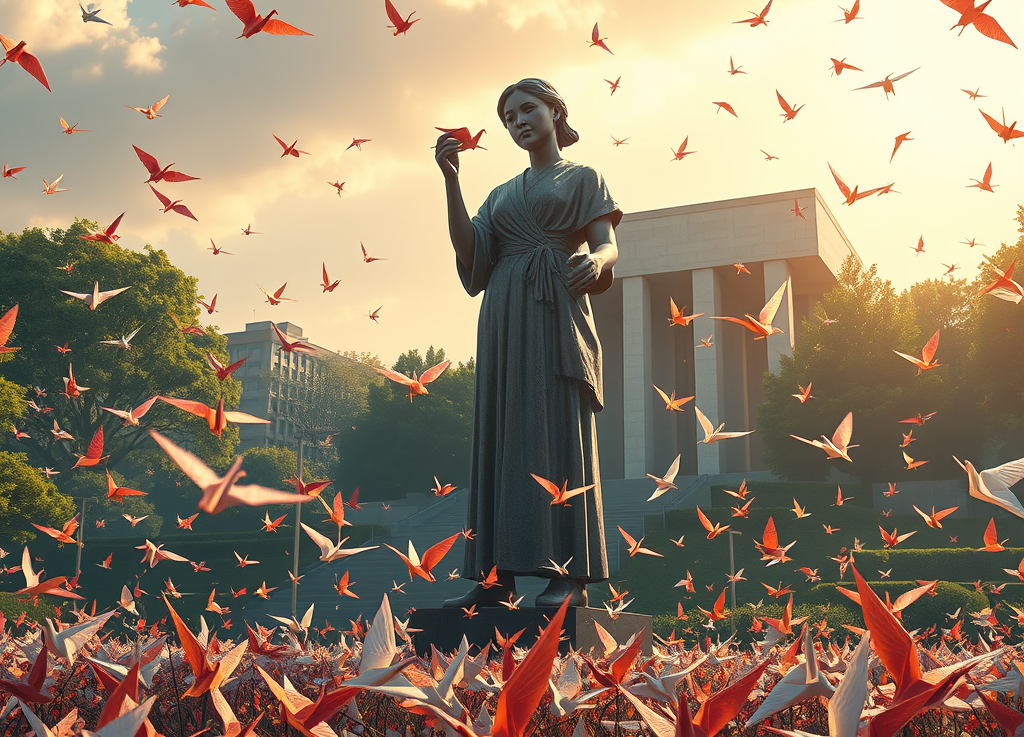
The paper crane has become an international symbol of peace in recent years as a result of it’s connection to the story of a young Japanese girl named Sadako Sasaki born in 1943.
Sadako was two years old when the atom bomb was dropped on Hiroshima, Japan on August 6, 1945.
As she grew up, Sadako was a strong, courageous and athletic girl. In 1955, at age 11, while practicing for a big race, she became dizzy and fell to the ground.
Sadako was diagnosed with Leukemia, "the atom bomb" disease.
Sadako’s best friend told her of an old Japanese legend which said that anyone who folds a thousand paper cranes would be granted a wish. Sadako hoped that the gods would grant her a wish to get well so that she could run again. She started to work on the paper cranes and completed over 1000 before dying on October 25, 1955 at the age of twelve.

The point is that she never gave up.
She continued to make paper cranes until she died.
Inspired by her courage and strength,
Sadako’s friends and classmates put together a book of her letters and published it.
They began to dream of building a monument to Sadako and all of the children killed by the atom bomb.
Young people all over Japan helped collect money for the project.

In 1958, a statue of Sadako holding a golden crane was unveiled in Hiroshima Peace Park. The children also made a wish which is inscribed at the bottom of the statue and reads:

"This is our cry, This is our prayer, Peace in the world".

Today, people all over the world fold paper cranes and send them to Sadako’s monument in Hiroshima.

http://www.sadako.org/

The Courtship of  Inanna & Dumuzi

The Courtship of Inanna & Dumuzi


Inanna spoke:  "What I tell you   Let the singer weave into song.   What I tell you,   Let it flow from ear to mouth,   Let it pass from old to young:  My vulva, the horn,   The Boat of Heaven,   Is full of eagerness like the young moon.   My untilled land lies fallow.  As for me, Inanna,   Who will plow my vulva!   Who will plow my high field!   Who will plow my wet ground!  As for me, the young woman,   Who will plow my vulva!   Who will station the ox there!   Who will plow my vulva!"  Dumuzi replied:  "Great Lady, the king will plow your vulva.  I, Dumuzi the King, will plow your vulva." Inanna:  "Then plow my vulva, man of my heart!  Plow my vulva!"  At the king’s lap stood the rising cedar.   Plants grew high by their side.   Grains grew high by their side.   Gardens flourished luxuriantly.  Inanna sang:  "He has sprouted; he has burgeoned;   He is lettuce planted by the water.   He is the one my womb loves best.  My well-stocked garden of the plain,   My barley growing high in its furrow,   My apple tree which bears fruit up to its crown,   He is lettuce planted by the water.  My honey-man, my honey-man sweetens me always.   My lord, the honey-man of the gods,   He is the one my womb loves best.   His hand is honey, his foot is honey,   He sweetens me always.  My eager impetuous caresser of the navel,   My caresser of the soft thighs,   He is the one my womb loves best,   He is lettuce planted by the water." Dumuzi sang:  "O Lady, your breast is your field.   Inanna, your breast is your field.   Your broad field pours out plants.   Your broad field pours out grain.   Water flows from on high for your servant.   Bread flows from on high for your servant.   Pour it out for me, Inanna.   I will drink all you offer."  Inanna sang: "Make your milk sweet and thick, my bridegroom.   My shepherd, I will drink your fresh milk.   Wild bull, Dumuzi, make your milk sweet and thick.   I will drink your fresh milk.  Let the milk of the goat flow in my sheepfold.   Fill my holy churn with honey cheese.   Lord Dumuzi, I will drink your fresh milk. My husband, I will guard my sheepfold for you.   I will watch over your house of life, the storehouse,   The shining quivering place which delights Sumer?  The house which decides the fates of the land,   The house which gives the breath of life to the people.   I, the queen of the palace, will watch over your house." Dumuzi spoke:  "My sister, I would go with you to my garden.   Inanna I would go with you to my garden.   I would go with you to my orchard.   I would go with you to my apple tree.  There I would plant the sweet, honey-covered seed."  Inanna spoke:  "He brought me into his garden.  My brother, Dumuzi, brought me into his garden.   I strolled with him among the standing trees,   I stood with him among the fallen trees,   By an apple tree I knelt as is proper.  Before my brother coming in song,   Who rose to me out of the poplar leaves,   Who came to me in the midday heat,   Before my lord Dumuzi,   I poured out plants from my womb.   I placed plants before him,   I poured out plants before him.   I placed grain before him,   I poured out grain before him.   I poured out grain from my womb." Inanna sang:  "Last night as I, the queen, was shining bright,   Last night as I, the Queen of Heaven, was shining bright,   As I was shining bright and dancing,   Singing praises at the coming of the night–  He met me–he met me!   My lord Dumuzi met me.   He put his hand into my hand.   He pressed his neck close against mine.  My high priest is ready for the holy loins.   My lord Dumuzi is ready for the holy loins.   The plants and herbs in his field are ripe.   O Dumuzi! Your fullness is my delight!"  She called for it, she called for it, she called for the bed!   She called for the bed that rejoices the heart.   She called for the bed that sweetens the loins.   She called for the bed of kingship.   She called for the bed of queenship. Inanna called for the bed:  "Let the bed that rejoices the heart be prepared!   Let the bed that sweetens the loins be prepared!   Let the bed of kingship be prepared!   Let the bed of queenship be prepared!   Let the royal bed be prepared!"  Inanna spread the bridal sheet across the bed. She called to the king:  "The bed is ready!"   She called to her bridegroom:  "The bed is waiting!"  He put his hand in her hand.   He put his hand to her heart.   Sweet is the sleep of hand-to-hand.   Sweeter still the sleep of heart-to-heart.Inanna spoke:  "I bathed for the wild bull,   I bathed for the shepherd Dumuzi,   I perfumed my sides with ointment,   I coated my mouth with sweet-smelling amber,   I painted my eyes with kohl.  He shaped my loins with his fair hands,   The shepherd Dumuzi filled my lap with cream and milk,  He stroked my pubic hair, He watered my womb.  He laid his hands on my holy vulva,   He smoothed my black boat with cream,   He quickened my narrow boat with milk,   He caressed me on the bed.  Now I will caress my high priest on the bed,   I will caress the faithful shepherd Dumuzi,   I will caress his loins, the shepherdship of the land,   I will decree a sweet fate for him."  The Queen of Heaven,   The heroic woman, greater than her mother,   Who was presented the me by Enki,   Inanna, the First Daughter of the Moon,   Decreed the fate of Dumuzi:  "In battle I am your leader,   In combat I am your armor-bearer,   In the assembly I am your advocate,   On the campaign I am your inspiration.   You, the chosen shepherd of the holy shrine,   You, the king, the faithful provider of Uruk,   You, the light of An’s great shrine,   In all ways you are fit:  To hold your head high on the lofty dais,   To sit on the lapis lazuli throne,   To cover your head with the holy crown,   To wear long clothes on your body,   To bind yourself with the garments of kingship,   To carry the mace and sword,   To guide straight the long bow and arrow,   To fasten the throw-stick and sling at your side,   To race on the road with the holy sceptre in your hand,   And the holy sandals on your feet,   To prance on the holy breast like a lapis lazuli calf.  You, the sprinter, the chosen shepherd,   In all ways you are fit.  May your heart enjoy long days.  That which An has determined for you–may it not be altered.   That which Enlil has granted–may it not be changed.   You are the favorite of Ningal.   Inanna holds you dear." Ninshubur, the faithful servant of the holy shrine of Uruk,   Led Dumuzi to the sweet thighs of Inanna and spoke:   "My queen, here is the choice of your heart,   The king, your beloved bridegroom.  May he spend long days in the sweetness of your holy loins.   Give him a favorable and glorious reign.   Grant him the king’s throne, firm in its foundations.   Grant him the shepherd’s staff of judgment.   Grant him the enduring crown with the radiant and noble diadem.  From where the sun rises to where the sun sets,   From south to north,   From the Upper Sea to the Lower Sea,   From the land of the huluppu-tree to the land of the cedar,   Let his shepherd’s staff protect all of Sumer and Akkad.  As the farmer, let him make the fields fertile,   As the shepherd, let him make the sheepfolds multiply,   Under his reign let there be vegetation,   Under his reign let there be rich grain.  In the marshland may the fish and birds chatter,   In the canebrake may the young and old reeds grow high,   In the steppe may the mashgur-trees grow high,   In the forests may the deer and wild goats multiply,   In the orchards may there be honey and wine,  In the gardens may the lettuce and cress grow high,   In the palace may there be long life.  May there be floodwater in the Tigris and Euphrates,   May the plants grow high on their banks and fill the meadows,   May the Lady of Vegetation pile the grain in heaps and mounds.  O my Queen of Heaven and Earth,   Queen of all the universe,   May he enjoy long days in the sweetness of your holy loins."  The king went with lifted head to the holy loins.   He went with lifted head to the loins of Inanna.   He went to the queen with lifted head.  He opened wide his arms to the holy priestess of heaven.Inanna spoke:  "My beloved, the delight of my eyes, met me.   We rejoiced together.   He took his pleasure of me.   He brought me into his house.  He laid me down on the fragrant honey-bed.   My sweet love, lying by my heart,   Tongue-playing, one by one,   My fair Dumuzi did so fifty times.  Now, my sweet love is sated.  Now he says:  ‘Set me free, my sister, set me free.   You will be a little daughter to my father.   Come, my beloved sister, I would go to the palace.  Set me free…’"  Inanna spoke:  "My blossom-bearer, your allure was sweet.   My blossom-bearer in the apple orchard,   My bearer of fruit in the apple orchard,   Dumuzi-abzu, your allure was sweet.  My fearless one,   My holy statue,   My statue outfitted with sword and lapis lazuli diadem,   How sweet was your allure…"

Oorsprong van de Yi

Oorsprong van de Yi


de Yi is veel meer uitgebouwd en gedocumenteerd dan andere orakel-vormen (Runen, Ifa, taro) gewoon een kwestie van ononderbroken documentatie van commentaren op commentaren op de traditie van de Shang(1600 voor de jaartelling t/m heden), waardoor de Yi een levende traditie is gebleven.

Na de Shang kwam de Zhou dynastie, volgens de overlevering werd het Orakel van Zhou (de Zhou Yi) opgesteld in de nadagen van de Shang.

Modern onderzoek heeft uitgewezen dat de Yi waarschijnlijk is gebaseerd op het [bot-orakel van de Shang

Taijiquan & Yi Jing

Taijiquan & Yi Jing


Acht technieken, trigrammen & windrichtingen

Peng: “afweren”: een backhand-achtige beweging; met de rug van de gebogen arm wordt een afweer (tegen de armen) of slag gedaan (tegen de romp). Een expansieve, explosieve techniek (afweer en/of slag
Qian: “hemel”: drie yang-lijnen., extreem hard. Het Zuiden.

Lu: “terugdraaien”: meegeven met de inkomende kracht, om deze vervolgens zijwaarts achter je naar de grond te leiden. Een terugtrekkende, meegevende beweging (balansverstoring)
Kun: “aarde”: drie yin-lijnen, extreem zacht. Het Noorden.

Ji: “persen”: beide handen bewegen naar elkaar, waarbij een kwetsbaar lichaamsdeel van de tegenpartij wordt samengeperst. (dubbele slag, klem).
Kan: “water”: een yang-lijn, ingeklemd tussen twee yin-lijnen: van buiten gezien extreem zacht, maar van binnen verborgen hardheid. Het Westen.

An: “duwen”: met een of twee handen duw je tegen de armen (om een aanval te neutraliseren) of de romp (om een slag te leveren met de open hand) van de tegenpartij. (afweer en/of slag)
Li: “vuur”: een yin-lijn, ingeklemd tussen twee yang-lijnen: van buiten gezien extreem hard, maar van binnen verborgen zachtheid. Het Oosten.

Cai: “grijpen”: de elleboog of pols van de tegenpartij grijpen, om deze in de gewenste richting te brengen. (balansverstoring, klemmen, breken).
Sun: “wind”: twee yang-lijnen boven een yin-lijn: voornamelijk hard, met zachte mogelijkheden: Het Zuidwesten.

Lieh: “splijten”: beide armen bewegen zich in tegengestelde richting, alsof je iets uit elkaar trekt; de bedoeling is met de ene hand een arm van de tegenpartij te grijpen, terwijl de andere hand een slag plaatst op de romp. (slag en greep-combinatie).
Zhen: “donder”: twee yin-lijnen boven een yang-lijn: voornamelijk zacht, met harde mogelijkheden. Het Noordoosten.

Zou: “elleboog”: de elleboog gebruiken om een stoot te leveren of om een greep te neutraliseren. (stoot of neutralisatie).
Dui: “meer”: een yin-lijn boven twee yang-lijnen: Zachtheid verbergt grote hardheid.Het Zuidoosten.

Kao: “botsen”: een onderdeel van het lichaam (schouder, rug, heup, dij, knie, borstkast, bil) gebruiken om op korte afstand de tegenpartij uit balans te brengen.
Gen: “berg”: een yang-lijn boven twee yin-lijnen: Hardheid verbergt grote zachtheid: Het Noordwesten.

De vijf posities & elementen
Jin Bu: “stap voorwaarts”: wanneer de tegenpartij zich uit een benarde positie wil terugdraaien, blijf je hem achtervolgen en klemzetten. Chin: “metaal”: verslaat “hout” en produceert “water”.

Tui Bu: “stap achterwaarts”: wanneer de tegenpartij met nadruk een aanval op je uitvoert, trek je terug om de aanval te neutraliseren. Mu: “hout”: verslaat “aarde” en produceert “vuur”.

Zuo Gu: “kijk naar links”: wendt je naar de linkerflank, om een aanval en/of verdediging in die hoek uit te voeren. Shui: “water”: verslaat “vuur” en produceert “hout”.

You Pan: “kijk naar rechts”: wendt je naar de rechterflank, om een aanval en/of verdediging in die hoek uit te voeren. Huo: “vuur”: verslaat “metaal” en produceert “aarde”.

Zhung Ding: “stabiliseer het centrum”: onder alle omstandigheden moet je balans en je zwaartepunt goed in je centrum zitten, dwz in je buik Tu: “aarde” verslaat “water” en produceert “metaal”.

De acht poorten (Ba men)
In de primaire rangordening der trigrammen volgens de volgorde van Fu Xi, zijn de trigrammen geordend in complementaire paren tegenover elkaar, waarbij de bovenzijde van het schema naar het zuiden is gericht.
De rangordening van Fu Hsi verwijst naar de relatie en interactie van de trigrammen voordat het scheppings-proces de archetypen doet indalen in de materie.
In de feng shui (geomantie) wordt gebruik gemaakt van de rangordening van Fu Hsi bij de inrichting van graf-heuvels.
Bij de inrichting van gewone huizen gebruik gemaakt wordt van een volkomen andere rangordening, namelijk die van koning Wen, die verwijst naar de relatie en interactie van de trigrammen nadat het scheppingsproces de archetypen werkzaam maakt in de materie.
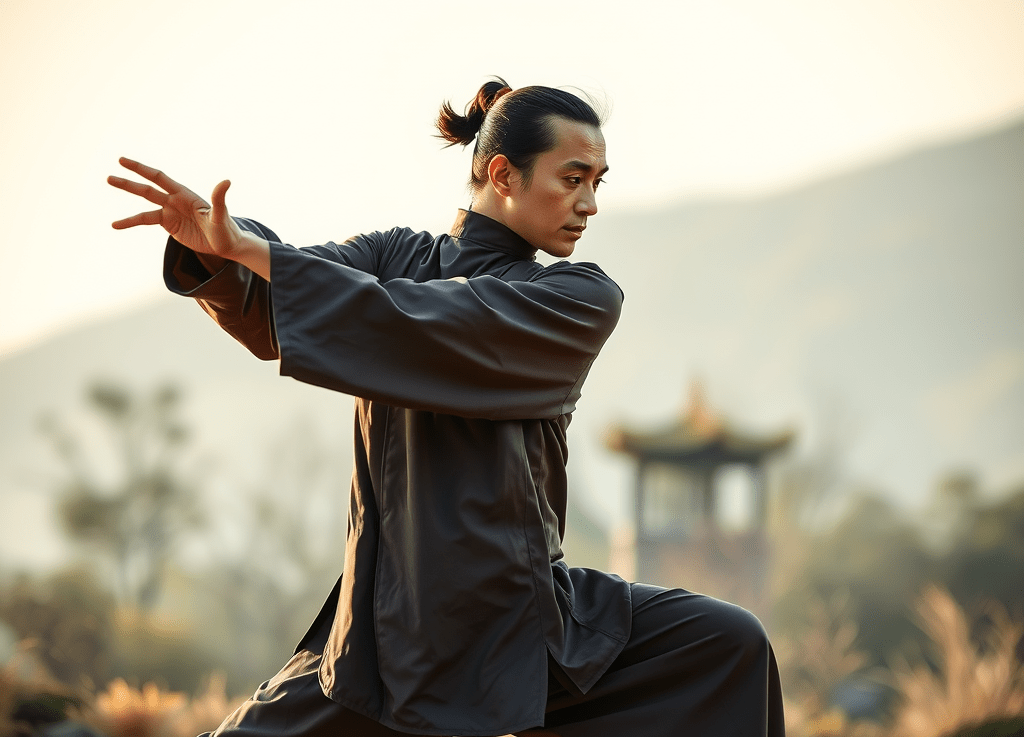
Bij het beoefenen van de Taijiquan vorm wordt gebruik gemaakt van de ordening van Fu Xi: begin je in het centrum met het gezicht naar het zuiden, je moet je bewust blijven van de acht windrichtingen. Tijdens de beoefening van de vorm verander je continu van richting, waardoor je alle acht richtingen doorloopt. Elke beweging en houding van de vorm is een antwoord op een actie van een onzichtbare tegenstander vanuit één van de acht richtingen.

Magie is een extreme vorm van bidden

Magie is een extreme vorm van bidden


(Aan het woord is de Amsterdamse X).
Via de magie van de Indiase tempeldans kwam ze 15 jaar geleden in contact met de magische wereld van de hekserij.
Een gesprek met X over haar eigen spirituele beleving van haar bestaan als heks.

De wrede pogingen van de Inquisitie ten spijt, floreert de hekserij vandaag de dag als nooit tevoren.
Aan informatie geen gebrek.
Je breekt bijna je nek over de talloze wicca-websites, de instant spreukpakketjes, New Age winkels en de esoterische boeken.
Er is zelfs een heuse heksenopleiding.

Er doen nogal wat enge verhalen de ronde over heksen.
Van satanische missen tot aan de boze heks in Doornroosje.

quote:
Ach, veel van die verhalen zijn door de toenmalige katholieke kerk de wereld in geholpen om ervoor te zorgen dat het oude geloof uitgeroeid zou worden.

Maria de godin

Is hekserij dan een geloof?

quote:
In die tijd was het een geloof.
Het was de overgang van het heidendom naar het christendom, van het polytheïsme naar het monotheïsme.
Het uitroeien van het oude geloof is nooit helemaal gelukt.
Veel heidense gebruiken zijn overgenomen door de katholieke kerk.
Je hoeft alleen maar naar de Mariaverering te kijken, dan herken je daarin de godinnencultus.
Ik brand regelmatig kaarsjes voor Maria in kerken.
Ik zie haar als een van de verschijningsvormen van de godin.

Christenen hebben kerst. Moslims hebben de ramadan. Wat hebben heksen?

quote:
Ik vier de belangrijkste jaarfeesten: lente, zomer, herfst en winter.
Daarnaast heb ik hier in de woonkamer allerlei altaren.
Ik aanbid het goddelijk principe in de vrouwelijke vorm.
Dat goddelijke heeft verschillende verschijningsvormen.
Zelf werk ik met het oude Noorse pantheon: Thor, Freya en Odin.
Ik doe bijna iedere dag wel een ritueel dat is gewijd aan de godin.
Ik brand een kaars en wierook en zing een gebed.
Ik heb op mijn altaar dat is gewijd aan de godin, ook een beeldje dat het vrouwelijke principe moet voorstellen.
Ik kijk nu eenmaal liever naar een beeldje dan naar een lege muur.
Ik ben geen Zen-boeddhist.
Mijn magiealtaar staat in de slaapkamer.
Daar doe ik belangrijke rituelen.

Wat dan?

quote:
Je moet dan vooral denken aan het leggen van contacten met mijn goden en helpers uit de andere werkelijkheid om hulp te vragen bij problemen waar ik mee zit.
Vaak heeft dat te maken met psychologische inzichten en processen.

Je bent heel voorzichtig.
Maar de tijd van heksenvervolgingen is nu toch voorbij.
Zo wil je niet onder je eigen naam aan dit interview meewerken
.

quote:
Er bestaan ontzettend veel misvattingen over heksen.
Het kan heel erg doorslaan.
Zo zijn er mensen vanuit christelijke hoek die als de dood zijn voor heksen, omdat je een verbond met de duivel gesloten zou hebben.
Maar de meeste heksen erkennen het bestaan van de duivel niet eens. Dus hoe zou je dat ooit kunnen aanbidden of er een verbond mee kunnen sluiten

.

Hoe verklaar je die hele heksenrevival?

quote:
Mensen zijn op zoek naar een vorm van spiritualiteit en komen dan in dit soort dingen terecht.
Veel pubermeisjes vinden het ontzettend stoer om zich vol te hangen met pentagrammen en te roepen: pas op, anders beheks ik je.

Magische mantra’s

Hoe ben jij eigenlijk heks geworden?

quote:
Heks worden is een levenshouding en een studie die levenslang duurt. Mijn zoektocht begon zo’n 15 jaar geleden.
Ik studeerde jarenlang Indiase tempeldans
Van mijn Indiase leraar leerde ik de beginselen dat energie gekanaliseerd kan worden.
De essentie van de Indiase tempeldans is eigenlijk het doorgeven van energie.
Via het hindoeïsme ben ik geïnteresseerd geraakt in Sanskriet mantra’s. Mantra’s zeggen is intunen op een bepaald soort energie.
En dat is dus magie.

Hoe bedoel je?

quote:
Magie voor mij is het werken met energieën.
De belangrijkste kracht die er is, is de gedachtekracht.
Ik persoonlijk zie dat alles in feite is opgebouwd uit energie.
Dat wordt ook bevestigd door de natuurkunde.
Gedachte is ook energie.
Energie kun je dus beïnvloeden en dan ben je met magie bezig.
Magie is al positief denken.
Je bent al met magie bezig als jezelf vertelt “ik kan het, het gaat lukken.”

De wens is de vader van de hekserij

Dus die gedachtekracht maakt je dan heks…

quote:
In mijn definitie wel.
Hoewel er ook veel mensen zijn die zich heks noemen, omdat ze kamillethee drinken als ze verkouden zijn, of zich heks noemen omdat ze het leuk vinden om in lange zwarte fluwelen jurken te lopen en naar Gothic festivals gaan.

Die magie van jou lijkt verdacht veel op het principe van een gebed?

quote:
Ik vind de ultieme vorm van magie het gebed.
En magie is in feite een extreme vorm van bidden.
Bidden doe meestal alleen maar met wilskracht.
Heksen gebrui¬ken meditatiehulpmiddelen zoals kaarsen en trance trommels.
Je kunt een wens uitspreken en dan die energie sturen.

Dus ook negatieve energie?

quote:
Dat klopt.
Maar ik denk dat het overgrote deel van de heksen gruwt bij het idee om mensen kwaad te doen.
Heel veel heksen houden zich bijna uitsluitend met healing bezig, en proberen mensen juist te genezen.
Maar je zit al snel op een hellend vlak.
Want dat wat goed is voor de een, kan schade berokkenen aan de ander. Dat maakt het heel erg moeilijk om met magie te werken en dan krijg je dus die regel: doe wat je wilt, maar doe een ander geen kwaad.
Dat is een van de moeilijkste regels om bij stil te blijven staan, maar het is wel een van de twee vuistregels in de moderne hekserij.

Wat is de andere vuistregel?

quote:
De andere is de threefold law.
Met andere woorden, dat wat je uitzendt, keert drie maal terug.
Er zijn mensen die deze macht niet aankunnen.

Kun je wat concreter zijn?

quote:
Waar heel veel mensen de fout mee in gaan, is liefdesmagie.
Ik ken iemand die als pubermeisje ontzettend verliefd was op een man en daar een bindingsritueel voor heeft gedaan.
Dat lukte.
Ze trouwden en kregen twee kinderen.
Op een bepaald moment ging het huwelijk niet meer.
Maar scheiden bleek niet zo eenvoudig, omdat de man haar niet kon loslaten.
Het kwartje viel pas bij haar toen de man zei: het lijkt wel alsof ik aan je vastgebonden zit.
De vrouw heeft vervolgens een ritueel gedaan om dat bindingsritueel ongedaan te maken.

Dus zo ongevaarlijk is hekserij dus niet?

quote:
Ik ben helemaal niet zo blij met al die info voor puberheksjes.
Het is geen speelgoed.
Het is net alsof je kinderen van 12 in een raceauto zet.
Het kan goed gaan, maar ook verkeerd.
Als ze toevallig het contactsleuteltje omdraaien en tegelijkertijd het gaspedaal indrukken, ja, dan krijg je een ongeluk.
En dat kan met magie ook gebeuren.

PS
Bovenstaand interview kreeg ik via een van mijn contactpersonen onder ogen, met expliciete toestemming om te plaatsen op een esoterisch forum voor feedback.
Terwille van de privacy, zijn de namen van de interviewer en inteviewee geanonimiseerd.

Chief Seattle’s Reply (january 1857)

Chief Seattle’s Reply (january 1857)


Yonder sky that has wept tears of compassion upon my people for centuries untold, and which to us appears changeless and eternal, may change.
Today is fair.
Tomorrow it may be overcast with clouds.
My words are like the stars that never change.

Whatever Seattle says, the great chief at Washington can rely upon with as much certainty as he can upon the return of the sun or the seasons.
The white chief says that Big Chief at Washington sends us greetings of friendship and goodwill.
This is kind of him for we know he has little need of our friendship in return.
His people are many.
They are like the grass that covers vast prairies.
My people are few.
They resemble the scattering trees of a storm-swept plain.

The great, and I presume — good, White Chief sends us word that he wishes to buy our land but is willing to allow us enough to live comfortably.
This indeed appears just, even generous, for the Red Man no longer has rights that he need respect, and the offer may be wise, also, as we are no longer in need of an extensive country.

There was a time when our people covered the land as the waves of a wind-ruffled sea cover its shell-paved floor, but that time long since passed away with the greatness of tribes that are now but a mournful memory.
I will not dwell on, nor mourn over, our untimely decay, nor reproach my paleface brothers with hastening it, as we too may have been somewhat to blame.

Youth is impulsive.
When our young men grow angry at some real or imaginary wrong, and disfigure their faces with black paint, it denotes that their hearts are black, and that they are often cruel and relentless, and our old men and old women are unable to restrain them.
Thus it has ever been.
Thus it was when the white man began to push our forefathers ever westward.
But let us hope that the hostilities between us may never return.
We would have everything to lose and nothing to gain.
Revenge by young men is considered gain, even at the cost of their own lives, but old men who stay at home in times of war, and mothers who have sons to lose, know better.

Our good father in Washington–for I presume he is now our father as well as yours, since King George has moved his boundaries further north–our great and good father, I say, sends us word that if we do as he desires he will protect us.
His brave warriors will be to us a bristling wall of strength, and his wonderful ships of war will fill our harbors, so that our ancient enemies far to the northward — the Haidas and Tsimshians — will cease to frighten our women, children, and old men.
Then in reality he will be our father and we his children.
But can that ever be?

Your God is not our God!
Your God loves your people and hates mine!
He folds his strong protecting arms lovingly about the paleface and leads him by the hand as a father leads an infant son.
But, He has forsaken His Red children, if they really are His.
Our God, the Great Spirit, seems also to have forsaken us. Y
our God makes your people wax stronger every day.
Soon they will fill all the land.
Our people are ebbing away like a rapidly receding tide that will never return.
The white man’s God cannot love our people or He would protect them.
They seem to be orphans who can look nowhere for help.
How then can we be brothers?
How can your God become our God and renew our prosperity and awaken in us dreams of returning greatness?
If we have a common Heavenly Father He must be partial, for He came to His paleface children.
We never saw Him.
He gave you laws but had no word for His red children whose teeming multitudes once filled this vast continent as stars fill the firmament.
No; we are two distinct races with separate origins and separate destinies.
There is little in common between us.

To us the ashes of our ancestors are sacred and their resting place is hallowed ground.
You wander far from the graves of your ancestors and seemingly without regret.
Your religion was written upon tablets of stone by the iron finger of your God so that you could not forget.
The Red Man could never comprehend or remember it. Our religion is the traditions of our ancestors — the dreams of our old men, given them in solemn hours of the night by the Great Spirit; and the visions of our sachems, and is written in the hearts of our people.

Your dead cease to love you and the land of their nativity as soon as they pass the portals of the tomb and wander away beyond the stars.
They are soon forgotten and never return. Our dead never forget this beautiful world that gave them being.
They still love its verdant valleys, its murmuring rivers, its magnificent mountains, sequestered vales and verdant lined lakes and bays, and ever yearn in tender fond affection over the lonely hearted living, and often return from the happy hunting ground to visit, guide, console, and comfort them.

Day and night cannot dwell together.
The Red Man has ever fled the approach of the White Man, as the morning mist flees before the morning sun.
However, your proposition seems fair and I think that my people will accept it and will retire to the reservation you offer them.
Then we will dwell apart in peace, for the words of the Great White Chief seem to be the words of nature speaking to my people out of dense darkness.

It matters little where we pass the remnant of our days.
They will not be many.
The Indian’s night promises to be dark.
Not a single star of hope hovers above his horizon.
Sad-voiced winds moan in the distance.
Grim fate seems to be on the Red Man’s trail, and wherever he will hear the approaching footsteps of his fell destroyer and prepare stolidly to meet his doom, as does the wounded doe that hears the approaching footsteps of the hunter.

A few more moons, a few more winters, and not one of the descendants of the mighty hosts that once moved over this broad land or lived in happy homes, protected by the Great Spirit, will remain to mourn over the graves of a people once more powerful and hopeful than yours.
But why should I mourn at the untimely fate of my people?
Tribe follows tribe, and nation follows nation, like the waves of the sea.
It is the order of nature, and regret is useless.
Your time of decay may be distant, but it will surely come, for even the White Man whose God walked and talked with him as friend to friend, cannot be exempt from the common destiny.
We may be brothers after all.
We will see.

We will ponder your proposition and when we decide we will let you know.
But should we accept it, I here and now make this condition that we will not be denied the privilege without molestation of visiting at any time the tombs of our ancestors, friends, and children.
Every part of this soil is sacred in the estimation of my people.
Every hillside, every valley, every plain and grove, has been hallowed by some sad or happy event in days long vanished.
Even the rocks, which seem to be dumb and dead as the swelter in the sun along the silent shore, thrill with memories of stirring events connected with the lives of my people, and the very dust upon which you now stand responds more lovingly to their footsteps than yours, because it is rich with the blood of our ancestors, and our bare feet are conscious of the sympathetic touch.
Our departed braves, fond mothers, glad, happy hearted maidens, and even the little children who lived here and rejoiced here for a brief season, will love these somber solitudes and at eventide they greet shadowy returning spirits.

And when the last Red Man shall have perished, and the memory of my tribe shall have become a myth among the White Men, these shores will swarm with the invisible dead of my tribe, and when your children’s children think themselves alone in the field, the store, the shop, upon the highway, or in the silence of the pathless woods, they will not be alone. In all the earth there is no place dedicated to solitude.
At night when the streets of your cities and villages are silent and you think them deserted, they will throng with the returning hosts that once filled them and still love this beautiful land.
The White Man will never be alone.

Let him be just and deal kindly with my people, for the dead are not powerless.
Dead, did I say? There is no death, only a change of worlds.

Ping: https://en.wikipedia.org/wiki/Chief_Seattle’s_speech

De weg van de Krijger-Sjamaan

De weg van de Krijger-Sjamaan


In mijn visie beschouw ik de esoterische vechtkunsten (Taiji, Bagua, Xingyi) als methodes om door middel van vechtkunsten tot geestelijke bewustwording te komen.
Als je bezig bent met vechtkunst, kom je de volgende leerpunten tegen: Angst en agressie in jezelf en in je opponent.
Een algemene ethische regel bij de vechtkunst is, dat fysiek geweld pas in allerlaatste instantie als oplossing wordt aangeboden.
In eerste instantie gaat het er om, een situatie waarin geweld zou kunnen ontstaan, te herkennen en te vermijden; wanneer de situatie onvermijdelijk zou zijn, is het streven om met een minimum aan geweld de aanvaller onschadelijk te maken.
Naast de toepassing van de vechtkunst in een daadwerkelijk gevecht, word je ook getraind in een specifieke geesteshouding, die ook van toepassing zou moeten zijn in het dagelijkse leven: een houding van alertheid, het vermogen om stress-situaties te onderkennen en te neutraliseren.
Nog verder gaat de esoterische training van de geest: Het fysieke beoefenen van vechtkunst kan je in geestelijke zin ook gebruiken als metafoor in het omgaan met geestelijke problemen.

Wat zijn geesten?

Wat zijn geesten?


Dikke van Dale

quote:
geest (de ~ (m.), ~en, ~en)
1 datgene in de mens wat denkt, voelt en wil => psyche; <=> lichaam
2 de scheppende, bezielende kracht die van iem. of iets uit gaat
3 strekking, bedoeling
4 onstoffelijk wezen
5 iem., beschouwd als een sterke, vooral intellectuele, persoonlijkheid

Waarover praten wij, als we het woord ‘geest’ gebruiken?
geest-psyche: psyche komt uit het grieks en betekent ziel of vlinder, dan hebben we het over de geest als ziel.

geest-onstoffelijk: etymologisch gezien is er een verband tussen geest en gas, geest als onstoffelijk ‘iets’, zoals ‘spirit’ etymologisch verbonden is aan ‘spiritus’.

In de Joodse traditie wordt onderscheid gemaakt tussen ruach (goddelijke, hogere) geest en nephesh (dierlijke, instinctieve, lagere) geest, die beiden aspecten vormen van de menselijke geest.

In de Arabische traditie word gesproken over jinni, een soort van elementale geesten.
Over Salomo word gezegd dat hij heerser was over de jinni.
In de Koran is sura 72 (al-jinni) gewijd aan de jinni.

In de Egyptische traditie worden nog meer onderverdelingen van ‘geest’ gemaakt:
ba, de bewuste identiteit & persoonlijkheid
ka, het etherisch dubbellichaam
sekhem, de aangeboren magische energie
sah, het astraallichaam
khaibit, de schaduw, de aura

De vraag blijft dus:
Waarover spreken wij, als we het woord ‘geest’ gebruiken?
Over ‘iets’ dat in beginsel bij de mens hoort?
Zo ja, welk aspect van dat ‘iets’ benoemen we dan?
Of over ‘iets’ dat ook niet-menselijk van oorsprong kan zijn?

Seizoensfeesten

Seizoensfeesten


De Lente-equinox (omstreeks 21 maart)
Equinox: de dag is net zo lang als de nacht.
Lente: Vanaf dit punt worden de dagen langer dan de nachten
We vieren de definitieve doorbraak van het licht.
Thema: nieuwe bloei van het leven.

De Zomerzonnewende (omstreeks 21 juni)
De zon staat op het hoogste punt, dit is de langste dag, de warmste periode, maar hierna gaat het zonlicht weer afnemen.
We vieren het hoogtepunt van het licht.

De Herfstequinox (omstreeks 21 september)
Equinox: de dag is net zo lang als de nacht.
Herfst: Vanaf dit punt worden de nachten langer dan de dagen.
We vieren het afscheid van het licht.
Thema: oogsten, loslaten.

De Winterzonnewende (omstreeks 21 december)
De zon staat op haar laagste punt, dit is de langste nacht, de koudste periode, maar hierna gaat het zonlicht weer toenemen.
We vieren de wedergeboorte van het licht.
Thema: nieuwe hoop