Category: story

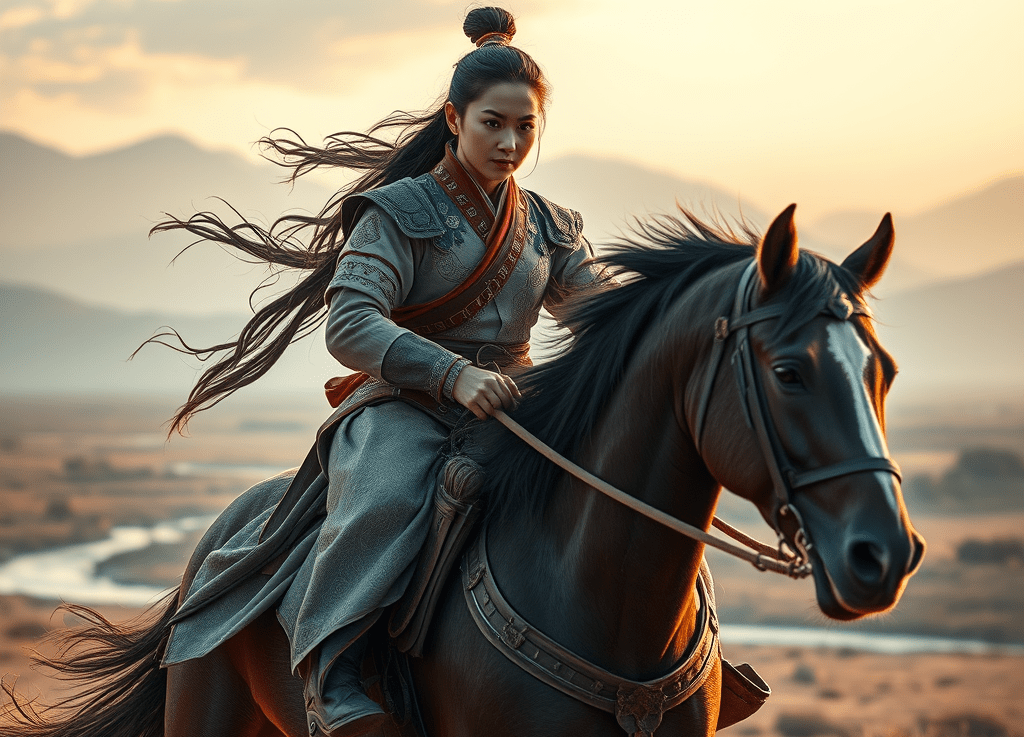
MuLan

MuLan


Tsiek tsiek and again tsiek tsiek,
Mu-lan weaves, facing the door.
You don’t hear the shuttle’s sound,
You only hear Daughter’s sighs.

They ask Daughter who’s in her heart,
They ask Daughter who’s on her mind.
“No one is on Daughter’s heart,
No one is on Daughter’s mind.

Last night I saw the draft posters,
The Khan is calling many troops,
The army list is in twelve scrolls,
On every scroll there’s Father’s name.

Father has no grown-up son,
Mu-lan has no elder brother.
I want to buy a saddle and horse,
And serve in the army in Father’s place.”

In the East Market she buys a spirited horse,
In the West Market she buys a saddle,
In the South Market she buys a bridle,
In the North Market she buys a long whip.

At dawn she takes leave of Father and Mother,
In the evening camps on the Yellow River’s bank.
She doesn’t hear the sound of Father and Mother calling,
She only hears the Yellow River’s flowing water cry tsien tsien.

At dawn she takes leave of the Yellow River,
In the evening she arrives at Black Mountain.
She doesn’t hear the sound of Father and Mother calling,
She only hears Mount Yen’s nomad horses cry tsiu tsiu.

She goes ten thousand miles on the business of war,
She crosses passes and mountains like flying.
Northern gusts carry the rattle of army pots,
Chilly light shines on iron armor.

Generals die in a hundred battles,
Stout soldiers return after ten years.
On her return she sees the Son of Heaven,
The Son of Heaven sits in the Splendid Hall.

He gives out promotions in twelve ranks
And prizes of a hundred thousand and more.
The Khan asks her what she desires.
“Mu-lan has no use for a minister’s post.

I wish to ride a swift mount
To take me back to my home.”
When Father and Mother hear Daughter is coming
They go outside the wall to meet her, leaning on each other.

When Elder Sister hears Younger Sister is coming
She fixes her rouge, facing the door.
When Little Brother hears Elder Sister is coming
He whets the knife, quick quick, for pig and sheep.

“I open the door to my east chamber,
I sit on my couch in the west room,
I take off my wartime gown
And put on my old-time clothes.”

Facing the window she fixes her cloudlike hair,
Hanging up a mirror she dabs on yellow flower powder
She goes out the door and sees her comrades.
Her comrades are all amazed and perplexed.

Traveling together for twelve years
They didn’t know Mu-lan was a girl.
“The he-hare’s feet go hop and skip,
The she-hare’s eyes are muddled and fuddled

Two hares running side by side close to the ground,
How can they tell if I am he or she?

Anonymous (c.5 A.D.)

Die goede oude tijd van het Matriarchaat, een sprookje?

Die goede oude tijd van het Matriarchaat, een sprookje?


Vreedzame matriarchale culturen, zoals geponeerd door Gimbutas etc, is nog heel veel controverse, de hypothese is tot nog toe onbewezen.

Er zijn wel zogenaamde Matrifocale/Matrilineaire culturen, dwz culturen waar relatief meer focus is op moeders/vrouwen, zonder expliciet dominantie te veronderstellen:

De Nari (Kerala, India), de Wemale (Ceram): van deze stammen is bekend dat de mannen primair professionele krijgers zijn, waardoor er een mannentekort is, wat zou kunnen verklaren dat vrouwen daar meer de boel regelen, dit is dus niet bepaald een vreedzame matriarchaat.

De Trobriand (Nieuw Guinea), de Minangkabau (Sumatra): deze stammen zijn matrilineair, de erflijn gaat via de vrouwelijke tak, maar dat is nog geen matriarchaat in de zin van vrouwenheerschappij, want anders zou je ook Jodendom kunnen rekenen tot matriarchaat.

Nu zijn er wel mythes over matriarchale samenlevingen: Amazones etc., maar of die ooit bestaan hebben?

Er zijn krijgshaftige koninginnen geweest:
Alexander de Grote werd teruggedrongen door de Koningin van Nubia, de Romeinen kregen klop van koningin Boudicca en koningin Zenobia.
Wat dit ook moge bewijzen, in ieder geval geen vreedzame matriarchaten!

Zie ook: http://en.wikipedia.org/wiki/Matriarchy

Reiki, hoe zit dat?

Reiki, hoe zit dat?


Reiki is van oorsprong veel meer dan alleen maar een inwijding (ter waarde van een paar duizend eurie) in handoplegging.

Volgens de overlevering:
Usui, een Tendai Boeddhist, mediteert en vast op een berg, en ontvangt inzichten die hem ertoe zetten om zijn spirituele leer te formuleren, waarbij spirituele ontwikkeling centraal staat.
Oorspronkelijk was de Reiki-inwijding ingebed in een complete spirituele leer, waarin men via meditaties en leefstijl de mogelijkheid verwerft om tot (zelf)genezer te ontwikkelen.
Zelfs tijdens het leven van Usui was het systeem continu in ontwikkeling.
Zijn leerling Hayashi, ontwikkelde het systeem meer in de richting van healing, en verliet de oorspronkelijke organisatie na de dood van Usui.
Zo onstond reeds in Japan allerlei afsplitsing van Reiki.

Een belangrijke ontwikkeling werd ingezet door de leerling van Hayashi, Takata: zij introduceerde het sterk veranderde Reiki-systeem in Amerika, compleet met gestructureerde symbolen en hand-opleggingen (en een hoog prijskaartje).
Nu onstond dus een Amerikaanse afsplitsing van Reiki, en dit is de versie die we in Europa het meeste tegenkomen, de Reik Alliantie.

Daarnaast nog allerlei andere afsplitsingen, waarbij het soms lijkt op een wedstrijdje ‘extra geheime symbolen ontdekken/channellen’.

Tenslotte is er ook nog een streven van een aantal groepen om ‘de oorspronkelijke Reiki te herstellen’, een nobel streven met als probleem dat Usui zo weinig documentatie heeft achtergelaten mbt zijn oorspronkelijk systeem en de ontwikkeling daarvan tot aan zijn dood.

http://en.wikipedia.org/wiki/Reiki#History
http://www.aetw.org/reiki_history_tl.html

Totems en krachtdieren, hoe zit dat?

Totems en krachtdieren, hoe zit dat?


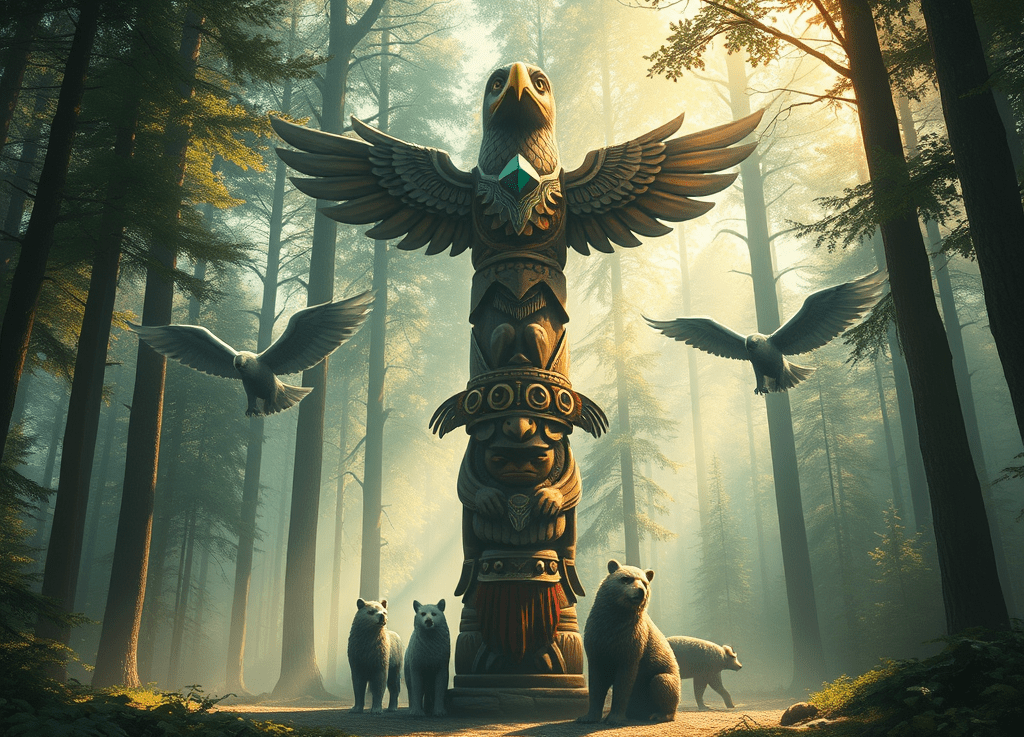
Totem komt uit de Ojibwa-taal, maar hetzelfde idee komt ook voor in andere sjamanistische tradities:
voor hen is een totem verbonden aan de clan binnen de stam.

Het idee van krachtdier komt in meerdere sjamanistische tradities voor waarbij zo’n wezen specifiek is verbonden aan een individu.

Discuzeuren

Discuzeuren


Als je in een academische discussie een verwijzing doet naar ‘andere bronnen’ om te bewijzen dat het anders ligt dan een reeds geciteerde bron, dan moet dat verifieerbaar zijn met bronvermelding.

Anders kan je net zo goed zeggen dat jouw info afkomstig is van een vizioen, op zich heeft dat ook wel een bepaalde waarde maar dan kom je in een andere soort discussie terecht.

A Hunting we will go

A Hunting we will go


A hunting we will go, a hunting we will go
Heigh ho, the dairy-o, a hunting we will go
A hunting we will go, a hunting we will go
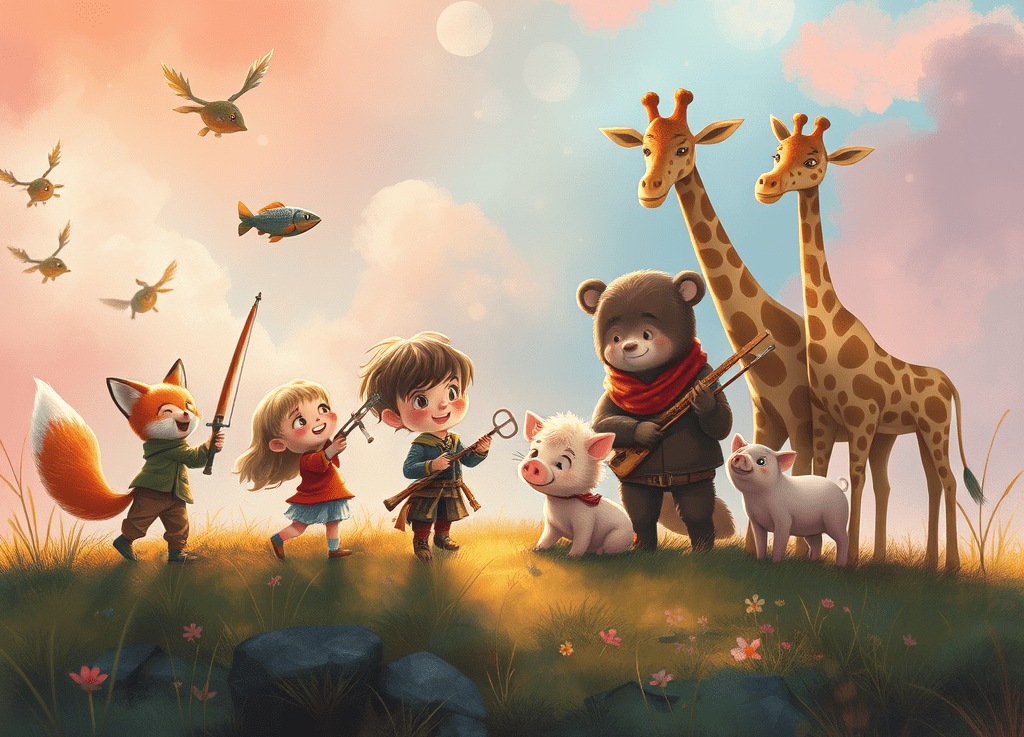
We’ll catch a fox and put him in a box
And then we’ll let him go

A hunting we will go, a hunting we will go
Heigh ho, the dairy-o, a hunting we will go
A hunting we will go, a hunting we will go
We’ll catch a fish and put him on a dish
And then we’ll let him go

A hunting we will go, a hunting we will go
Heigh ho, the dairy-o, a hunting we will go
A hunting we will go, a hunting we will go
We’ll catch a bear and cut his hair
And then we’ll let him go

A hunting we will go, a hunting we will go
Heigh ho, the dairy-o, a hunting we will go
A hunting we will go, a hunting we will go
We’ll catch a pig and dance a little jig
And then we’ll let him go

A hunting we will go, a hunting we will go
Heigh ho, the dairy-o, a hunting we will go
A hunting we will go, a hunting we will go
We’ll catch a giraffe and make him laugh
And then we’ll let him go

If I give my heart to you

If I give my heart to you


If I give my heart to you
Will you handle it with care?
Will you always treat me tenderly?
And in every way be fair?

If I give my heart to you
Will you give me all your love?
Will you swear that you’ll be true to me?
By the light that shines above?

And will you sigh with me when I’m sad?
Smile with me when I’m glad?
And always be as you are with me tonight?

Think it over and be sure
Please don’t answer till you do
When you promise all these things to me
Then I’ll give my heart to you

Think it over and be sure
Please don’t answer till you do
When you promise all these things to me
Then I’ll give my heart to you

Doris Day

The foggy dew

The foggy dew


As down the glen one Easter morn to a city fair rode I
There Armed lines of marching men in squadrons passed me by
No fife did hum nor battle drum did sound it’s dread tatoo
But the Angelus bell o’er the Liffey swell rang out through the foggy dew

Right proudly high over Dublin Town they hung out the flag of war
‘Twas better to die ‘neath an Irish sky than at Sulva or Sud El Bar
And from the plains of Royal Meath strong men came hurrying through
While Britannia’s Huns, with their long range guns sailed in through the foggy dew

‘Twas Britannia bade our Wild Geese go that small nations might be free
But their lonely graves are by Sulva’s waves or the shore of the Great North Sea
Oh, had they died by Pearse’s side or fought with Cathal Brugha
Their names we will keep where the fenians sleep ‘neath the shroud of the foggy dew

But the bravest fell, and the requiem bell rang mournfully and clear
For those who died that Eastertide in the springing of the year
And the world did gaze, in deep amaze, at those fearless men, but few
Who bore the fight that freedom’s light might shine through the foggy dew

Ah, back through the glen I rode again and my heart with grief was sore
For I parted then with valiant men whom I never shall see more
But to and fro in my dreams I go and I’d kneel and pray for you,
For slavery fled, O glorious dead, When you fell in the foggy dew.

https://en.wikipedia.org/wiki/Foggy_Dew_(Irish_songs)